ACKNOWLEDGMENT


ACKNOWLEDGMENT

by Sharon Stevens

Recently I took a story back to my critique group. My words had been posted in a blog, but I knew from the moment I clicked it into cyber-space to our facilitator that it wasn’t quite right. It may not have been terrible per se, or even wrong, it just needed work, and I looked to my fellow writers to listen to the story and help me “fix it”.

I think they were relieved. They had been confused by the story and didn’t quite know how to tell me. It didn’t connect and not only that, it was filled with many words leading nowhere. The main focus, the heart of the story got lost somewhere in all the jumble.

Our facilitator told me to rework it and bring it back, and he would repost it. No one would ever know.

I left that night even more confused than before. None-the-less I took it back home and worked and reworked the story, following the advice of my fellow writers until it was perfect with a capital P. If I do say so myself it was my finest masterpiece. Granted the word count was over a thousand words, but strong, connected and glowing. Every thought matched to the next. Each paragraph connected together in one sweeping saga linked heart and soul. All my facts were checked and rechecked. All the names honored and placed within the body of the piece. I made sure the story was grammatically correct with every word in its place. I took out all the “wases”, found the echoes, edited the errors and streamlined the focus.

After I had read this saga over for the millionth time I felt it was ready to resubmit. I highlighted to copy and save and then paste to the facilitator. (He would be so proud of me.) And then I clicked a key, I’m still not sure which one, and my work was gone. Not gone to my blog post, or gone to my file folder but gone gone…never to be retrieved again.

I stared at the screen before me not comprehending what had just happened. I pushed paste and paste again, and the computer still glowed empty.

And that is when it hit me. I realized what I had written and what I had initially taken to my critique group and what they had tried to get me to see, was nothing more than an acknowledgment. My story wasn’t a story after all, it was simply a dedication, a Pulitzer prize winning entry to a story not yet written aimed at all those who had paved the way for me in Heaven as well as here on earth.

This is who I am and who I will always be, but it provided a revelation. I worked so hard honoring the people and memories close to my heart who inspired me to put words on paper. I guess I just wanted them to know how much they touched my life and lifted me up and encouraged me to dream. As one of the members of my writing group explained that my heart was so full that it spilled over into my writing.

When my blog disappeared I was hurt. Not only that, I was devastated, dumbfounded, depressed, discouraged and any other “dis” in the dictionary. But I truly wasn’t that upset. There was no gnashing of teeth or ripping of clothes or tearing of hair. There were tears, but no sobbing. It was all just so perfect and I didn’t think I could retrieve it from my memory word for word.

It wasn’t until I found Jennifer Archer’s book, “Once Upon A Dream” at our bookstore, and read her acknowledgment to her friends and fellow writers that I came to my “aha” moment.

There was no question the fault of loosing my written work lay with my stupidity, for not saving it first before taking any other action. That’s a given and one of the first rules in writing!

When I clicked on that key that wiped out my tale it was if the Angels above were admonishing me. “Get past this, go further, reach higher, GET OFF THE FIRST PAGE! We know what we have done and we are proud of what we accomplished while there on earth. You don’t need to acknowledge us any more. You have a glowing, empty screen before you. Now go and write your story.

And so I did, with one last acknowledgment.

Jennifer Archer will be the guest speaker at the Panhandle Professional Writers meeting on September 17, 2011. She will be at the east campus of the St. Stephen’s Methodist Church, 4600 S. Western from 10-3 speaking on the “5 Senses: How to Capture the Magic & Bring Your Story Alive.”

PPW was founded by two women, Laura V. Hamner and Phebe Warner who not only encouraged writing, but were involved in the entire community way beyond the pages of a story. They along with Loula Grace Erdman and the many members of PPW down through the years, have made it all possible for those of us who love to share a story with each other, and in a tangible medium with a printed page.

Jennifer will be speaking on how to make your writing glow for a reader using all your senses and theirs. She should know, she knows how to write a great story.

But I can’t leave without honoring HER acknowledgments, as I think she said it best. But with doing so I want to honor MY Wordsmith Six critique group, Natalie Bright, Nandy Ekle, Barbara Propst, Joe Nichols and Craig Keel.

In Jennifer‘s words…“Many thanks to my Thursday night critique group: Karen Smith, DeWanna Pace, Jodi Koumalats, Bruce Edwards, Kim Cambell and Judy Andrew. Each week you challenge me, encourage me and teach me something new.

Thanks also to Ronda Thompson, Kimberly Willis Holt and Charlotte Goebel for giving me their time, suggestions and friendship.

And, as always, to Jeff for making it possible for me to chase a dream.”

Sharon Stevens
AGING WITH HONOR


Aging with honor

Getting older doesn’t happen to everybody. You have to stay alive first, as my previous blog about my cousin Bryan solemnly reminded us. For those of us dealing with the physical slow down that comes with the years, I think we have to stay active as possible, yet accept what we can no longer do without complaining or becoming depressed about it.

In my novel TRAILS END, seventy-eight year old Robert Jarrett is determined to ride and train the young colt (Trails End) by himself. This causes a spat between the rancher and his wife, Allie. Because I am trying to make the story as realistic as possible, Allie wins.

Robert decides to have Donnie Williams, (the homeless boy he bailed out of jail) ride Trails End for him. This puts enormous pressure on the boy, but Robert believes it will build his confidence. I believe this demonstrates an example of admitting your limitations while helping someone else. Aging with honor.

Rare But Special continues his race carrier at The Downs at Albuquerque. As of this year, the New Mexico track is excepting all ages of horses. This will also allow a good horse to “Age with honor”.

Joe Nichols

WRITE TO MAKE DIAMONDS


Write to make Diamonds

I recently conducted some interesting research on diamonds, how they are formed in the earth, the process used in mining these allotropes of carbon and what happens to them on the journey from mining to the market.

Dealing with diamonds the industry uses what is called the 4C’s. The first “C” is the Carat. This is a term used to reference the size of the diamond. The second is Color. This can range from colorless, the most valuable, to a yellow hue. On occasion a diamond of another color is found such as the blue Hope Diamond. These are rare. Thirdly is the Clarity. This describes the degree to which a diamond is free of blemishes and inclusions. Finally is the Cut. The cut is the jeweler’s touch. The angle at which a diamond is cut makes it attractive to the eye and gives it its shimmering brightness.

I have found that these “4C’s” are very useful in writing.

First, the carat. What size does my writing project need to be? Many contest pieces, devotionals, short stories and articles are subject to a specific word count. Publishers and agents may also require a word count in the length of some novels.

Secondly is the color. What is the genre’ of my writing? The answer to this question will not only help you in what to write, but in determining your target audience when it comes time to publish.

Third is clarity. What point of view are you writing from? Is it first person or third person, past or present? Double check your grammar usage and make it proper for the piece; and don’t forget the punctuation and spelling. These things can determine whether your story shines or is as clear as mud.

Finally the cut. The goal of this stage is to produce a faceted jewel where each angle between the facets optimizes the luster of the diamond. The jeweler cuts out weaknesses and flaws to focus attention on the beauty of the diamond. As writers, we type as fast as we can, elaborating on every little detail and sometimes find ourselves in a dark alley away from our storyline; or we add filler just to make the word count. Let’s face it; there are some things that will need to be taken out to make it shine.

At the jeweler’s a rough diamond is placed in a small vice, then carefully and strategically cut, and when it’s polished, it’s beautiful!

The diamond is your story.

Rory C. Keel

Toss, Salvage, Donate, Keep


Toss, Salvage, Donate, Keep

One of the benefits of moving is the opportunity to go through all the stuff in the house and do major editing. I make four stacks – keep, toss, salvage, and donate. It’s not always easy to decide which pile is the right one. Toss is more obvious. Trash is trash and surprisingly I accumulate a ton of that. The salvage pile includes items like a blouse with a missing button. Keep and donate are more difficult. Dishes, clothes, and furniture normally fall into all the categories. Sometimes I make a fifth stack called “I’ll decide later”. By the time I’ve gone through everything, I have packed boxes labeled for the movers, tagged boxes with bright pink sticky notes for charity, and bags of trash are ready for the dumpster. Even with all the editing, I realize I have too much stuff.

Sometimes we need to assess the baggage in our personal and professional lives. Over the years, I learned we carry around baggage that hinders our growth toward healthy attitudes and creativity. Let’s start with the toss pile. Get rid of procrastination. This is one of my weaknesses. I tend to put off things I could be working on now. I claim I can do my best work under pressure, but why add to my stress. Get rid of guilt, resentment, and the “I can’t” attitude. They are counter-productive.

Salvage that under the bed project. I have a novel that fell apart because of September 11, 2001. I took a break from packing to read parts of that story and decided to box it because I think it may be some of my best work. When I’ve completed my current project, I plan to pull out MACON GEORGIA and rework it. Most writers have such manuscripts. Perhaps now is the time to revisit the work.

Donate your time to other writers. Every writer has something to pass on to their peers and beginners. We’ve all learned something along the way. Maybe a trick for formatting or tracking submissions would help a beginner or even a more experienced writer. Don’t keep your tips to yourself. Think about all the folks who helped you, and return the favor.

There are definite keeps in life. I treasure my family and friends. They have supported me through the bad times, shared my tears and disappointments. They have celebrated my successes and kicked me in the backside when needed. I could not survive as a person or a writer without them. I keep copies of my successes to encourage me when the project stumbles. And I maintain a file of failures to keep me humble when I succeed.

Cait Collins

HONOR TO THE MASTERS


POST CARDS FROM THE MUSE

Honor To the Masters

“I love that story!  It’s my all time favorite!”  You have the story almost word for word, almost every dot of punctuation embedded in your heart, and you still can’t get enough of it.  You’ve probably read the book and seen the movie a thousand times a piece, and it still thrills you to the core.

There are a ton of reasons that particular story calls to you over and over. It could be the high concept, or a perfect plot with no loopholes. Maybe the voice is comfortable and striking at the same time. Maybe the world and the atmosphere bring you exactly the feel you are looking for, or any number of other traits of a great story.  But actually, it all boils down to plain good writing.

A master of words can take any theme, any plot (no matter how weak) and make it fascinating.  He can make you hear the words as if they fall out of his mouth.  She can set the tone in the first sentence, with the first couple of words on the page.  A master can weave a spell around you with very little effort, and you are helpless to break free until you see the words, “The End.”  And then you are left feeling lonely and know that it won’t be long before you must open that book and read it again.

These masters of the craft feed our desires to be just as good at writing as they are.

Study your favorite book and analyze exactly what it is that stays on the edge of your consciousness when the book is closed.  Then you can give them the ultimate homage by emulating their eloquence.

Congratulations.  You have just received a post card from the muse.

Nandy Ekle

BRAVO


BRAVO

by Sharon Stevens

The Amarillo Globe News issue of September 7, 2011 contained the note; “Today in History-In 1940 Nazi Germany began its eight month blitz during World War II with the first air attack on London” This date in history brought back my memories of the aftermath of September 11th.

On September 15, 2001, just four days after the destruction of the World Trade Center, my mother and I were sitting in the audience at the Amarillo Globe News Center for the Performing Arts waiting for the overture of Amarillo Opera’s “Kismet”. My mother, Mildred Freeman, a Bravo supporter with the opera for many years invited me to accompany her as a birthday gift.

As always Artistic Director, Mila Gibson appeared onstage to introduce and thank everyone for their support. This year was truly somber as the tragedy was still unfolding in New York, the devastation overwhelming.

Mila related how after Desert Storm she had considered postponing the opera, and that Margaret Harper shared her story during the war years. Margaret related that her husband Dr. Ples Harper worked with government intelligence in London England. In between bombings they still attended concerts and performances in the city parks. This was something that not only lifted everyone’s spirit, but showed the enemy they could not be cowed, and they would not back down.

That evening, even the program reminded us of all that we treasure in our city and brought out all that was good that surrounds us. It contained the names of the performers onstage and within the orchestra pit, most students and professors of Amarillo College and WTAMU. The technical crew with lights, sound, costumes and sets were also listed every page was filled with colorful advertisements supported by every business in the Amarillo and Canyon area. Truly, as always, a community endeavor.

Ten years later I wished I could remember Mila’s exact words. Not only did she bring up such wonderful memories of our beloved Margaret Harper, but she touched on all that brings us joy and solace throughout history, in all wars, in all pain, down through the centuries and generations. I will never forget as we took our seats that night in 2001 we watched an Amarillo doctor make his way down the aisle visiting with those he knew about the safety of his daughter who worked in New York City. How he and his family must have enjoyed this one night together with music and pageantry without the onslaught of ugly images flooding their sight.

This year’s performance of Amarillo Opera will be in October. “La Boheme” is the age-old story of love and death, poverty and wealth. The heritage and legacy of the arts will continue to live on in the hearts and souls of all who encourage and support the community.

Mila Gibson is no longer the artistic director. The Harper’s, the Brantley’s, the Moore’s, the Raillard’s are all gone now, but they will continue to have the best seats in the house.

With the anniversary of 9/11 we will continue to mourn the lives that were lost. At the same time we will celebrate those who came together then, and continue to minister to those connected to this terrible tragedy now. At the end of the performance I, along with those seated around me will rise and give the cast and crew a standing ovation. We will applaud their efforts to transport each of us beyond the footlights away from our earthly cares for just one moment in time.

I hope they will be able to hear my “BRAVO” from the audience mixed with the chorus of all the Angels in Heaven that took just a moment to stop and listen.

Sharon Stevens

RARE BUT SPECIAL


RARE BUT SPECIAL

We all are faced with tough decisions concerning our animals. It doesn’t seem appropriate, but sometimes the emotions we have dealing with pets and livestock traumatize us more than our family situations.

Rare But Special ran his best race. He broke from the starting gates in the lead, and easily maintained that position until the straightaway. Down the stretch, a horse challenged him on the outside and took the lead by a half-length. In only a short distance, our horse regained the lead and left that horse behind. At that point, we thought victory was ours.

We wanted that horse to win so bad. He evolved from a starved unbroken five year old, to a serious contender in a sanctioned race. Because of his age, he needed to win first to continue his racing career. Two horses inched passed him in the last fifty yards, and he won third. This was his first long race, 870 yards. The mental and physical conditions are strenuous for that distance, and the race he ran was amazing under the circumstances. My wife and I are so proud of him, yet heartbroken he didn’t win. He may be out of options, and we’re faced with deciding his future. He really isn’t suited for any other purpose.

Donnie Williams witnesses this type of situation in chapter three of TRAILS END. It’s a hard part of owning animals. They can become so close to you, they are part of who you are.

I don’t know the topic of the next blog, but it’s going to be fun and positive, opposite of the last two. I hope to have you back for next Wednesday.

Joe Nichols

ENDLESS POSSIBILITIES


Reasons to Write

     Why do I write? Is it because throngs of fans demand it, anticipating every word of my next masterpiece? Is it because I honestly expect to make millions of dollars on a bestseller, or desire to be famous? No.

This week I will share with you the 5th reason of why I write                                                                                                                                                                                   

Reason #5 – Endless Possibilities                                                    

On a recent business trip to the west coast, I noticed something amazing. Traveling along the highway, I read the billboards. Some of them knew I was reading them and said things like, “Caught you looking!” or “You’re so good. You read me like a book!” As spots on a connect-the-dots drawing, these towering advertisements had information about the grandest hotels, motels and the cleanest restrooms. They pointed the way to the best buffets and restaurants. Some revealed the places to go for the nightlife, and what it will cost if you drink too much of the highlife and turn into a lowlife while driving.

Occasionally we pulled into roadside rest-stops for short breaks and “free coffee,” and then we would load up on all the local vacation magazines, free maps and tourist information to read along the way. One visitor’s guide said that Arizona has more boats per capita than any other state in the nation—and they’re a land locked desert!

My point is that the possibilities for writers are endless because writing is everywhere. From billboards along the American road to epic novels, behind everything you read is a writer.

Rory C. Keel

A FAMOUS SPIDER BOOK


A FAMOUS SPIDER BOOK

And Why I Hate It

By Natalie Bright

I have read Eric Carle’s The Very Busy Spider thousands of times. My son loved it and insisted we read it at bedtime. Every. Single. Night.

Never mind that I had joined a book club which sent two new picture books each month.  He wasn’t interested.

The sheer drudgery of reading that book over and over was almost too much. My husband and I took turns reading in goofy voices for the animal parts, seeing who could make the other one laugh first. To break up the drudgery we played a game of find the fly. This book followed our son through the years with only a toddler vocabulary of “Uhh – Uhhh!” as he pointed to the fly and then to a three year old vocabulary of “There it is!”

Feeling exhausted and desperate one night, I thought of a compromise. We would read two stories every night; one of his choosing and one of my choosing. My son thought this over for several long seconds.  “Okay,” he says.  “But we have to read busy spider two times.”

Even though he proved my theory that kids are always one step ahead of their mothers, I did feel victory. I would be opening his mind to new and wonderful picture books, even though I’d be reading about that dreaded spider twice as much.

Today, inspired by my critique partners posts about Why I Write, as a writer, I stand in awe of that book. Now I understand what drives me to write for children. It’s because I want a Very Busy Spider book too.

In a bookcase full of glow-in-the dark covers, pop-up gizmos, and celebrity ramblings, I think most children’s authors want their book to be the one kids choose every night for story time. We dream of our book being the one a librarian removes from her shelf and places into the waiting arms of an emerging reader. And better still, if our story is the one that an adult remembers from childhood, and then reads over and over to a child, our purpose in life will have been fulfilled.

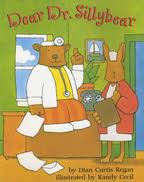
Many years later, as we unpacked from a move, both of my sons searched frantically through piles of boxes. My youngest found his treasure; Dear Dr. Sillybear by Dian Curtis Regan. And our teenager let out a sigh of relief as he clutched a book to his chest. Right along side collections of Hank the Cowdog and military histories, The Very Busy Spider still remains in my oldest son’s room.

With all due respect to Mr. Carle, did I mention I still cringe every time I see that book?  It’s a love-hate thing.

To Be or Not To Be


To Be or Not To Be

The Bard said “What’s in a name? that which we call a rose By any other name would smell as sweet.” Now I’m not sure I agree with that statement as some roses have no fragrance at all. I prefer to think a rose by any other name would still be as beautiful to be more accurate. American Beauty, Queen Ann, Peace, Fourth of July, Purple Passion, and Oranges & Lemons are varieties of roses. Different names but all roses.

So what’s in a name for authors? The question is posed during the question and answer session at writers’ conferences. Should I use a pen name? The answer is not always simple. While there are valid reasons to have a pen name, for the most part they are not necessary.

If an author writes more than one genre, a pen name might be a wise move. For example, a fan of a well-known romance writer purchases the new novel expecting an exceptional love story. Instead, the novel is a graphic murder mystery. Such a jarring departure from the expected might harm the author’s reputation as a romance writer. In this instance, a pen name might be a valid choice.

When an author’s name is not considered easily marketable, an agent or editor might suggest a pseudonym. Sometimes the writer chooses a nom de plume to hide his or her identity. I wonder what the congregation would say if they learned the minister’s wife wrote erotica. One conference attendee thought a pen name would protect her from possible legal consequences when writing a tell-all book. It will not. An attorney will trace the AKA.

Before making the decision to use a pen name, consider your reasons for wanting the name. If you decide to take a pseudonym, check the laws in your state. Some states require you to register the name as an Also Known As (AKA). Whatever your choice, remember it’s your legal name that must appear on the contract.

Cait Collins