People Watching


Outtakes 27

People Watching

My hair stylist ran late last Saturday.  He’s really good about keeping on schedule, so I didn’t mind the wait. I sat out in the lobby and read my book until a mom with a cute toddler entered the building. The little one jabbered and explored. She smiled at everyone. Mom gave her some space, but when the little one strayed too far, Mom brought her back to their chairs. I thought how wonderful. Here’s a happy little girl who is being taught about boundaries and limits, but she has enough freedom to test her wings. I really enjoyed watching the little one play.

People watching is a wonderful way for writers to pass time or conduct a little research. I love seeing an older couple walking hand-in-hand. I begin to imagine the progression of the relationship from courtship to the present day. I consider the day they met. Was it love at first sight or more of an I-don’t-think-I-like-you-but-I-want-to-give-you-a-chance situation? What about the wedding? Did they have a simple home ceremony or a lavish affair? What obstacles did they face? We all know relationships aren’t perfect. How did they weather the storms? Are they still in love? I watch him look down at the woman at his side. His eyes shine. He smiles. True, she’s not the girl he married. Her steps are slower. Wrinkles etch her face. But in his eyes, she is still beautiful, and she’s the light of his life.

Watch the young mother shopping for groceries. She consults her list; shuffles through her coupons to see if she can save a few cents on one brand over another. Her hand hovers over the name brand but she selects the store label because it is cheaper. The little one in the cart asks for a treat, but Mom shakes her head. It’s not in the budget. Her brow wrinkles. She checks her wallet; counts the money. It’s not enough to buy the healthy food her family should have, so she compromises.

Scenes like these offer opportunities for the writer to enhance his characterizations. By truly observing the people around him, he can recreate the expressions, mannerisms, and physical attributes to show the reader what is happening to the character instead of stating what is occurring. It brings the reader into the story and creates a bond between the reader and the character. Using his observations tightens the writing and keeps the plot moving. Learning to use what he sees eliminates excessive adverbs and adjectives and makes a cleaner, clearer story.  Give people watching a try and let your imagination soar. The results will be amazing.

Cait Collins


Oh, The Horror of it All!


Oh, The Horror of it All!

The term Horror describes an intense feeling of fear, shock, or disgust. In this genre you will find stories created to stir these intense feelings in the reader. From the classic Frankenstein to The Blob of unknown origins, from the resurrected dead to the mad protagonist who never dies.

The stories in the horror genre make the nightmares of our childhood real by describing the horrific and shocking details in a way that bends them into a plausible scenario.

It has several subgenres including the following:

Aliens: which may also overlap with science fiction.

Creepy Kids: Involves possessed, ghostly or dead children.

Cross Genre: Horror that contains major elements of other genres.

Cutting Edge: Usually associated with graphic novels.

Dark Fantasy: Is the companion to human evil and strife, instead of monsters.

Dark Fiction: This is a term used in the horror genre to market stories without using the term HORROR.

Erotic: Horror that usually contains violent sexual elements.

Extreme (splatterpunk, grindhouse or visceral): 
When thinking of this subgenre think Texas Chainsaw massacre. It intends to be bloody and gross.

Fabulist: horror emphasizes stories in a specific place or old-fashioned style.

Gothic (English gothic, southern gothic): 
This subgenre is written in a ‘literary’ style such as much of Edgar Allen Poe’s work.

Haunting: Have you ever seen a ghost? You will find them in this subgenre.

Holocaust: tales involve mass deaths, or a near-future apocalyptic plague, whether past or future.

Humorous horror: The Macabre in parody such as the Munster’s.

Paranormal: These are stories that describe the battle against the evil supernatural.

Rampant Animals: Horror containing animals: birds, dogs, giant ants, etc.

Rampant Technology: Horror where machines take over.

Supernatural (demons, zombies, etc.): 
Stories of monsters persistent on consuming the lives of mankind.

Be scared, be very scared!

Rory C. Keel

Books on Impulse


Books on Impulse

By Natalie Bright

Impulse buy is a standard retail term meaning spur of the moment purchases. The buying is unplanned and purely spontaneous triggered usually by seeing the item. Who can resist the decorative tissues, gum, breath mints, cute bottles of hand sanitizer–all the little goodies jammed in the display next to the check-out. Why do you think the milk and eggs are at the far back corner of the grocery store? It’s basic retailing logic.

I’ve read that books are becoming more and more a form of entertainment classified under the term impulse buy. I’ve fallen victim to the ease of logging on and ordering books and more books, and last week this became even more apparent.

Making Connections

My blog about characterization and creating a history for characters was read by a writer who I had met at DFWcon the year before. By happenstance, we had sat together in several classes, enjoyed interesting conversation over a few meals, and after returning home, ‘liked’ each others Facebook pages.

Following Links

Last week, she sent me a private email with an attachment explaining her process of character development. I followed the links included in her email to her blog and ePublishing sites. Within a few seconds, I placed an order through my PayPal for her 45 page eNovella and there it was, on my desktop within seconds. Shazaam!

Buying on Impulse

That’s impulse buying at it’s finest, and this savvy author made it easy for the consumer. Within minutes of her email, I followed all of the leads, learned about her and her work, and made a purchase. It’s a great time to be a writer, and if you’re a fan of hot romance I hope you’ll follow the link and checkout Casesa Major’s blog.

What’s an impulse buy you’ve made recently?

Natalie Bright

Appealing To Readers Outside Your Genre


TRAILS END – The Novel

Appealing To Readers Outside Your Genre

Rome Wager is a friend of mine. Not a close friend that I know intimately, but someone I became well acquainted with during my rodeo days. He stood out, for several reasons, and I admired him.

I am a subscriber to the NATIONAL GEOGRAPHIC magazine. It could be the most diverse publication there is. I most likely will skip the article on the latest species of frog or spider discovered in New Zealand or Kenya, but lots of topics are interesting to me. The cover story of the latest issue is about the writing of the King James version of the Bible. The article began with the first two words, Rome Wager.

I thought, how strange, whoever they’re taking about has the same name as ole Romey. Guess what. It was him, my bronc riding buddy.

The reason to include Rome in the article? He now is a minister in northern New Mexico, near the Jicarilla Apache Reservation. He is reaching out to young cowboys, ranchers, oil field workers, and staff at the Apache Nugget Casino. The point being made that ancient manuscripts from England, found their way to the American West to be repeated just as they were written.

Can you imagine how many people in the world have read and appreciated this article? This is what I would like to accomplish with my novel. A book that anyone can relate to, and enjoy.

My best wishes to you, Rome.

Thanks for reading,

Joe

In The Beginning


POST CARDS FROM THE MUSE

In The Beginning

Once upon a time I had a teacher in high school who wasn’t a whole lot older than we were. She was easy to talk to because we were almost peers. One day she told a funny story about her brother. She told us that her whole family had gone out to eat in a restaurant one day and they were all talking and laughing and having a good time. Her brother, just a little kid at the time, wanted some of the attention, but no one noticed him at all. He finally stood up on a chair in the middle of the restaurant and yelled at the top of his lungs, “UNDERWEAR!” Needless to say, he found his attention.

Our stories are kind of like my teacher’s brother.

Our readers are busy people with homes, families and friends, jobs, shopping, and tons of other things to do in their lives. If we want their attention to tell them our stories, we need to shout something riveting in the first few words. We should start with something that will catch their attention immediately, or we will lose them quickly. Action is a good way to start, and humor opens their hearts. Then there’s the mysterious beginning such as, “If I had known things would turn out like that, I never would have done it.”

Try different opening sentences, reading them allowed and listening to the words. Look for a group of words that are provocative and attention grabbing. Your readers will be hooked for the remainder of the story.

Congratulations. You have just received a post card from the muse.

Nandy Ekle


CHOICE


CHOICE
by Sharon Stevens

Recently a news journalist remarked that this was a wonderful time to be a reader, with books, magazines, libraries, bookstores, I-Pads, the Internet and so on.

I beg to differ. I don’t think there is any better or more glorious time in the history of our world than to simply be a writer.

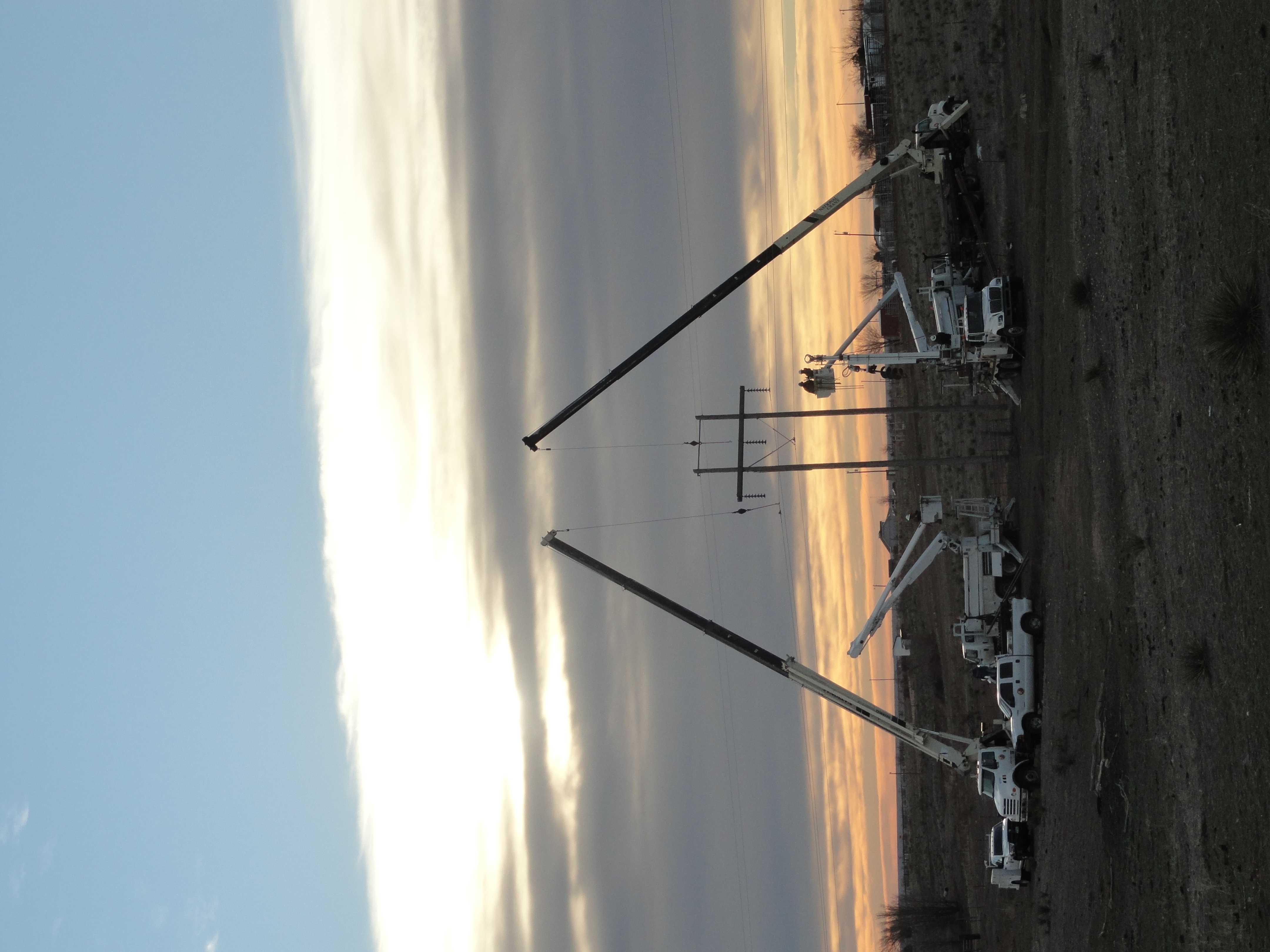
Let me give you an example. On the way into town one morning, I passed a work crew on our neighbor’s land replacing electric poles of the “walking giants.” They were silhouetted against the morning sun and I could just make out the men and women getting into their safety gear, ready to climb into the buckets of their “cherry pickers” in preparation for the assent to the top of the poles.

I got out of my car to snap a quick picture and took just a moment to contemplate the scene before me. For a writer, this pastoral scene was simple and straight forward. But with a flick of my imagination I could conjure up any number of plots and characters. There were so many choices open to me on both sides of the grid requiring no human contact at all. My story could lead in so many different directions and avenues. I could use any emotion or genre of my choice.

My 1890 Webster’s Dictionary defines choice in so many ways. “The act of choosing, the voluntary act of selecting or separating from two or more things. The thing chosen. The best part of anything. That which is preferable and properly the object of choice.”

Again, as a writer, this puts the dilemma right in front of me, making it almost impossible to tackle. Or it does for me.

For instance, I could write a drama regarding one of the men being so distracted with troubles at home, putting the lives of his fellow workers in danger. Or I could pen a romance of the electricians and engineers erecting poles with hard muscles, strong spirit, dedicated heart, and with faces that exuded masculinity or sexuality in their smile, through eyes etched with desire that could look deep into your soul.

Or maybe I could write about safety, including hard hats, or lifelines, or anchors to the ground such as those about safety first that fellow Wordsmith Six blogger Natalie Bright wrote in her book Oil People. What about tragedy and the loss of friends on the job, senseless acts, terrorism on a national scale, shutting down the power grids all across the country. I would have to do a lot of research, but it’s doable.

On the one hand I could write about the power conglomerates tearing up the land, killing the environment, gobbling up natural resources. Or maybe I could choose to focus my story on the hawk I witness every day on my way home from work that settles on top of one of the cross bars of the electric pole just high enough to survey his domain as he looks for a tasty meal from his lofty perch.

What about cattle ranches and farmers? Each pole the power company erected was across generations of neighbors’ land on both sides of the spectrum. I could write about the power companies taking Eminent Domain, growth hormones, Mad Cow disease, PETA, or vegetarians. Or I could write about Molly and Charles Goodnight and the Goodnight-Loving Trail, John Wayne, saving the environment, the beef industry, steaks sizzling on the grill for an outdoor cookout, hamburger sliders at a tailgate party for the Super Bowl.

And where would we be if there was no electricity or fuel to run the tractors, the cotton gins, and the grain elevators. Without this most basic commodity farmers would not be able to feed their neighbors, their families and their friends here in the community, but also throughout the world.

And then there is politics. I could choose any debate on the energy crisis, oil embargoes, foreign oil, offshore drilling. Or I could write about how thankful I am that Franklin Delano Roosevelt worked so hard for us to have rural electric power that runs our water well, the microwave, the washer and dryer, the lights, the heat, the air-conditioner, the refrigerator that keeps all food and produce at the peak of freshness, and of course, last but not least, our T.V.

But I am also intent on sharing the story that electricity levels the playing field for all businesses, corporations, and CEO’s, that reach from the tallest sky scrapers down to the littlest mom and pop shops alike.

The sky remains the limit for me or any writer worth their salt. I could undertake a screenplay, a stage play, a murder mystery, non-fiction, horror, science fiction/fantasy, westerns, children’s book, or even a song lyric. “I am a lineman for the county,” as Glen Campbell would sing. And if my little heart desires I could find a place for vampires, werewolves, blood sucking aliens, or energy guzzling robots. And how easy it would be to connect and pay tribute to all that protect and serve against all forms of those who spew evil in every walk of life.

So many choices, so many avenues, limitless possibilities.

After staying to watch the men work to link the cables that stretched from one end of the earth to another I knew I had to get to town. I took one last glance and climbed back into my car. My heart was heavy with the magnitude of decisions I would have to make. Once I left this place I feared the memories would dim. But as I turned my eye I caught the reflection of the breaking sun. The brilliance burst across the horizon through the clouds. I knew I had my answer. I could choose to write about the worst of society, the ills of mankind, the stupidness of humanity at large, or I could go with my first impression.

What I first witnessed in my heart and soul when I saw the framework of trucks embracing the giants was the Holy Trinity…the Father, the Son, and the Holy Ghost, and encircled within was the symbol of the cross. I could see the light of the Spirit rising above the scene with all of His majesty. I pictured the fields and the pastures and all the creatures below enveloped in the warmth of His gentle embrace all across the land.

And that leaves me with MY definition of “choice” from Webster’s Dictionary, “Holding dear, selecting with care. Worthy of being preferred, select, precious, very valuable.

And I knew at that precise moment what I would write.

No question, this is truly a glorious time to be a writer!

Sharon Stevens

By the Book


Outtakes 27

 By the Book

I admit to being a stickler for rules. If I’m told “no exceptions”, I don’t ask. If my manager says an hour of overtime per day, I rearrange my schedule. If my assignment is due on Friday, I’ll have it done by Thursday at the latest. I find I land in trouble when I don’t read and follow the rules. Case in point; I didn’t read the rules on a slot machine and cheated myself out of money.

I’m not a big gambler, but sometimes I enjoy playing the slots or a little Black Jack. Recently, three of my sisters and I drove to Wichita Falls, Texas, to celebrate our older sister’s birthday. Part of the celebration was a trip over the border to a small casino in Oklahoma. The place is not big enough for Craps, Black Jack, or Roulette. Their staple is slot machines. I sat down at a penny or nickel machine, loaded it with a twenty dollar bill, and hit spin. Had I read the “about this game” information, I would have realized I won a bonus round on my first spin. I kept racking up points until I did not make the minimum for the round. Instead of cashing out, I played off the bonus credits. I did have a nice sum when I cashed out, but had I read the information, I would have made more money.

The same goes for submitting your work to an agent or editor. Agents and editors are truly busy people. They cannot read every manuscript, so an author must do their homework and make the submission shine. Check the website for submission guidelines. Keep in mind, these are not suggestions, they are actual rules to follow when sending your work. Some agents or editors will request a cover letter, synopsis, and the first three chapters. Check for the length for the synopsis. The agent may want a maximum of three pages, or perhaps one page. Please do not send ten pages. You will not be read. If the guidelines say three chapters, do not send the entire manuscript.  Make sure you spell the name correctly. Check for the genres the agency represents. Whatever you do, do not submit your erotica to a Christian publishing house.

There are some basics to follow. Standard font and type style is Times New Roman or Courier New 12 pt. Script is impossible to read, and fancy fonts are not professional. Use a good quality bond paper. White only! I’ve disqualified contest entries because the submission was received on gray or baby blue paper. Margins should be one inch all around, and the type should be on one side only. Use black ink. Pink or purple may be your favorite colors, but editors will not appreciate your creativity.  Double space your manuscript. Do not include your photograph, your child’s picture, or a puppy photo. The agent will not be impressed. Proof read. Proof read. Proof read.  Ask a friend to proof read the submission for you.

Remember, writing is a business, and rules must be followed. Want to know more about writing for the editor? Check out the Panhandle Professional Writers’ website at pandhandleprowriters.org for information regarding the Frontiers in Writing Let’s Write Weekend, June 29-30, 2012 in Amarillo, Texas. Hilary Sares, former acquiring editor for a New York publishing house, will present workshops on meeting editors’ expectations. Y’all come. We’d sure like to meet you.

Cait Collins

Children’s Genre


Children’s Genre

What genre does your writing fit into?

This week we will explore the genre of children’s writing.

Have you ever read Where the Wild Things Are or Curious George? What about Dr.Seuss or Hank the Cow Dog? Then you have a good idea of the type of writing that fits into the children’s genre. Written for small children ranging from the littlest tykes to eleven years old, these books contain simple words and characters of animals or other young children.

As with most genres, there can be several subgenres.

Juvenilia are works written by the author in their childhood.

Early Readers use simple syllable words to help children learn to read.

Middle or Junior Readers also known as Chapter books, are usually longer books that use more involved wording.

Picture Books have bright and colorful illustrations, and have minimal printed text.

Pop-Up Picture Books are written with three-dimensional pop-up pictures that open when the pages are turned.

Traditional Stories are older stories such as fairy tales and fables told in a simple form and illustrations.

The children’s category is a fantastic genre where kids learn to read, dream and develop their imagination.

Rory C. Keel

Getting the Facts


TRAILS END – The Novel

Getting the Facts

Last week I wrote about continuing to improve our abilities, and to learn new skills, even as we age. I attended the Team Roping school taught by Rickey Green, and would like to share a little about that experience.

In sports or any profession, there are individuals who completely change the standard methods in use. In his era, Ricky revolutionized the excepted way of roping the back feet of a steer, and left his competition behind. Everybody had to change what they were doing to catch up, because his ideas worked better and faster. After slowing down from full time competition, he then devoted himself to teaching others to rope. In the same way he competed, he so improved the process of instruction that he is today considered one of the best clinicians in the business.

If you want to improve your skills, in whatever field, you need to learn from the people who have made a living at doing it. Not someone who has made a living at teaching it, but someone who was successful producing income from it. Then you have to be sure that person is capable of instruction. This takes a lot of effort to develop. I’ve known World Champions who couldn’t teach you how to tie your shoe.

In the story of TRAILS END, Jim Barnes is that very type of person to teach Donnie Williams how to ride broncs, and how to win. But is the veteran bronc rider a good influence for the young and impressionable kid that worships him? I hope you will be interested to find out.

I would like to thank Rickey Green for a great positive experience. I wasn’t able to put the information to use during the school, but I’m confident I now have the tools for success. Thanks also Rickey, for making the learning fun.

Thank-you all for reading,

Joe

Why Do I Write


POST CARDS FROM THE MUSE

Why Do I Write

From time to time I run across a writing exercise that asks the question, “Why do you write?” I have read other people’s answers, and they are as varied as face shapes. Some people write to make money, some write for release, some write for therapy.

I thought about my answer. Why do I write? I write to tell a story. I write to connect with people. I write for the fun of it. I write because I can’t stop. However, I think my favorite reason to write is the rush I get from creating. I love to sit with my hands on computer keys and my eyes pointed at the monitor. I get a thrill to feel a rush of words flow from my brain to my hands and then onto the screen. I get a little giddy when I come out of my “zone” long enough to realize that several pages have appeared and I had no idea I was even doing anything.

So, why do you write? Do any of the reasons mentioned above describe you, or is there a new one?

Congratulations. You have just received a post card from the muse.

Nandy Ekle