Nano


POST CARDS FROM THE MUSE
Nano

By Nandy Ekle
We are now in the middle of August. In my part of the world we are still in the throws of a huge barbecue under the sun, temperatures soaring into the hundreds daily. However, there is a slight change in the air reminding us that summer is coming to a close. I may be because of the ads and the themes the stores and malls are spreading to remind parents to get their kids ready for school to start. Or it may be the calendar, hanging so proudly on my wall announcing that we have indeed entered the eighth month of the year. Or it could be that we are all so tired of being roasted daily like marshmallows that we are dreaming of those cooler days.

Most assuredly, the approach of autumn is felt with much excitement to those like me because all of the above reasons, and a few more: colors, weather, adventure, smells . . . I guess the only thing I do not like about the fall season is the fact that where I live, we only have about two weeks of true fallish type weather before the deep freezer door hangs open letting in all the ice and snow we can stand. And then, by late April, we will be praying for the heat of summer to come back.

Autumn holidays are practically non-existent. Of course, the biggest day of autumn is Thanksgiving, which opens the Christmas season and starts the holly jolly madness of the winter holiday. There are also a couple of smaller holidays between Indepenced Day and Christmas: Labor Day, Columbus Day, and Halloween. And then, Of course, Thanksgiving. 

There is another thing about autumn that is very exciting. NaNoWriMo. This is a group of authors who have gotten together and sent November as Novel Writing Month. The challenge is to write a novel of 50,000 words, at least, in the 30 days of November. The first couple of times I participated in this, my attitude was, piece of cake. I could write anything any time. But I have learned what a pompous attitude that is. It is a challenge, and the challenge is big.

Beginning midnight, November 1, through midnight November 30, 50,000 words will be put on paper. The only rule is you cannot have written any of the story before midnight, November 1. On that night, you may type “Once upon a time,” or “It was a dark and stormy night,” and kick off your story. The story does not have to make sense, it does not have to to be one long story. And it may be one that goes on further than 50,000, or stops short. As long as you have 50,000 words by midnight November 30, you will be able to say, “I beat NaNoWriMo.” And being able to say this is worth the prize, which is more of a prize than than the other NaNoWriMoers could ever give you.

So the time is right. November is still a little ways away, It may still be blisteringly hot outside, but it’s not too early tho begin thinking about November.

Congratulations. You have just received a post card from the muse.    
Story Exploded


POST CARDS FROM THE MUSE

Story Exploded

By Nandy Ekle

It happened again. I woke up listening to a voice telling me an adventure. As the words scrolled across the great movie screen in my head, I realized that would make an amazing story. Probably ten or fifteen pages, a nice juicy short story at best.

As a “pantser” (one who writes “by the seat of their pants”), trying not to do so much planning that all the fun turns into a fill-in-the blank, essay-ish type of work, I took out my trusty computer, opened the word processor and let my fingers transcribe the scenes playing out in my head.

And then I came to a decision-making moment. Sometimes this is where I get locked down, waiting for the characters to tell me what comes next. Most of the time I can see the scenes clearly, but the transitions between the scenes is the muddy white noise part of the brain-feed movie going on. So I have to think for a minute. This is usually not wise if I want a short story because a lot can happen in a decision-making moment.

In this story I began to see twists and turns multiply to look like a roller coaster gone haywire. The hidden truths I will build to are good ones. In fact, I broke out in goosebumps and giggled like an insane madwoman every time a new twist popped up.

Research. I needed to research a couple of things I knew nothing about. And I had to research some things I knew a little about, and one or two things I completely understood, but wanted to find a way to connect to the new things I would be learning. And all the while a new secret would wink at me and I would giggle a little more.

So now I look at my “short story” and realize it’s a good tale, but it exploded into an outright novel. Only, I absolutely don’t want to say it out loud because the muse will pack up and leave me holding a paper cutout of my character in one hand and an dry ink pen in the other.

So, for the moment, we will continue to call this a short story.

Congratulations. You have just received a post card from the muse.
Message From Mundania


POST CARDS FROM THE MUSE

Message From Mundania

Life, moving slowly, as if the same day repeats over and over and brings to mind a phrase from the days of Flower Children: What a drag.

You get up in the morning, rub your eyes, wash your hair and drink your coffee. You go to your jobs or classes, work a while, eat your lunch, work a while, go back home. You eat supper or dinner—whatever you like to call it—turn on the TV and settle for the night. And it all starts over the next day.

But what we forget are the little adventures we have every day, you know, the little things that are different about a day. The postage machine hijacks the fax machine, the client forgot to send in the payment, or a black plastic bag scoots across the highway and reminds you of an alligator coming after your car. Once, just breaking the promise to myself that I would not eat my favorite snack that day brought a very nice story.

When something happens just the teeniest bit out of the ordinary, whether it’s frustrating or hilarious, you can write an entire story centered on this event. Let your imagination ponder and study it. Then add in some exaggeration to what you already know about the event. You’ll soon find that your ho-hum life is full of story-worthy adventures and “boring” will be for people like detectives and spies.

Congratulations. You have just received a post card from the muse.

Nandy Ekle

Back To Basics


POST CARDS FROM THE MUSE

Back To Basics

Think back to the first thought you had of writing. I’m not talking about the assigned theme about how you spent your summer vacation. I’m not talking about the essay explaining photosynthesis. And I’m not talking about the lines you may have had to write declaring that you would not talk out in class.

What I am talking about is the little paragraph you put together about who said what during lunch. Think about the notes you wrote your friends telling them the latest gossip. Remember the stories you told each other during PE and recess.


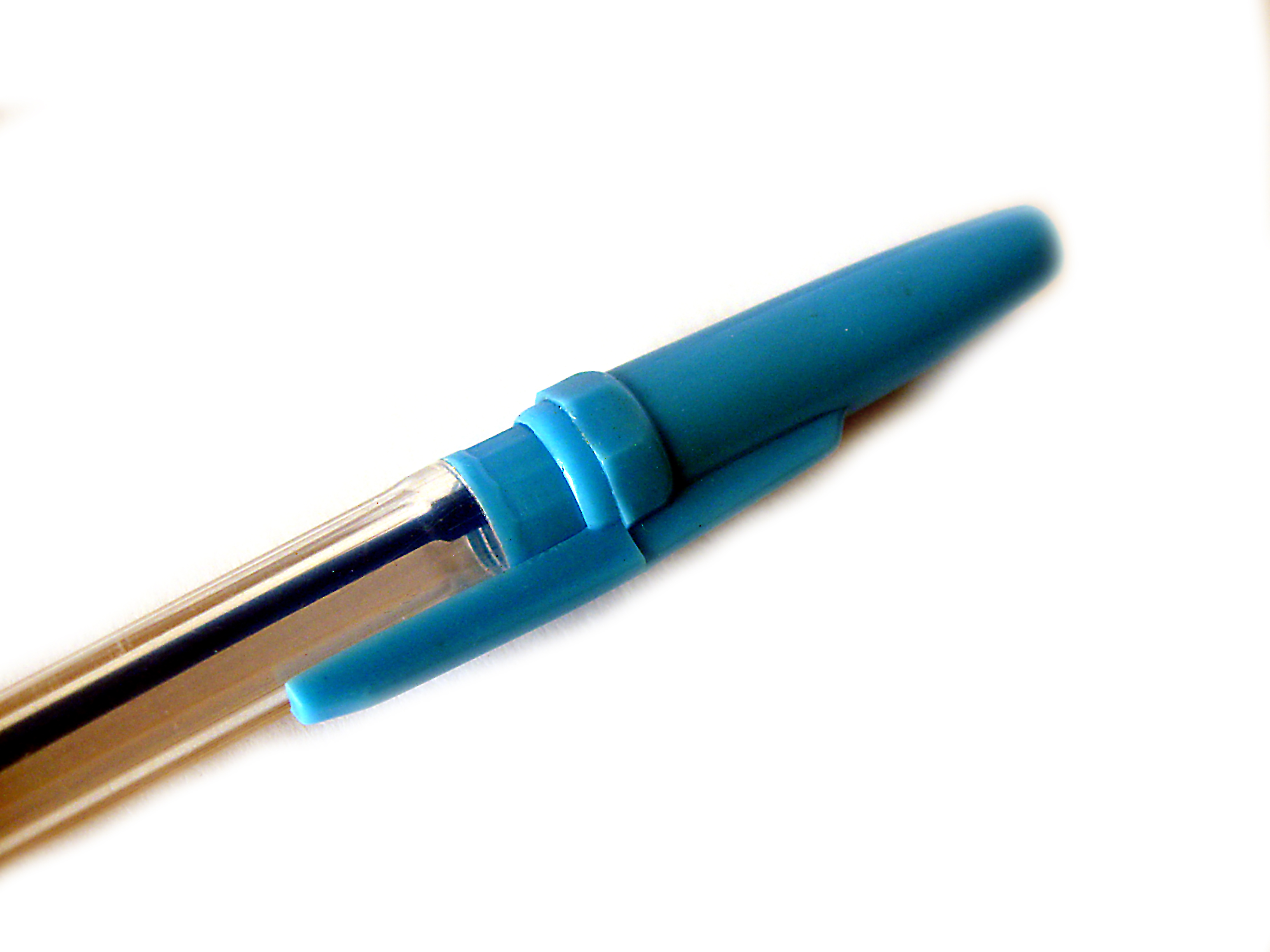
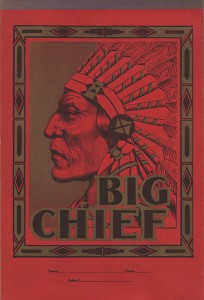
Sometimes the best inspiration is where it’s always been, at the beginning. One of the things that used to really stir the story pot in my head was a blue ink pen and a brand new Big Chief Tablet. That was definitely one of the most thrilling things in the world. I could take that medium point pen and the paper with the newsprint texture and whole new worlds full of interesting people opened up. The beautiful blue ink nearly jumped from my pen onto the tablet forming words and sentences, paragraphs and pages. I never experienced a stuck moment as long as I had those tools.

What brought the writer out in you? Did you have a certain favorite paper and ink color? Was it a favorite song? favorite character? a fun assignment? Did you and your friends share stories back and forth? Whatever it was, find it again and feel the magic start all over again. I can almost guarantee that your words will make their way through that blockade that has caused them to huddle in a corner waiting to be pulled out and put down on that page.

Congratulations. You have just received a post card from the muse.

Nandy Ekle

Left Behind


POST CARDS FROM THE MUSE

Left Behind

By Nandy Ekle


From the outside the building stands tall and quiet. It’s been there for nearly a century, resting, as it slides back to the earth. The windows are dark, the brick is crumbling, and the doors are tagged with graffiti.

As I stand on the doorstep, the oppressive heat consumes the air and I feel as if I am suffocating. I reach up to wipe sweat from my brow and the door on the bottom floor of the old building clicks open.

Peeking inside I find a room with no furnishings whatsoever. The concrete floor is covered with plaster which has fallen from the sheet rocked walls. All around is gray, except the spots directly across from the dusty windows. These spots sport bright sunlight which magnify the dust motes floating through the space.

I turn and walk deeper into the building. The heat is just as harsh without the benefit of a breeze. However, there seems to be plenty more air than existed outside, but the mustiness causes couches to bubble up from my lungs.

The first sight I had of the dark and dilapidated room was that of ancient decay. But then I see movement in the far corner of the room. I follow the line of sight and notice the only color in the place, the only sign of life present.

A single red balloon floats ten feet high as its string descends to the dirty gray floor.

Now, Dear Blog Follower, your job is to finish the story. How did the balloon get there and what does it mean?

Congratulations. You have just received a post card from the muse.


The Story Teller


POST CARDS FROM THE MUSE

The Story Teller

By Nandy Ekle

Last Friday I promised to carry on with the subject of point of view. And this certainly goes along with that. In researching exactly what I want to say I came to realize that for your story to be effective, you have to make some decisions before you ever put a word on paper. One one the most important decisions to be made is who is telling this story. This is a very important choice because it can make or break your story.

Last week I defined the different point of view. And I really think some genres work better with certain types of viewpoint better.

the romance genre works better with a third person POV, which is the female character and the male character. If you love romance stories, you probably want to know what she thinks and perceives, and you probably want to know the same about the male character. Because you know what the two main characters are seeing, thinking, feeling, wanting, you can understand their dilemmas, and why they fight against their relationship, even though everything in the world says they should be together. However, if there are more points of view than those two, you might get lost in who the main characters are and what their goals are.

Thrillers and suspense are two other genres you might want to limit your number of points of view. These two types of stories work on building up a mystery and then the answer explodes. Sometimes the reader knows what’s going on, sometimes they are as surprised as the characters. And that “punched in the gut” feeling is what this audience of readers crave. So if this is what you’re writing, more than a couple of heads becomes too much to deal with while also trying to hold on the chain of events and the list of characters.

Mysteries are a little different from the thriller/suspense genre. And sometimes the main character (and the reader by proxy), experience the events at the same time. This creates a very satisfying puzzle for the readers. This is why the first person, and the limited third person POV work best in this genre.

Next week we’ll look at a few of the other genres and points of view.

Congratulations. You have just received a post card from the muse.

Head Hopping


POST CARDS FROM THE MUSE

Head Hopping

By Nandy Ekle

Head hopping is technical jargon for writers. This is when the writer tells you what everyone is thinking and doing instead of sticking with one character. I’ve seen it work when used by a certain master novel writer, but most of the time it’s frowned upon by readers. The accepted rules are to change chapters if you must hop to another head, or you can show the needed information in dialogue, in body language, or by the actions and appearances of the different characters.

Another way to show your reader what all the other characters may be thinking and why is perception of your main character. And this method can be a delicious plot twist tool. I’ve seen this used more times than I can count, and when I recognize it, I usually fall in love with the author.

There’s the typical love story where the conflict is due to one character misperceiving the other character, which leads to heartache, which leads to either happily ever after or sadder buy wiser.

And then there’s the typical mystery. The bad guy can actually be hidden this way. He will be able to hide right out in the open if the other characters think he’s just another good guy standing around wondering who the bad guy is, when it’s him all along.

And, of course, this method is king in comedies. Some of the funniest stories in the world are built around a gross misperception. I know you’ve read and seen this happen, even in real life. One person gives his opinion on a subject. Another person walks in in the middle of the conversation and thinks the subject is one thing, when it’s actually something complete different, something so totally random that the audience is left wondering how could the misunderstanding have happened. After that, the whole story centers around each character acting upon what they believe the other has inferred.

But another interesting fact is when this is used on the reader. Now, we never ever want to lie to our readers. But if we make a statement, our readers are free to interpret it the way they want. So, if tell you “Jim walked in quietly with his white hat covering his head,” you might think Jim is cowboy,an introvert with a good sense of morals, and his hair is blond. However, you might not know he’s wearing a white baseball cap because he’s bald under the hat, and he’s quiet because he’s barely awake after spending a night killing his date.

Next week I’ll talk about the different points of view and why we might choose the POV we choose.

Congratulations. You have just received a post card from the muse.

A Blatant Borrow


POST CARDS FROM THE MUSE

A Blatant Borrow

By Nandy Ekle

I was surfing around and found this great list called “Top Ten Objectives For Writers.” So I’m sharing this with you guys because if you’re a writer, I know you’ll like it.

Top Ten Objectives For Writers

1.Ignore your inner critic.

2.Write first – edit later.

3.Keep learning! Join a writer’s group, take a class, attend a conference.

4.Make time to write every day.

5.Get published! Send out submissions . . . or decide to self publish.

6.Be you! No one writes quite like you.

7.Try something new: Experiment with a different genre.

8.Have fun! Enjoy being a writer.

9.Develop an author platform: social media, website, book trailer, blog

10.Set goals: “A dream is just a dream. A goal is a dream with a plan and a deadline.” —Harvey Mackay

WritersRelief.com

Congratulations. You have just received a post card from the muse.

The Dog And the Leash


POST CARDS FROM THE MUSE

The Dog And the Leash

By Nandy Ekle

I took part in a survey recently—one question, intended to make you think introspectively: name one thing you wish you could bring back from your childhood. This question definitely did get my brain cells working.

I started thinking about what kind of child I was. And then a story bubbled which gave me my answer.

Once upon a time, a girl had a dog. This dog was very energetic and very powerful, and the girl had to learn to control it. She clipped a leash to its collar and they went for a walk. The dog wanted to run and play, and he wanted the girl to run and play with him. But he was big and strong and the girl usually ended up huddled in a corner with a skinned elbow or a tear in her jeans.

But she couldn’t get rid of the dog because he was her constant companion. He went everywhere she went. He slept next to her at night, got up and went to school with her in the morning, came home and ate dinner with her, took baths with her, and then went to bed with her every single night.

And every day she took him for a walk on the leash. She learned to tell him no, that she didn’t want to run. She pulled on the leash to slow him down when he went too fast. And she yanked the leash if he tried to run after a bird or a rabbit.

But she also gave him treats. She bought tasty things for him to chew on. She gave him his favorite snacks. She scratched him behind the ears and made sure he had plenty of healthy food and water.

One day she took her dog out for a walk. She took hold of his collar with one hand and held the leash in the other. She rubbed the metal clip of the leash on the metal loop of his collar, but she didn’t really attach them. Instead she hung the leash around her neck, held her arm out as if she actually was holding the leash, and they began their walk. And an incredible thing happened. Her dog walked as if he really was attached to the leash. He didn’t run away from her, or drag her, or jump around. He walked calmly by her side and obeyed her when she talked to him.

After a while she remembered how much fun it was when he was running and jumping, and she wanted him to do that again. So she pretended to take the leash off his collar, but he still stayed calmly by her side. It wasn’t until she began to run that the dog started running as well.

So, I’ve gone through all this to say, I’m the girl and my imagination is the dog. I’ve spent so much time and energy learning to control it, and now when I want it to run wild, it looks at me as if I still have it leashed. If I could bring one thing back from my childhood, it would be my wild and free imagination.

Congratulations. You have just received a post card from the muse.

Quoting the Masters


POST CARDS FROM THE MUSE

Quoting the Masters

By Nandy Ekle


I like to read quotes by authors who know what they’re talking about. I find a lot of inspiration, instruction, wisdom, truth, and humor.

Here’s a few I’ve picked out from other sites on line to share with you.

  1. “I want to write because I have the urge to excel in one medium of translation and expression of life. I can’t be satisfied with the colossal job of merely living. Oh, no, I must order life in sonnets and sestinas and provide a verbal reflector for my 60-watt lighted head.” — Sylvia Plath
  1. “Writing is my way of expressing – and thereby eliminating – all the various ways we can e wrong-headed.” —Zadie Smith
  1. “When I sit down to write a book, I do not say to myself, ‘I am going to produce a work of art.’ I write it because there is some lie that I want to expose, some fact to which I want to draw attention, and my initial concern is to get a hearing.” — George Orwell
  1. “I don’t know why I started writing. I don’t know why anybody does it. Maybe they’re bored, or failures at something else.” — Cormac McCarthy
  1. “Why does one begin to write? Because she feels misunderstood, I guess. Because it never comes out clearly enough when she tries to speak. Because she wants to rephrase the world, to take it in and give it back again differently, so that everything is used and nothing is lost. Because it’s something to do to pass the time until she is old enough to experience the things she writes about.” — Nicole Krauss
  1. “I write because I don’t know what I think until I read what I say.” — Flannery O’Connor
  1. “I started writing novels while an undergraduate student, in an attempt to make sense of the city of Edinburgh, using a detective as my protagonist. Each book hopefully adds another piece to the jigsaw that is modern Scotland, asking questions about the nation’s politics, economy, psyche and history . . . and perhaps pointing towards its possible future.” — Ian Rankin
  1. “Why am I compelled to write? . . . Because the world I create in the writing compensates for what the real world does not give me. By writing I put order in the world, give it a handle so I can grasp it. I write because life does not appease my appetites and anger . . . To become more intimate with myself and you. To discover myself, to preserve myself, to make myself, to achieve self-autonomy. To dispel the myths that aI am a mad prophet or a poor suffering soul. To convince myself that I am worthy and that what I have to say is not a pile of shit . . . Finally I write because I’m scared of writing, but I’m more scared of not writing.” — Gloria E. Anzuldua

Congratulations. You have just received a post card from the muse.