Memory Jolts


MEMORY JOLTS 

By Natalie Bright

Through out life, isn’t it strange how the simplest experiences can stun us with a jolt of memory? More often than not, it seems this is connected to a significant loss.  I walked into a welding shop eight years after my father had passed on and the smell brought tears to my eyes.

LOSS OF A CHILD

The loss of a child has an even longer impact and today I’m blogging about the loss of a baby. If you are suffering from this devastating grief, just know that you have more strength than you might realize. Good days and bad days are in your future, and you’ll make it through.  I’m sure you’ve already noticed that every day occurrences can knock you to your knees.

For me, it’s playground equipment and the beginning of school.  Every year around this time I keep thinking I should be buying three sets of school supplies instead of just two. And playground equipment always reminds me of the things our sweet baby will never experience.

PHOTO MEMORIES

When I asked my friend Joe Stevens to take a picture of abandoned playground equipment for the cover of a book I was writing, I mentioned that he had about a month before I finished the final edits. The very next day, he drove to an abandoned rural school yard one evening after work. Out of only eight pictures, this was one of them:

The haunting symbolism in this picture resonated with me, from the beam of the setting sun shining at the top of the slide, to the dead weeds at the end of the slide where a parent might be standing.  His gift and talent to capture that image at that exact time makes me realize how fragile life is. A split second, and the photo would be lost and still life goes on. You must continue too.

WORDS OF HOPE

For words of hope and healing after the loss of a baby, my book GONE NEVER FORGOTTEN  is now available for Kindle at amazon.com. Based on my experience, I’m offering words of hope and poems to lift you during the bad times. From my heart to yours.

Natalie Bright

GONE NEVER FORGOTTEN


By Natalie Bright

I have the perfect home office, which I blogged about previously at WordSmith Six.

Sometimes, the ideal situation might stifle your creative muse, as I found out when I tried to write a story that has been on my heart and mind for the past fifteen years. The story is about the loss of our firstborn son, and to write it I had to be in the middle of the chaos, with television and two perfectly healthy sons asking, “what’s for dinner”. The result is a book for grieving parents and families who’ve suffered the loss of a baby.

GONE NEVER FORGOTTEN offers healing words through verse and text for grieving parents. I didn’t begin where most books do on this topic; instead, I started at what happens when you get home. With empty arms, parents have to return to their life without the much anticipated new addition to their family. The daily struggle seems endless and the loss is something you may never get over, but we made it through and you can too.

In addition to several of my favorite Bible verses, two very special ladies have contributed poetry on grief and hope.

Marianne McNeil Logan is an award winning rhyming poet. I’ve admired Marianne’s work for many years, and I enjoy rereading her chapbooks as inspiration for words and the writing craft. She continues to be a strong voice of encouragement for our local writing community.

Nell Lindenmeyer is a long-time friend through a our day jobs and through our work in an organization which educates its members about the energy industry. When I discovered she wrote poetry, I asked if she might have some pieces on grief and the free-verse samples she sent absolutely blew me away. I hope you find inspiration and peace through them as much as I did.

From my heart to yours, GONE NEVER FORGOTTEN, is a book of hope and healing after the loss of a baby, and is available on amazon.com for your Kindle. Click on the title now to download to your Kindle, and please let me know if any of the content touches your heart. Email me natalie@nataliebright.com.

Read an excerpt below:

1. LIVING WITH GRIEF

This past year our oldest son would have turned fifteen. As I write, tears fill my eyes, and I swallow the lump in my throat. How could I have forgotten his birthday again? I had planned to purchase a wreath, fasten a well-used toy from a younger brother’s room, and visit the cemetery to honor the special day. In the swirl of daily life, the date had slipped past, and I had done nothing.

Through the years, the pain over losing a baby will resurface out of nowhere. Special dates and events will pass without a second thought, and at other times, the overwhelming sense of loss will smack you out of nowhere. You must learn to live with your grief.

Playgrounds are difficult for me. Watching children yell and swing and slide reminds me of the missing link in our family. Certain times of the year are more painful than others. When I buy new clothes and school supplies for our two sons, I always feel a certain sense of loss and emptiness. I should be buying three sets of erasers, glue, and colored notebooks, instead of two.

During the past years, the only way I have found best to deal with this grief is to block the five days of our firstborn son’s life from my mind. That’s the way it’s been since we lost our sweet Clayton. My husband finds comfort in stopping by his grave and honoring our son on birthdays and holidays. For me, when I visit the cemetery, I sink into a deep depression that lasts for weeks. The memory of the overwhelming sense of hopelessness I felt as we left the hospital with empty arms consumes me. Every emotion and memory vividly haunts me, even now fifteen years later. I have learned to block the delivery experience from my thoughts without guilt, all the while remembering his presence in this world.

To read more, GONE NEVER FORGOTTEN is available on Kindle for only $4.99.

  • Format: Kindle Edition
  • File Size: 37 KB
  • Publisher: Apollo Publishing LLC; 1 edition (August 25, 2011)
  • Sold by: Amazon Digital Services
  • Language: English
  • ASIN: B005K9POP2

MAKING RETAIL CONNECTIONS


Making Retail Connections

By Natalie Bright

If you’ve self-published a book, it’s up to you to establish retail connections.

An author once told me that he’d only intended to write the book, and never wanted to be a book salesman. Now he’s traveling around with a car full of books. Welcome to the reality of today’s publishing world.  How are people going to read your book, if they don’t know it exists?

As the CEO of YOU, guess who is in charge of book promotion?

Make the Connection

While the internet offers a multitude of book promotion opportunities, for this particular post, I want to talk specifically about working with retail outlets and how to approach owners or managers.

On cold calls, approach them in a friendly, cooperative manner, introduce yourself and ask if they’d like to see your book. Most bookstore owners are always interested in talking to authors. Ask them if it’s a subject their customers might like. Information flyers and postcards work as well. When I receive inquiries in regards to my middle grade book, OIL PEOPLE, I offer to leave the store manager a preview copy. If it’s an inquiry by phone or email, I always offer to mail a preview copy. Be sure to include promo copies in your budget.

Store Owners Rule

Retail stores have to realize at least a 50% to 60% markup in the items they sell. They have a store front to operate which includes payroll, building utilities, and inventory expense.

DO NOT tell the storeowner the retail price. It’s their store, they set the price. Business owners are independent and territorial. If you tell them how to run their business, you’ll be out the door in a flash. Quote them the price you need, and you can suggest a retail price but ultimately the cost to customers is the store owners decision.

Setting the Price

If you self-publish, you have to leave a little wiggle room when setting your price. I hear this complaint all of the time and it is confusing to self-published writers. Authors quote the price printed on their book or the over-inflated price they paid for printing, expecting that’s the price they are due. Shop around and find the best possible printing deal in order to keep your price per book as low as possible. Hopefully, you’ll have room to make a few bucks, and the store comes out ahead as well.

Retail owners are in business to make a profit. If business owners’ efforts aren’t going to generate dollars to pay for the cost of staying open, it’s not worth having your book take up valuable shelf space.

The key, I think, is being able to offer a low price to retail outlets and being able to negotiate a price without being too pushy.

Consider ALL Possibilities

Major chain bookstores may not be an option to self-published authors for many reasons which are beyond your control. Are there specialty shops in your area? What about possible connections through family and friends?

Think about cross-selling. If you have a book of poetry, why not approach a lingerie shop? If you have a children’s book about horses, drop by a saddle and tack store or the local feed store. Stop stressing over things you can’t control and consider all of the possibilities, and keep writing!

Natalie Bright

CREATIVE NONFICTION


CREATIVE NONFICTION

By Natalie Bright

Real life stories seem to be everywhere, from reality television to magazines covering genuine people overcoming life’s obstacles. When you recount your life or if you have ever talked to someone about their life experiences, things are remembered in segments or scenes. Creative nonfiction takes those scenes, fills in the background, and introduces the characters in a narrative form.

“Creative nonfiction is the fastest growing genre,” says Lee Gutkind, award winning author and professor at the University of Pittsburgh and speaker at Frontiers in Writing in Amarillo.* He sites proof as evidenced by the decrease of fiction in popular magazines.  “More and more publications have cut back straight fiction into stories based on real life experiences.” he says. “Five years ago the adventure nonfictions were popular. Today we are in the middle of an information explosion and readers want more serious topics such as science, technology, and economics.”

When crafting creative nonfiction, story must come first. The substance of the information is important, but the story has to come before the factual information. It is the people and the story that will hook the reader.  Gutkind stresses that the writer must find the true scene. It’s got to be real and true with accurate information.

Once the real life story is uncovered, the first three paragraphs formulate your hook. “Your beginning must be fast, soon, now, best and strongest,” he says. “Sixty percent of the readers are lost at this point.  Your goal is to engage the reader at the very beginning and keep them turning pages.”

Gutkind recommends crafting your creative nonfiction story around a frame and focus. The frame is the container or overall narrative structure of your story. Your narrative should be presented in an interesting and orderly manner, the simplest being the chronological beginning to end scenario.

The next essential part of your article or book is the focus, or overall theme. What is the primary point that ties the elements of your story together? Another way to determine the focus is to ask yourself why you are writing this particular story. As the author, what do you want to say about this topic? The focus will also help you to determine which facts are essential to the story and to identify details that may need to be excluded.

One cannot forget an important building block of the creative nonfiction story which is the story itself, or the facts. Gutkind explains, “The story determines the research the writer must do.”

As you work on the ending, always keep your overall story structure in mind or frame. “Guide your reader’s to what it is you want them to believe but use evidence,” explains Gutkind. He says don’t worry about endings, as the perfect ending may only come after completion of the entire book.  “Lead the reader through your story. Don’t tell people what they want to know until you’re ready to dispense with them.”

Natalie Bright

#  #  #

 For more information, The Art of Creative Nonfiction by Lee Gutkind

*Frontiers in Writing is a summer writing program sponsored by Panhandle Professional Writers. Mark your calendar and join us in Amarillo, June 29-30, 2012!

A FAMOUS SPIDER BOOK


A FAMOUS SPIDER BOOK

And Why I Hate It

By Natalie Bright

I have read Eric Carle’s The Very Busy Spider thousands of times. My son loved it and insisted we read it at bedtime. Every. Single. Night.

Never mind that I had joined a book club which sent two new picture books each month.  He wasn’t interested.

The sheer drudgery of reading that book over and over was almost too much. My husband and I took turns reading in goofy voices for the animal parts, seeing who could make the other one laugh first. To break up the drudgery we played a game of find the fly. This book followed our son through the years with only a toddler vocabulary of “Uhh – Uhhh!” as he pointed to the fly and then to a three year old vocabulary of “There it is!”

Feeling exhausted and desperate one night, I thought of a compromise. We would read two stories every night; one of his choosing and one of my choosing. My son thought this over for several long seconds.  “Okay,” he says.  “But we have to read busy spider two times.”

Even though he proved my theory that kids are always one step ahead of their mothers, I did feel victory. I would be opening his mind to new and wonderful picture books, even though I’d be reading about that dreaded spider twice as much.

Today, inspired by my critique partners posts about Why I Write, as a writer, I stand in awe of that book. Now I understand what drives me to write for children. It’s because I want a Very Busy Spider book too.

In a bookcase full of glow-in-the dark covers, pop-up gizmos, and celebrity ramblings, I think most children’s authors want their book to be the one kids choose every night for story time. We dream of our book being the one a librarian removes from her shelf and places into the waiting arms of an emerging reader. And better still, if our story is the one that an adult remembers from childhood, and then reads over and over to a child, our purpose in life will have been fulfilled.

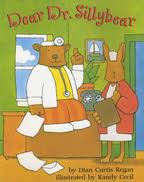
Many years later, as we unpacked from a move, both of my sons searched frantically through piles of boxes. My youngest found his treasure; Dear Dr. Sillybear by Dian Curtis Regan. And our teenager let out a sigh of relief as he clutched a book to his chest. Right along side collections of Hank the Cowdog and military histories, The Very Busy Spider still remains in my oldest son’s room.

With all due respect to Mr. Carle, did I mention I still cringe every time I see that book?  It’s a love-hate thing.

Walking Up a Poem


Walking Up a Poem

By Natalie Bright

At Frontiers in Writing 2011 conference in Amarillo, poet Donald Mace Williams spoke on Walking Up a Poem. He talked about how the physical activity of walking clears the brain and brings on the muse. “The brain is a tough editor,” he said.

One example he discussed is a poem by A.E. Houseman:

 Loveliest of trees, the cherry now

 Is hung with bloom along the bough,

And stands about the woodland ride

Wearing white for Eastertide.

How different would the line read with “cherry tree” rather than its singular form as “cherry”. Adding one word changes the flow and vision of the words. One letter can do the same; “hung with blooms” instead of “bloom”. Would you like it as well? Houseman allowed the rhythm and natural flow of words to dictate his work. Obviously he shut his inner editor off.

Another example we discussed is the poem “A Leaf Treader” by Robert Frost. The rhythm and the sound of the words in this poem imitates “treading” as we imagine Frost must have walked in the woods near his home, and then tackled the fallen leaves in his yard. There are numerous writings on his true meaning of this poem, however I like to take Frosts’ words at their face value; a gifted man walking and observing the changing seasons.

The speaker for this workshop is a poet in his own right. Modernizing the Old English epic poem, Beowulf, Williams did a contemporary version set in Texas’ Palo Duro Canyon, and most of this verse arrived clear and complete while walking. He explains that entire sections would come to him, which he wrote down as soon as he got to pen and paper. I’m inspired by how he signed my copy of this lengthy undertaking “To Natalie, With Writerly Sympathy and Best Wishes”. I leave you with an excerpt from Donald Mace Williams’ poem Wolfe:

 At night sometimes a cowboy sang

Briefly to a guitar’s soft twang

While others talked, wrote letters home,

Or stared into brown-bottle foam.

Wolfe has been used in university level classes as required reading. Donald Mace Williams is a former newspaper writer, editor, and college English instructor. His work is available at the Buffalo Bookstore in Canyon, Texas or online at www.rattle.com

Natalie Bright

Researching the West


Researching the West

By Natalie Bright

Tucked away on a little side street in San Angelo, Texas, a quaint bookstore is filled with hard to find books, the majority of which are westerns.

The owner of Cactus Bookstore was a personal friend of the great western author, Elmer Kelton. The store features an extensive collection of Kelton from used trade paperbacks to pricey autographed first editions. I asked him if Kelton had ever written a how-to book on writing. He said, “No, but I have this.” He handed me a cassette tape, 90 minutes, featuring two of Kelton’s keynotes from 1989. Marked down half-price, I grabbed it, and what a treasure. While it’s short on specific technique, it’s long on wonderful stories and quotes from the people who crossed his path. Kelton also shares his personal favorite western novels, and includes insightful background on creating unique characters.

I already own one of his recommendations: the most realistic account he knows of for a cattle drive, THE LOG OF A COWBOY by Andy Adams. Published in 1903 by University of Nebraska Press, I found this well-worn book at a used book store in the Dallas area.

For an entertaining read, it’s a little dry, however historians and writers will love it. Written in first person narrative by a young man who moved from Georgia to Texas after the Civil War, the specific details are invaluable. For example, here’s an excerpt about a sale which took place between Mexican vaqueros on a March day at the Rio Grande.

Here he explains the important count after the herd was transferred across the water. The cows were strung out between four mounted counters; a Mexican corporal, a US Custom House gov’t man, the drive foreman, and a drive hand. “…the American used a tally string tied to the pommel of his saddle, on which were ten knots, keeping count by slipping a knot on each even hundred, while the Mexican used ten small pebbles, shifting a pebble from one hand to the other on hundreds.” The story continues with two men agreeing on the same number of 3105 head, one man came one under and another came one over. The deal was sealed that night over dinner in Brownsville.

I’ll be blogging more about my prized Elmer Kelton tape. Thanks for following Wordsmith Six blog!

WIP? Do Tell!


WIP? Do Tell!

By Natalie Bright

Do you talk about your WIP (work in progress)?

Some writers feel it takes away the momentum of their story. They don’t breathe a word about the characters and scenes mulling around in their head.  Ask me about my stories, and I’ll talk your ear off.

The first niggling of an idea works itself out in my brain, and as I ponder the possibilities a character, a place and usually their problems begin to evolve. Once I have the ending in my head, I like to verbalize the story idea. When I talk about my characters, it makes them even more real to me. Their personalities and quirks come to life. The whys and reasons and obstacles begin to make sense. And thank goodness, I have a critique group that listens.

Our meetings usually run long. We delve into much more than commas and sentence structure.  Since we’ve been meeting together for several years, we are familiar with each others projects. We dig deep and talk character motivation and plot structure, and it’s wonderful.

What about you; do you spill about your WIP?

Natalie Bright

WELCOME TO WORDSMITH SIX


Welcome to Wordsmith Six Blog. Thanks for finding us! – Natalie bright

We’re New

We are a diverse group of writers based in Texas. We’ve been meeting bimonthly since 2009 and our meetings are lively get-togethers where we obsess about words and character motivation. Through this blog, we hope to share with you our love of the written word. Come, follow us on our journey.

Welcome to Monday

I’m Natalie and I’ll be blogging every Monday about juggling the writing life, writing for middle grades, and historical research. I’m published in inspirational, several local magazines, and I founded the Write Stuff for Kids creative writing workshops in my area. My first middle grade book came about because of my volunteer work at our local museum. I needed a handout, which ultimately morphed into a book titled OIL PEOPLE about the varied workforce needed to explore, drill and produce American Energy. I’m currently working on a middle grade western set in 1890’s Texas Panhandle. The main character, a wild-haired, feisty girl named Silver Belle, has occupied my mind for over a year. She even wakes me up nights begging for me to tell her story. I’ve had more fun sorting out her adventures. Book one is finished and I’m half-way through book two.

At an Oklahoma SCBWI conference, a speaker said “good stories will always find the right home”. I hope Silver Belle will find a home some day. In the meantime, my current project is on a more serious note. I’ll be releasing an eBook for grieving families on hope and healing after the loss of a baby. Two of my friends have contributed some amazing poetry. This story has been on my heart and mind for 15 years. My wish is that it will bring comfort to those suffering through this devastating experience.

I hope you’ll join us every Monday-Friday as I join my critique group to share our work, hopes,  struggles and inspiration for the written word.

Do you have a story or character that wakes you at night? We want to hear from you too…

Click on the author page above to connect with Natalie.