ENDLESS POSSIBILITIES


Reasons to Write

     Why do I write? Is it because throngs of fans demand it, anticipating every word of my next masterpiece? Is it because I honestly expect to make millions of dollars on a bestseller, or desire to be famous? No.

This week I will share with you the 5th reason of why I write                                                                                                                                                                                   

Reason #5 – Endless Possibilities                                                    

On a recent business trip to the west coast, I noticed something amazing. Traveling along the highway, I read the billboards. Some of them knew I was reading them and said things like, “Caught you looking!” or “You’re so good. You read me like a book!” As spots on a connect-the-dots drawing, these towering advertisements had information about the grandest hotels, motels and the cleanest restrooms. They pointed the way to the best buffets and restaurants. Some revealed the places to go for the nightlife, and what it will cost if you drink too much of the highlife and turn into a lowlife while driving.

Occasionally we pulled into roadside rest-stops for short breaks and “free coffee,” and then we would load up on all the local vacation magazines, free maps and tourist information to read along the way. One visitor’s guide said that Arizona has more boats per capita than any other state in the nation—and they’re a land locked desert!

My point is that the possibilities for writers are endless because writing is everywhere. From billboards along the American road to epic novels, behind everything you read is a writer.

Rory C. Keel

A FAMOUS SPIDER BOOK


A FAMOUS SPIDER BOOK

And Why I Hate It

By Natalie Bright

I have read Eric Carle’s The Very Busy Spider thousands of times. My son loved it and insisted we read it at bedtime. Every. Single. Night.

Never mind that I had joined a book club which sent two new picture books each month.  He wasn’t interested.

The sheer drudgery of reading that book over and over was almost too much. My husband and I took turns reading in goofy voices for the animal parts, seeing who could make the other one laugh first. To break up the drudgery we played a game of find the fly. This book followed our son through the years with only a toddler vocabulary of “Uhh – Uhhh!” as he pointed to the fly and then to a three year old vocabulary of “There it is!”

Feeling exhausted and desperate one night, I thought of a compromise. We would read two stories every night; one of his choosing and one of my choosing. My son thought this over for several long seconds.  “Okay,” he says.  “But we have to read busy spider two times.”

Even though he proved my theory that kids are always one step ahead of their mothers, I did feel victory. I would be opening his mind to new and wonderful picture books, even though I’d be reading about that dreaded spider twice as much.

Today, inspired by my critique partners posts about Why I Write, as a writer, I stand in awe of that book. Now I understand what drives me to write for children. It’s because I want a Very Busy Spider book too.

In a bookcase full of glow-in-the dark covers, pop-up gizmos, and celebrity ramblings, I think most children’s authors want their book to be the one kids choose every night for story time. We dream of our book being the one a librarian removes from her shelf and places into the waiting arms of an emerging reader. And better still, if our story is the one that an adult remembers from childhood, and then reads over and over to a child, our purpose in life will have been fulfilled.

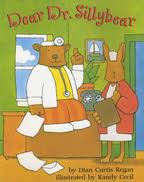
Many years later, as we unpacked from a move, both of my sons searched frantically through piles of boxes. My youngest found his treasure; Dear Dr. Sillybear by Dian Curtis Regan. And our teenager let out a sigh of relief as he clutched a book to his chest. Right along side collections of Hank the Cowdog and military histories, The Very Busy Spider still remains in my oldest son’s room.

With all due respect to Mr. Carle, did I mention I still cringe every time I see that book?  It’s a love-hate thing.

Killing Me Softly


POST CARDS FROM THE MUSE

Killing Me Softly

It’s that song!  You know the one I’m talking about.  When you hear it on the radio it commands your attention and pulls you in, ears first, then your head, followed by your soul.  It’s the words, the tune, the voice, the chords.  There’s just something about that song.

Music is a wonderful place to find a story. It’s not always obvious, in fact sometimes you have to dig for it.  But you know it’s there.  It’s hiding between the words and the notes.

Over and over you listen to the piece and over and over you fall into the score searching for the real story behind the lyrics. A single phrase fogs your imagination further and the mystery grows deeper.

Listen closely to your music and piece together the story.

Congratulations! You have just received a post card from the muse.

Nandy Ekle

Writer Appreciation


Reasons To Write

Why do I write? Is it because throngs of fans demand it, anticipating every word of my next masterpiece? Is it because I honestly expect to make millions of dollars on a bestseller, or desire to be famous? No.

This week I will share with you reason number 4 of why I write.


Reason #4 – Writing helps me appreciate other writers.                                              

Having put my hand to the mighty pen and wielded the awesome power of a fine writing instrument –well ok, I used a computer—I have come to appreciate other writers. While I have not read the writings of every author whose name is attached to a poem or printed on a glossy cover of a book, I can honestly say that I appreciate their work.

No matter the genre, the fact that they took the time to write down their thoughts and ideas is truly amazing.

Consider a few things it takes to succeed in writing:

The idea – Having an idea that draws someone into the writing, then takes that person through a meaningful journey and places him at the end, and having them enjoy the experience is a monumental task. Many of us wish we had an Idea.

Commitment of time – Alas, writing is not like a pyramid scheme, which claims to allow a person to make millions of dollars with only five minutes invested each week. No, writing takes time. Constantly learning the craft of writing, doing research on materials, then actually sitting and writing takes dedicated time.

Persistence – Many who start writing become discouraged through the process of continual critiques received and the re-writing which must be done during the process. Keep writing, use these things as learning tools and don’t give up, consider it as fine-tuning.

Yes, I appreciate other writers, both the famous and unknown, because they wrote.

Rory C. Keel

Ambushed


Ambushed

I’m fortunate to have four of my five sisters living here in Amarillo. Once the repairs were completed, they came over to help me move the furniture into place and make the place a home. Sister #5 has a flair for interior decorating and she’s not shy about letting you know she doesn’t like your ideas. I spent time drawing room layouts to scale just to make sure everything would fit and she didn’t like it. When I left the living room, Number 5 rearranged a section to her taste. Then she started on my office.

Now don’t get me wrong. I appreciate her efforts. I’m not the best designer, and she has good ideas. I’d even admit I like her placements better, but I don’t want to give her a big head. Still, she could have asked about moving the television and chair instead of greeting my return with the finished product. Honestly, the room looks great, so I will overlook the ambush.

As writers, we need to be open to a different perspective on our work. Face it we are too close to the piece to always be objective. “My mother loves it,” is not a critique. Mother loves you and will gush over your story. You need unbiased reader or a critique group. I’m have both. My reader is honest but fair, and I have the best critique group around. These folks allow me the chance to step back and take a critical look at my project. Have I left out vital information? Does the current scene contradict a previous scene? Are my characters always acting appropriately? Often they are correct in their assessments, but they are never cruel and always willing to discuss their suggestions. We do not always agree, but I have fresh ideas and the opportunity to accept or reject their viewpoints. They respect me and my talent, and in turn, I respect them.

Not all readers or critique groups are good. Unfortunately, some writers are more focused on “rip it apart” instead of “can we help make it better”. Look for writers with personalities compatible with yours. You want and need support and advice, not slash and burn. Remember, you are not married to your group. If it’s not working out, you can and should walk. Do not give up on finding the individual or team to help you be your very best. Better to receive criticism from people who care about you and your manuscript than be ambushed by an agent or editor.

Cait Collins

Echoes of the Day


POST CARDS FROM THE MUSE

 Echoes of the Day

“I saw her again today.” You hear this uttered between friends.  You’re not part of the conversation, but the phrase works its way into your ears as if it was aimed there. The rest of the day you walk around repeating it over and over. You have no idea who “she” is or when the last time “she” was seen. But the words echo through your imagination until you develop some sort of picture and story.

Sometimes just a simple phrase will catch your attention and stay bouncing around your brain. You listen to it whisper inside your head over and over and marvel at the sounds and meanings of the words.  You consider all the different things it could have meant. Eventually you realize that there are as many stories as there are meanings of the phrase.

As writers, our job is to find the story that best fits the meaning of the day’s magic phrase.  When such a story is discovered, use the provocative phrase as your starting sentence and watch the rest of the story appear on your page.

Congratulations!  You have just received a post card from the muse.

Nandy Ekle

“Put feet to your dreams.”


“Put feet to your dreams.” –Jodi Thomas

by Sharon Stevens

I took my first creative writing class at Amarillo College in 1993 with the encouragement of a friend, Connie Hirsch. The class was taught by Jodi Thomas and DeWanna Pace, not only teachers but authors in their own right. I was surrounded by every conceivable genre known to man…or woman…or beast as the case may be. One gentleman was a Civil War buff, one lady historical romance. There was a man who was writing a book on the murder of his daughter by her husband, but also wrote the most moving stories of his family during their time in a hospital ICU. You could tell there were some serious writers as well as those who wanted only to publish the great American novel bypassing the work it took to get there, obviously impatient with the entire process.

I didn’t fit into any niche. My passion was not to write a novel or publish a book. I just wanted to set down simple family stories into a tangible medium to preserve from my generation to the next.

Connie had told me that the first night they used a writing exercise about coming across a single shoe and telling its story. The wonderful thing about Jodi and DeWanna’s class is that you never had to read aloud if you didn’t want to. You could just listen to the other stories and share if you wished.

I never wished. I agonized over my story again and again. I knew what it entailed and where the characters were led. I understood the dynamics and shared the pain and the joy involved with my lost shoe. But I never could finish. There was something so painful in the memories that led up to the shoe being lost. These weren’t ugly memories per se, and there was love involved within the family so it wasn’t a pure loss. But for some reason my thoughts made me cry and tugged at my heart. Maybe because I knew the ending ended with sweetness, or that I knew it would never end that way, could never end that way, should never end that way.

I have written so many stories since that first night of class, wonderful, joyous celebrations of community and heritage. Surrounded by family and friends my heart has been full as I witnessed kindness and care, but also ugliness and stupidity with bullies and charlatans galore. I have seen true acts of faith and patriotism coupled with treason and discrimination, all in one day. Each and every one has found a place in the thoughts I put down on paper.

Over all I have taken three separate creative writing classes from Jodi. I joined the Panhandle Professional Writers, attended several Frontiers in Writing Conferences, submitted articles for publication, some published, most not, and was one of the co-founders of the Jodi Thomas Fan Club with friends Connie Hirsch and Natalie Bright. I shared “Sowing Jodi” with Claudia Wilson as she and her husband traveled around the country as park host, and visited local libraries to celebrate the books of Jodi. I wish I could list all the others who have crossed my path on my writing travels, but it would be endless.

I also can’t tell you how wonderful it is to celebrate the journey of Phyllis Miranda and Linda Broday as they come into their own right with their “Give Me A Texan” anthologies along with Jodi and DeWanna. At the recent book signing for the launch of their latest anthology, “Give Me A Texas Outlaw” at Barnes and Nobles in Amarillo, DeWanna shared with me that August would be celebrating thirty years since she and Jodi took their very first creative writing class together at Amarillo College. As I watched Linda, Phyllis, Jodi and DeWanna sign book after book and visit with fan after fan I was overwhelmed. Never once, not once in all the times I have known these wonderful ladies have they been unkind, or impatient. They have answered questions, shared tips and celebrated the success of every writer who crosses their path.

I may never finish the story of the lost shoe. Jodi and DeWanna understand. But you can bet if I do complete the memory they will be the first to give kudo’s.

My shoe was lost by the side of the road. It was real, it was tangible and it was there, and will remain there until I am ready to go back, pick it up, and place it among my heirlooms to treasure. After all its only one shoe. I realize now that Jodi and DeWanna share the other.

Congratulations on their journey!  Sharon Stevens

Writing Improves Your Skills


Reasons to Write

Why do I write? Is it because throngs of fans demand it, anticipating every word of my next masterpiece? Is it because I honestly expect to make millions of dollars on a bestseller, or desire to be famous? No.

This week I will share with you reason number 3, of why I write.

 Reason #3 – Writing improves your skills.

“Practice makes perfect!” I knew there had to be a reason the teacher made me write my spelling words three times each in grade school. There were a few other lessons I learned while writing words multiple times on the chalkboard, but I will spare you from my youthful indiscretions. Yes, the more a person writes the more they learn and the better they become at the craft. Even those who have a level of natural ability will continue to show improvement with every word.

Use of Tools

There are a few basic tools that you will need to help you get started.

  1. A Thesaurus and a Dictionary will help to insure the proper meaning and usage of words, improving your vocabulary.
  2. The Chicago Manual of Style, or Strunk and White Elements of Style, will aid in punctuation and sentence structure. Over time you will notice a marked improvement in your writing.
  3. Use Encyclopedias found online or at your local library, to research your project. It will naturally results in an increased knowledge of that subject and improve your reading comprehension.
  4. A computer with a word processor program, and certainly, pen and paper are still terrific to use for jotting things down.
  5. Find a comfortable writing place.
  6. Then start with an Idea and write it down.

How do I know these points are true? I’ve come along way since the first grade, A-B-C-D-E-F-G . . .

Rory C. Keel

Researching the West


Researching the West

By Natalie Bright

Tucked away on a little side street in San Angelo, Texas, a quaint bookstore is filled with hard to find books, the majority of which are westerns.

The owner of Cactus Bookstore was a personal friend of the great western author, Elmer Kelton. The store features an extensive collection of Kelton from used trade paperbacks to pricey autographed first editions. I asked him if Kelton had ever written a how-to book on writing. He said, “No, but I have this.” He handed me a cassette tape, 90 minutes, featuring two of Kelton’s keynotes from 1989. Marked down half-price, I grabbed it, and what a treasure. While it’s short on specific technique, it’s long on wonderful stories and quotes from the people who crossed his path. Kelton also shares his personal favorite western novels, and includes insightful background on creating unique characters.

I already own one of his recommendations: the most realistic account he knows of for a cattle drive, THE LOG OF A COWBOY by Andy Adams. Published in 1903 by University of Nebraska Press, I found this well-worn book at a used book store in the Dallas area.

For an entertaining read, it’s a little dry, however historians and writers will love it. Written in first person narrative by a young man who moved from Georgia to Texas after the Civil War, the specific details are invaluable. For example, here’s an excerpt about a sale which took place between Mexican vaqueros on a March day at the Rio Grande.

Here he explains the important count after the herd was transferred across the water. The cows were strung out between four mounted counters; a Mexican corporal, a US Custom House gov’t man, the drive foreman, and a drive hand. “…the American used a tally string tied to the pommel of his saddle, on which were ten knots, keeping count by slipping a knot on each even hundred, while the Mexican used ten small pebbles, shifting a pebble from one hand to the other on hundreds.” The story continues with two men agreeing on the same number of 3105 head, one man came one under and another came one over. The deal was sealed that night over dinner in Brownsville.

I’ll be blogging more about my prized Elmer Kelton tape. Thanks for following Wordsmith Six blog!

Rest in Peace Harry Potter


Rest in Peace Harry Potter

 An era has ended. The final installment of the Harry Potter series hit the theaters making even bigger mega bucks for the franchise. That’s fine as I enjoyed every movie. With HARRY POTTER AND THE SORCERER’S STONE, a ten year journey began for my nephews and me. One was seven and the other twelve when the movie came out. I bought the tickets and the boys bought the snacks. This was our tradition for each movie.

My eyes misted as we left the theater following the DEATHLY HALLOWS Part II.  My nephews are now college students and fine young men. Watching the guys grow up fascinated me. One year they were kids with wide-eyed wonder and dreams.  Now they are fine, talented young men setting goals and focusing on the future. I’m honored to have had these special moments with them.

Just as my nephews grew up, so must our characters grow and change. When the story opens, the protagonist faces a problem. As the tale progresses we learn what he is willing to do to solve the issue. How disappointing it would be to finish a novel or leave the theater knowing the protagonist never learned anything from his hardships and life journey. In the end he is the same self-centered, weak individual we met at the beginning. What a waste of time, money and effort. Chances are you would never again invest in that author or screenwriter’s work.

Writers also face growing pains. The first short story or manuscript may be rough, but we send it out hoping our efforts will attract the attention of an agent or editor. Too often we are met with scathing rejections or at the very least polite form letters. The true writer does not quit. He keeps on producing work, honing the skills necessary to achieve the ultimate goal of publication. Then there are the writers who refuse to listen to critiques and continue making the same mistakes. They stagnate and die without ever realizing the goal.

My advice to all writers is simple; take advantage of opportunities to learn more about the craft of writing. Enroll in writing courses at a local college. Find a writers group and get involved in the meetings and activities. Attend writers’ conferences. Practice the art of networking. Accept one very hard fact; you may never have your work on the shelves in a bookstore or see your name on a movie screen. Even if this is your reality, the journey is worth the effort.

Cait Collins