CHOICE


CHOICE
by Sharon Stevens

Recently a news journalist remarked that this was a wonderful time to be a reader, with books, magazines, libraries, bookstores, I-Pads, the Internet and so on.

I beg to differ. I don’t think there is any better or more glorious time in the history of our world than to simply be a writer.

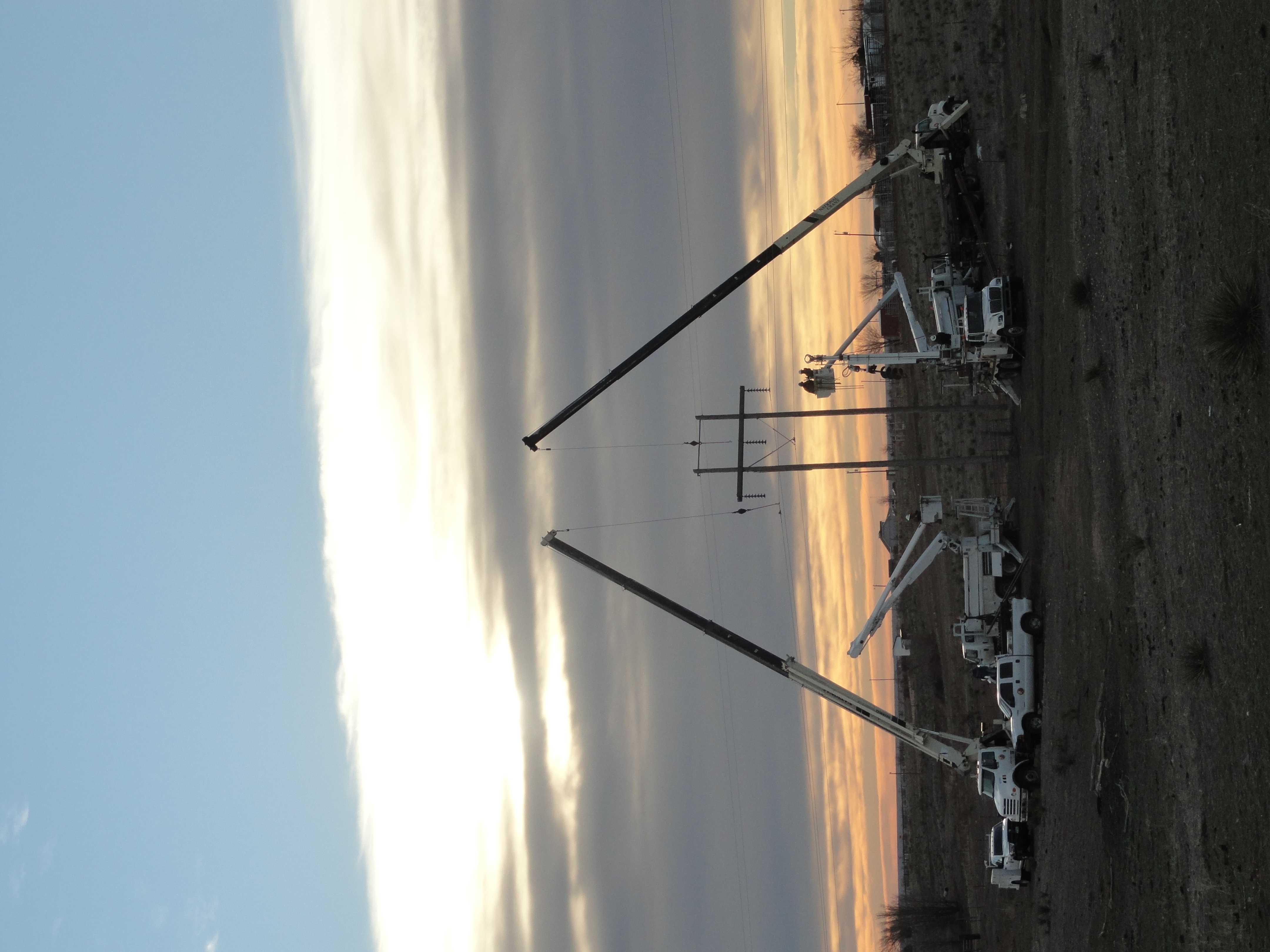
Let me give you an example. On the way into town one morning, I passed a work crew on our neighbor’s land replacing electric poles of the “walking giants.” They were silhouetted against the morning sun and I could just make out the men and women getting into their safety gear, ready to climb into the buckets of their “cherry pickers” in preparation for the assent to the top of the poles.

I got out of my car to snap a quick picture and took just a moment to contemplate the scene before me. For a writer, this pastoral scene was simple and straight forward. But with a flick of my imagination I could conjure up any number of plots and characters. There were so many choices open to me on both sides of the grid requiring no human contact at all. My story could lead in so many different directions and avenues. I could use any emotion or genre of my choice.

My 1890 Webster’s Dictionary defines choice in so many ways. “The act of choosing, the voluntary act of selecting or separating from two or more things. The thing chosen. The best part of anything. That which is preferable and properly the object of choice.”

Again, as a writer, this puts the dilemma right in front of me, making it almost impossible to tackle. Or it does for me.

For instance, I could write a drama regarding one of the men being so distracted with troubles at home, putting the lives of his fellow workers in danger. Or I could pen a romance of the electricians and engineers erecting poles with hard muscles, strong spirit, dedicated heart, and with faces that exuded masculinity or sexuality in their smile, through eyes etched with desire that could look deep into your soul.

Or maybe I could write about safety, including hard hats, or lifelines, or anchors to the ground such as those about safety first that fellow Wordsmith Six blogger Natalie Bright wrote in her book Oil People. What about tragedy and the loss of friends on the job, senseless acts, terrorism on a national scale, shutting down the power grids all across the country. I would have to do a lot of research, but it’s doable.

On the one hand I could write about the power conglomerates tearing up the land, killing the environment, gobbling up natural resources. Or maybe I could choose to focus my story on the hawk I witness every day on my way home from work that settles on top of one of the cross bars of the electric pole just high enough to survey his domain as he looks for a tasty meal from his lofty perch.

What about cattle ranches and farmers? Each pole the power company erected was across generations of neighbors’ land on both sides of the spectrum. I could write about the power companies taking Eminent Domain, growth hormones, Mad Cow disease, PETA, or vegetarians. Or I could write about Molly and Charles Goodnight and the Goodnight-Loving Trail, John Wayne, saving the environment, the beef industry, steaks sizzling on the grill for an outdoor cookout, hamburger sliders at a tailgate party for the Super Bowl.

And where would we be if there was no electricity or fuel to run the tractors, the cotton gins, and the grain elevators. Without this most basic commodity farmers would not be able to feed their neighbors, their families and their friends here in the community, but also throughout the world.

And then there is politics. I could choose any debate on the energy crisis, oil embargoes, foreign oil, offshore drilling. Or I could write about how thankful I am that Franklin Delano Roosevelt worked so hard for us to have rural electric power that runs our water well, the microwave, the washer and dryer, the lights, the heat, the air-conditioner, the refrigerator that keeps all food and produce at the peak of freshness, and of course, last but not least, our T.V.

But I am also intent on sharing the story that electricity levels the playing field for all businesses, corporations, and CEO’s, that reach from the tallest sky scrapers down to the littlest mom and pop shops alike.

The sky remains the limit for me or any writer worth their salt. I could undertake a screenplay, a stage play, a murder mystery, non-fiction, horror, science fiction/fantasy, westerns, children’s book, or even a song lyric. “I am a lineman for the county,” as Glen Campbell would sing. And if my little heart desires I could find a place for vampires, werewolves, blood sucking aliens, or energy guzzling robots. And how easy it would be to connect and pay tribute to all that protect and serve against all forms of those who spew evil in every walk of life.

So many choices, so many avenues, limitless possibilities.

After staying to watch the men work to link the cables that stretched from one end of the earth to another I knew I had to get to town. I took one last glance and climbed back into my car. My heart was heavy with the magnitude of decisions I would have to make. Once I left this place I feared the memories would dim. But as I turned my eye I caught the reflection of the breaking sun. The brilliance burst across the horizon through the clouds. I knew I had my answer. I could choose to write about the worst of society, the ills of mankind, the stupidness of humanity at large, or I could go with my first impression.

What I first witnessed in my heart and soul when I saw the framework of trucks embracing the giants was the Holy Trinity…the Father, the Son, and the Holy Ghost, and encircled within was the symbol of the cross. I could see the light of the Spirit rising above the scene with all of His majesty. I pictured the fields and the pastures and all the creatures below enveloped in the warmth of His gentle embrace all across the land.

And that leaves me with MY definition of “choice” from Webster’s Dictionary, “Holding dear, selecting with care. Worthy of being preferred, select, precious, very valuable.

And I knew at that precise moment what I would write.

No question, this is truly a glorious time to be a writer!

Sharon Stevens

By the Book


Outtakes 27

 By the Book

I admit to being a stickler for rules. If I’m told “no exceptions”, I don’t ask. If my manager says an hour of overtime per day, I rearrange my schedule. If my assignment is due on Friday, I’ll have it done by Thursday at the latest. I find I land in trouble when I don’t read and follow the rules. Case in point; I didn’t read the rules on a slot machine and cheated myself out of money.

I’m not a big gambler, but sometimes I enjoy playing the slots or a little Black Jack. Recently, three of my sisters and I drove to Wichita Falls, Texas, to celebrate our older sister’s birthday. Part of the celebration was a trip over the border to a small casino in Oklahoma. The place is not big enough for Craps, Black Jack, or Roulette. Their staple is slot machines. I sat down at a penny or nickel machine, loaded it with a twenty dollar bill, and hit spin. Had I read the “about this game” information, I would have realized I won a bonus round on my first spin. I kept racking up points until I did not make the minimum for the round. Instead of cashing out, I played off the bonus credits. I did have a nice sum when I cashed out, but had I read the information, I would have made more money.

The same goes for submitting your work to an agent or editor. Agents and editors are truly busy people. They cannot read every manuscript, so an author must do their homework and make the submission shine. Check the website for submission guidelines. Keep in mind, these are not suggestions, they are actual rules to follow when sending your work. Some agents or editors will request a cover letter, synopsis, and the first three chapters. Check for the length for the synopsis. The agent may want a maximum of three pages, or perhaps one page. Please do not send ten pages. You will not be read. If the guidelines say three chapters, do not send the entire manuscript.  Make sure you spell the name correctly. Check for the genres the agency represents. Whatever you do, do not submit your erotica to a Christian publishing house.

There are some basics to follow. Standard font and type style is Times New Roman or Courier New 12 pt. Script is impossible to read, and fancy fonts are not professional. Use a good quality bond paper. White only! I’ve disqualified contest entries because the submission was received on gray or baby blue paper. Margins should be one inch all around, and the type should be on one side only. Use black ink. Pink or purple may be your favorite colors, but editors will not appreciate your creativity.  Double space your manuscript. Do not include your photograph, your child’s picture, or a puppy photo. The agent will not be impressed. Proof read. Proof read. Proof read.  Ask a friend to proof read the submission for you.

Remember, writing is a business, and rules must be followed. Want to know more about writing for the editor? Check out the Panhandle Professional Writers’ website at pandhandleprowriters.org for information regarding the Frontiers in Writing Let’s Write Weekend, June 29-30, 2012 in Amarillo, Texas. Hilary Sares, former acquiring editor for a New York publishing house, will present workshops on meeting editors’ expectations. Y’all come. We’d sure like to meet you.

Cait Collins

Children’s Genre


Children’s Genre

What genre does your writing fit into?

This week we will explore the genre of children’s writing.

Have you ever read Where the Wild Things Are or Curious George? What about Dr.Seuss or Hank the Cow Dog? Then you have a good idea of the type of writing that fits into the children’s genre. Written for small children ranging from the littlest tykes to eleven years old, these books contain simple words and characters of animals or other young children.

As with most genres, there can be several subgenres.

Juvenilia are works written by the author in their childhood.

Early Readers use simple syllable words to help children learn to read.

Middle or Junior Readers also known as Chapter books, are usually longer books that use more involved wording.

Picture Books have bright and colorful illustrations, and have minimal printed text.

Pop-Up Picture Books are written with three-dimensional pop-up pictures that open when the pages are turned.

Traditional Stories are older stories such as fairy tales and fables told in a simple form and illustrations.

The children’s category is a fantastic genre where kids learn to read, dream and develop their imagination.

Rory C. Keel

Getting the Facts


TRAILS END – The Novel

Getting the Facts

Last week I wrote about continuing to improve our abilities, and to learn new skills, even as we age. I attended the Team Roping school taught by Rickey Green, and would like to share a little about that experience.

In sports or any profession, there are individuals who completely change the standard methods in use. In his era, Ricky revolutionized the excepted way of roping the back feet of a steer, and left his competition behind. Everybody had to change what they were doing to catch up, because his ideas worked better and faster. After slowing down from full time competition, he then devoted himself to teaching others to rope. In the same way he competed, he so improved the process of instruction that he is today considered one of the best clinicians in the business.

If you want to improve your skills, in whatever field, you need to learn from the people who have made a living at doing it. Not someone who has made a living at teaching it, but someone who was successful producing income from it. Then you have to be sure that person is capable of instruction. This takes a lot of effort to develop. I’ve known World Champions who couldn’t teach you how to tie your shoe.

In the story of TRAILS END, Jim Barnes is that very type of person to teach Donnie Williams how to ride broncs, and how to win. But is the veteran bronc rider a good influence for the young and impressionable kid that worships him? I hope you will be interested to find out.

I would like to thank Rickey Green for a great positive experience. I wasn’t able to put the information to use during the school, but I’m confident I now have the tools for success. Thanks also Rickey, for making the learning fun.

Thank-you all for reading,

Joe

Why Do I Write


POST CARDS FROM THE MUSE

Why Do I Write

From time to time I run across a writing exercise that asks the question, “Why do you write?” I have read other people’s answers, and they are as varied as face shapes. Some people write to make money, some write for release, some write for therapy.

I thought about my answer. Why do I write? I write to tell a story. I write to connect with people. I write for the fun of it. I write because I can’t stop. However, I think my favorite reason to write is the rush I get from creating. I love to sit with my hands on computer keys and my eyes pointed at the monitor. I get a thrill to feel a rush of words flow from my brain to my hands and then onto the screen. I get a little giddy when I come out of my “zone” long enough to realize that several pages have appeared and I had no idea I was even doing anything.

So, why do you write? Do any of the reasons mentioned above describe you, or is there a new one?

Congratulations. You have just received a post card from the muse.

Nandy Ekle

TEXAS


TEXAS
by Sharon Stevens
by Paul Green
Act I
Scene I
(With Choral Overture)
The evening star hangs like a liquid ball of fire trembling above the canon’s rim in the amethyst summer sky. As the night deepens, it descends and goes on down and out of sight. The amphitheater lights fade into darkness. Far up on the rim of the high canyon wall at the rear a single trumpet sounds a call-The first two phrases of the old cowboy song, “Oh, Bury Me Not on the Lone Prairie”.
A halo of light comes on up there revealing a Texas Ranger seated on his horse with a lifted trumpet to his lips. The call is repeated, then the light dims down on him and his horse somewhat. The rattle of a drum begins as if under the very feet of the horse and comes down the canyon wall toward the audience in a growing avalanche of sound, building with the timpani until the whole amphitheater is enveloped in a thundering turmoil of musical tempest.
The tumult deluges the audience for a moment, then like a great ocean wave begins receding, passing backward and up the canyon side and diminishing as it goes, finally to merge itself into the ranger’s trumpet call again as the light brightens there. This time the call concludes with the last two phrases of the above song, with one repetition only.
After an instant of pause, the light dies out from the ranger and his horse.
The above passage comes from the actual script of the musical drama TEXAS. What thoughts must have been running through Paul Greens mind as he contemplated the letter sent by Margaret Harper inviting him here. She had read the article about him in the July 1960 edition of the Readers’s Digest. After an evening shared with her husband Ples, and Margaret and William Moore, professors at WTAMU, they sent the note to invite Green to come to see what he thought about writing a play for Palo Duro Canyon.
Green responded quickly with excitement and to inform them of his expenses, but also asked if they could send him information about the area so he could begin to gather ideas of the struggles and joys of the panhandle settlers.
Of all the plans made from that day forward I am sure the hardest had to be with that first step. The Harpers and the Moores knew not only the Greek philosophers, and Shakespeare but George M. Cohan. They also knew and had read Loula Grace Erdman and J. Evetts Hayley as well as all the other local authors from here to Dallas. Phebe Warner and Laura Hamner, founders of the Panhandle Professional Writers, one of the oldest continuous writing groups in the nation, were established writers in their own right, and probably found their way into the mix.
How do you choose? How do you fathom? How can you condense buffalos, American Indians, faith, cattlemen, farmers, merchants, families, and everyone in between in one package? What do you think will be important in the thoughts of a man a thousand miles away as he begins to form the basis of the heritage and civilization of the panhandle of Texas? What will tell the true story of the ancient understanding of man versus man, man versus nature and man versus himself?
Paul Green was a Pulitzer Prize winning author with several shrine dramas under his belt. “The Common Glory” and, “The Lost Colony”, were just two of the many sagas he had helped bring to the stage. What was important to him as he began to form a picture in his mind of the canyons, the people, and the wind, the ever draining wind?
 So many times as I sit down at my computer I am totally overwhelmed with what faces me. I am not afraid of the blank screen. I am petrified of the billions of words that will fill it up. There are so many stories and plots, people and struggles that share white space. How can I tame them down, and share their memories with the respect they truly deserve without getting mired in the rhetoric sure to follow.
There is no magic formula, no book on writing, no critique group that can cure this dilemma. The only relief is to write and read, and read and write again, and again, and then again, always tightening, cutting, adding, and deleting until the words make sense.
And this is why we write.
I am sure Paul Green was faced with this insurmountable task when he received the package from Canyon Texas. He knew to fulfill his mission he had to do justice to the characters found within the pages of the mountain of materials from the post office. When he visited Palo Duro Canyon they say he jumped from rock to rock, always with pen in hand, to hear where the echo sounded the best off the canyon walls to complete his manuscript. I am sure he stopped to listen and to see if he could hear the sound of a thundering herd of buffalos, or the yip of a coyote, or the screech of an owl, or a whisper of the wings of a hawk or a field lark, or a mockingbird. No doubt he witnessed the majesty of our sunrises and sunsets painted by The Master himself.
Every year when I am sitting in the audience of the Pioneer Amphitheater and follow the music and hear the overture signaling the opening scene I am reminded of the words condensed and written in the actual script by Paul Greens own hand…The rattle of a drum begins as if under the very feet of the horse and comes down the canyon wall toward the audience in a growing avalanche of sound, building with the timpani until the whole amphitheater is enveloped in a thundering turmoil of musical tempest.
If only my words could talk like that!
Sharon Stevens

Three Lawyers and a Judge


Outtakes 26

 Three Lawyers and a Judge

I just spent four days on jury duty. Now don’t misunderstand me. I don’t enjoy jury duty. I have issues with the hurry-up-and-wait situations. I read James Patterson’s 10TH ANNIVERSARY on the first day. That gives you an idea how much idle time we had. I also hate being away from the office. It just takes so long to catch up. That said we should be thankful for our jury system. Not many countries allow trial by jury.  Most defendants or respondents will never know what it’s like to be judged by their peers instead of magistrates. As inconvenient as jury duty is, it is the best system around. It also provides some spectacular inspiration for a novel.

Take this case as an example. We were not hearing a criminal case. Ours was a civil matter, and the rules were different. The jury was comprised of 6 jurors and an alternate, all novices except me. In fact, my experience as a foreperson is what landed me on the panel. Instead of a reasonable doubt, we judged on the preponderance of the evidence. We did not determine guilt or innocence, but answered yes or no to the questions on the charge. A yes response was in favor of the State of Texas; a no vote favored the respondent.

While there were some characters on the jury, the real players were the judge and the three attorneys. The attorney for the state was knowledgeable but arrogant. He felt we did not need medical reports and tons of pictures; we should believe the witnesses because they were professionals from law enforcement, vets, and accomplished dog trainers. Never mind the fact the humane society left the property with all the pictures and the sheriff hadn’t seen any of them until closer to trial. We just had to believe the state’s case.

In contrast, the respondents’ attorneys offered expert testimony, but they had photos released on the internet, medical records, invoices, and pictures of all those lovely registered dogs. They were more low keyed, soft spoken and respectful. They appealed to our common sense and logic over emotions. It was only when the State’s attorney tried to introduce a statement from the respondent that I saw the fire from the lead counsel for the respondents. He and his attractive co-counsel demanded, “May we approach, Your Honor?” They covered the distance between the counsels’ tables and the bench quickly. The word mistrial was whispered before the judge asked the jurors to take a break.

Finally, the judge acted as moderator between the opposing sides. He smiled a lot,  spoke softly, and continually thanked the jurors. He didn’t take sides, but effectively ruled on the objections,  never favoring one side or the other. His judgments were based on the law. I respected him.

Now, let’s put the characters together in a totally different situation. In place of a quiet civil action we are in the middle of a high profile multi-count criminal trial. The defendant is the son of a mob boss. The state’s attorneys maintain their soft-spoken demeanor. The defense attorney hammers away at the state’s DNA expert. And then…

Now you finish it.

Cait Collins

Where do you belong?


Where do you belong?

Where does your writing fit in the world of genre?

A genre is a “category” of literature or other forms of art and culture. Knowing the answer to this question will be a great benefit in every area of your writing.

Here is a list of the major writing genres: children, fantasy, horror, mystery, romance, science fiction, short fiction, thriller, westerns, young adults, mainstream, nonfiction. Within each of these groups there are multiple sub-genres.

You will find that your thoughts will be more focused when you write if you understand the genre where your project best fits. You will also have a greater chance of success when seeking the proper agent for representation. Remember that not all agents represent every genre. When submitting your work directly, choose a publisher that best fits your writing. Research the company to understand what genre they represent to ensure greater chances of publication.

To help you discover which Genre fits your writing best, we will explore each category in future weekly blog posts.

Rory C. Keel

Creating History for Fictional Characters


Creating History for Fictional Characters

By Natalie Bright

“I’m not quite sure what I feel is missing.” This from an agent who had requested my middle grade novel. “It doesn’t feel fully cooked yet.”

What’s missing? This character has haunted me and has woken me up nights for almost a year. My critique group had critiqued every word, phrase and scene. They loved it! I posted this agent’s email on my bulletin board and studied them over and over. All the while this character keeps clogging my brain. She’s ready for two more adventures and I still don’t know what’s missing.

While lunching with writer friends, the discussion turned to their small town series. One already had a contract for seven novels, and the other had plans for four with hopes of pitching her idea in the near future. They discussed the dynamics of creating a fictional town with characters that must ultimately resonate with readers. I asked them how would one keep up with all of that detail, not just who is who, but the history of how they

got there, the street layout, the minute details that bring a story to life for the readers?

Their answer involved two very different processes, which I’d like to sharing with you here: Jodi Thomas [www.jodithomas.com] keeps all of that detail in her head. She becomes so engrossed in the world she creates, that if she writes any notes it’s hard for her brain to remember if she used that in the book or not. The town, the people, their quirks and strengths, all vividly ramble around in her amazing head. She can “see” the streets, the buildings, the characters as they play out the story. While she’s writing one book, her brain is working out details for the next and the next. Her character’s reactions and personalities chart the course.

Phyliss Miranda [www.phylissmiranda.com] begins with extensive research on her location and develops detailed characterizations. She charts a family tree for her characters, going back several generations. She writes detailed descriptions on what they look like, their good and bad habits, their favorite foods, childhood experiences, etc.

Both agreed that giving your characters a history is very important. I replied that my main character is only eleven, so she doesn’t have much history to tell. Their response was a rapid-fire line of questioning: How did her father and mother meet? Where was her mother born? Why did is her father a US Marshall? Where do her grandparents live? Horrors! I had to admit that I didn’t know the answer to any of those questions.

Today, I’m happy to report my character has a history. Over the New Year’s Holiday I created family tree charts, expanded my characterizations, drew a town plat, and because I write historical, I made a complete time line on creation of the town. And the best thing, I got ideas for two more adventures.

Now, if I only had the courage to submit it again…

NOTE:  Both of these authors will be speaking at Frontiers in Writing Conference June 28-30 at Amarillo, Texas. Jodi will be talking about finding inspiration to write every day at the Friday night dinner, and Phyliss will be conducting a workshop on developing characters. www.panhandleprowriters.org click on the FiW Conference tab.

Natalie Bright

Continuing Education


TRAILS END – The Novel

    Continuing Education

This weekend I am attending a school. It is a Team Roping clinic.

I have been a cowboy my whole life and have used a rope in my occupation and for recreation since I was a kid. So why would I drive 200 miles and pay someone for this instruction? Because I want to improve. I want to be more competitive. I want to partner with my wife and catch more consistently. This will increase our chances to win, and decrease my chances of sleeping on the couch. That’s an unfounded joke, but my point is, regardless of age we should never quit trying to get better or  try new things. I’m learning to develop physical balance and inner peace, learning to invest, and learning to write.

Donnie Williams learns to ride broncs in rodeos, but the story is really about the life lessons he experiences, which shapes him into the person we see develope.

What’s going on with you? Get after it.

Thanks for reading,

Joe