Avoid the Cliché


Avoid the Cliché

by Rory C. keel

Teachers of the writing craft are unanimous about avoiding the cliché. Have you heard that one before?

A cliché is the use of phrases or expressions that are overused to the point of losing the desired effect of the intended meaning.

One example might be “Are you a man or a mouse?”

While you may want to express the level of strength or fear in your character to that of a small animal, to use this phrase would show lack of originality in your writing. Try to find other words that will demonstrate the meaning and will bring originality to your writing.

I wonder how they used to do it?


I wonder how they used to do it?

Rory C. Keel

I thought I would write a few observations. We are surrounded by such a diverse assortment of super technology. For example, we have smart phones that are so powerful they can interrupt a personal, face-to-face conversation with an individual, and allow us to talk, text and send pictures simultaneously around the globe to multiple unseen individuals.

Computers are now a way of life. They check our spelling and grammar and make learning the many beautiful loops of cursive penmanship once taught in schools obsolete. And what is a pen anyway?

We sit in dark rooms like hermits, wearing our pajamas,  tangled hair and unshaven, and faces with no makeup, and with the push of a button circle the globe. We gather information on places we would love to go, and things we want to do–if we ever got dressed and left our home.

The sun is no longer needed to determine which direction is north, south, east or west. Grown men who stubbornly refuse to listen to their zealous wives give them directions will react, without hesitation, to the soft and sultry female voice of a GPS system, accepting every command without question.

With vehicles that can automatically parallel park, the useful skills needed in backing automobiles are forgotten, and the rearview mirror that automatically adjusts to the lighting, is relegated to review our hair, lipstick, or to check for pimples.

The aeronautics industry is also awe-inspiring. The kid down the block that used to chase the other children, dive-bombing them with his remote control airplane, is still in his backyard chasing the Taliban on the other side of the world with remote war drones.

Speed has not always been a friend to avionics. The world’s fastest commercial passenger jet, the Concord, is now retired. The expense of chasing itself around the world was too high. Crossing the International Date Line, it could arrive at its destination tomorrow, and come back yesterday.

The truly amazing thing about all the technology that we experience today is that it causes us to ask questions. But the most frequent question I hear today is not, “How will we do things in the future?” but, “I wonder how they used to do it?”

As an exercise, write about a few things in your past that have changed.

Roryckeel.com

The Scrivener Corkboard


The Scrivener Corkboard

By Rory C. Keel


The Scrivener writing software by literatureandlatte.com, has a wonderful feature for those who love to storyboard called Corkboard. The way to get to the Corkboard is to first open Scrivener and look in the tool bar for a section called “Group Mode,” It looks something like this picture.

Untitled

Now click on the middle button of the three. This should put you into the Corkboard.

In this view, you can find options for your Corkboard in the right-hand corner at bottom of the page. It will look something like this.

cb2

With these buttons you can change the view from “arranged” placement of the cards to the “freeform Corkboard” which allows you to move each card around to change their order.

You will also notice a third button allowing you to set the Corkboard options, such as the size of card, card ratio, spacing and number of cards across the Corkboard.

Another way to access your Corkboard cards is through the “Inspector” button at the top right-hand corner of the tool bar.

scriv3

With a click of this button, the Inspector will open on the right–hand side of your screen and contain note sections including your Corkboard notecard. By pressing the notecard button in the inspector view, you can toggle between the notecard or a picture section.

scriv4

For even more adjustments to your Corkboard, in the Scrivener tool bar, go to the word Scrivener > Preferences > Corkboard.

scriv5

In the tool bar of this view, click on the Corkboard and you can adjust your board background colors and patterns, card line colors, fonts etc…

I hope this helps you use the Corkboard and get more out of the Scrivener writing program.

Ok, Where’s the Title?


Ok, Where’s the Title?

By Rory C. Keel


Many good projects have been written with a “working title”. That’s a temporary name given to your piece while you are still working on it. When the writing is done, you will want to give your masterpiece the perfect permanent title. Often, this can be more difficult than completing the actual piece of work.

When choosing the best title, consider these two basic points.

First, the title needs to fit within the theme of the story or work. Consider using the name of a person, place, or thing within your story. A specific kind of action that takes place in your writing could even make a good title.

Secondly, make the title easy to remember. While there are works that carry long titles, the shorter it is, the easier it is to remember. One exercise to help with this is to try and describe your story in one word. Can you do it? Consider the theme, the action, think about the people, places and things and boil the idea down to one or two words.

With this basic formula, you can have the perfect title.

Ok, Where’s the Title?


Ok, Where’s the Title?

By Rory C. Keel


Many good projects have been written with a “working title”. That’s a temporary name given to your piece while you are still working on it. When the writing is done, you will want to give your masterpiece the perfect permanent title. Often, this can be more difficult than completing the actual piece of work.

When choosing the best title, consider these two basic points.

First, the title needs to fit within the theme of the story or work. Consider using the name of a person, place, or thing within your story. A specific kind of action that takes place in your writing could even make a good title.

Secondly, make the title easy to remember. While there are works that carry long titles, the shorter it is, the easier it is to remember. One exercise to help with this is to try and describe your story in one word. Can you do it? Consider the theme, the action, think about the people, places and things and boil the idea down to one or two words.

With this basic formula, you can have the perfect title.

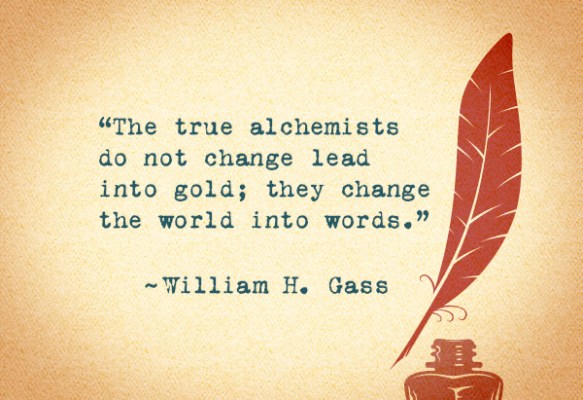
Writing Inspiration

Image


quotes-writing-william-h-gass-600x411

Why do I feel compelled to write?


Why do I feel compelled to write?

For me, it’s the past that drives me to write.

I read to know the strength and wisdom of those who have written about their past struggles, ideas and hopes for the future.

And so I write, in the hope that those who read my words and those that exist beyond my days can draw some strength and motivation for their days.

What compels you to write?

Roryckeel.com

Basic Social Media for Writers


Basic Social Media for Writers 

By Rory C. Keel


After mountains of research, hours of keeping my rear end in the chair and wearing out the keyboard, they expect me to do what?

Yes, that’s right, as a writer you need to have an internet presence on social media.

Recently, I was asked to present some basic materials about social media, to the Ranch House writers, a group of writers who occasionally gather for a meal and encouragement from others in the writing community.

This blog will be the first in a series of four, dealing with the basics of social media for writers.

What is Social Media

Simply put, social media is a varied group of internet based applications that allow YOU to create and share content.

Early in the development of the internet, most websites were static. In other words, much like a billboard on the highway, it was costly to change and no had ability to interact with consumers.

Today, social media platforms give writers the ability to create, share, discuss ideas, and publish user-generated materials.

These applications are often categorized into groups such as networking sites, blog sites, video Sharing sites and even photo sharing sites. There are hundreds of applications and Facebook, Twitter, Google +, YouTube and Flickr are just a few examples.

Will Social Media benefit me as a writer?

While there are many reasons an individual might use social media, for the writer it’s as simple as Business 101.

Writing is a business

Have you ever read the reviews of a restaurant before going out to dinner? Have you ever researched someone on Facebook, Twitter or LinkedIN, before meeting for an appointment?

It is estimated that in 2015, 93 percent of all businesses will use some form of social media. For both consumers and businesses it has become the norm and is expected.

Using Social Media

Using social media as a writer allows easy communication between you and your readers. It is a medium that allows the ability to develop relationships by having accessibility to groups where individual time is not possible.

And finally, social media allows you multiple mediums to develop your brand as a writer. By blogging, posting, tweeting, google plus-ing, you can establish yourself as a writer and build a large readership.

Next Tuesday we will discuss which social media platform to use. See ya’ then!


Meet the Author – Natalie Bright


Meet the Author  

Since the creation of WordsmithSix as a critique group, we have evolved in many ways. While every member is like family and brings their own valuable insights to the group, sometimes there are changes. Some of our members have moved on in their life’s journey, however their contributions continue to influence our writing forever. Others have filled the empty chairs and have started their journey into the world of writing.

Each member of WordsmithSix is excited about our writing journey. For the next few weeks we will dedicate a Sunday blog to letting our readers know a little more about who we are. Each author will be asked a few questions to help you understand their desire to write and what motivates them. Maybe their answers will influence you in your writing.

This week we are excited to feature one of our original Wordsmithsix members. An established Author and Blogger, her writing includes: Chicken Soup for the Mother of Preschoolers Soul “The Race”, Books – Oil People, Gone never Forgotten and West Texas Christmas Stories. You can find more about Natalie on her website nataliebright.com.

Please welcome Natalie Bright

When did you start writing?

For as long as I can remember, I’ve been scribbling in diaries or writing silly poems, and then I began to write novels in high school.

Why did you choose the Genre you write in?
The stories choose me. My vision was to be a romance novelist because I’m been a lifelong fan of the genre, but the stories inside my head tend to be more for young readers. I honestly do not have any control over the characters that wake me at night.

What’s the best thing you’ve done to help your writing?
Found a great critique group (thank you WordsmithSix!). I read a gazillion kid lit books, and reread my childhood favorites with a critical eye. Why have those classics stood the test of time? Write every day. Stop questioning the why. Joined writing organizations directly related to the genre I write.

What’s your writing routine like?
There is no routine. I have two teenagers, a day job, community volunteer work; I write whenever, wherever I can.

How do you reach that personal place that allows the writing to flow?
Butt in chair, focus and do your job. Writers must practice intense self-discipline. No one is hovering over your shoulder telling you to work. I think this is what separates the successful writers from the ones that always struggle to reach THE END. It’s an endless internal battle.

Are you an outliner?
Sometimes. Every book is different.

What has been your biggest writing challenge?
Finishing one novel before the next spark takes over.

What advice would you give to new writers?
Just like any professional in any career, learn as much as you can about story craft and the publishing business.

What’s the most positive thing you could tell writers today?
I believe it’s an amazing time to be a writer. If you have respect for the craft and can find joy in the writing, then your work will be authentic. When writers view their craft like a business and they see themselves as a professional, both traditional and indie published authors can achieve great success. We have just begun to tap the potential of eBooks and the ability to reach worldwide markets. There are readers out there waiting for your stories.

Meet the Author – Cait Collins


Meet the Author  

Since the creation of WordsmithSix as a critique group, we have evolved in many ways. While every member is like family and brings their own valuable insights to the group, sometimes there are changes. Some of our members have moved on in their life’s journey, however their contributions continue to influence our writing forever. Others have filled the empty chairs and have started their journey into the world of writing.

Each member of WordsmithSix is excited about our writing journey. For the next few weeks we will dedicate a Sunday blog to letting our readers know a little more about who we are. Each author will be asked a few questions to help you understand their desire to write and what motivates them. Maybe their answers will influence you in your writing.

This week we are excited to feature one of our original Wordsmithsix members. An established writer, she lists three documentaries, a thirteen-week local television series, commercial copy and news copy on her writing resume. She has also written Bible application stories, puppet plays, and two 15 minute plays for her church youth group.

Please welcome Cait Collins

When did you start writing?

I started writing when I was in grade school. Then I fell in love with Illya, the Russian agent from Man from U.N.C.L.E, and wrote “romances” based on the show.

Why did you choose the Genre’ you write in?

I like suspense and romance, so I began writing romance with the suspense twist. I recently tried writing memoirs of growing up during the 50’s and 60’s. My nieces and nephews have no knowledge of how different my childhood was. Some of the memoirs are for the kids.

What’s the best thing you’ve done to help your writing?

First was taking a creative writing course at Amarillo College taught by New York Times Best Selling Author, Jodi Thomas. Jodi is a great teacher and mentor. I also began attending writers’ conferences and workshops. Wordsmith Six, my critique group, is the best. If you don’t want honest critique, you don’t belong in the group. We have a rule; give the good before pointing out the weaknesses.

What’s your writing routine like?

I’m not one to force myself to look and the computer daily and get frustrated when the words don’t come. I tend to go on writing binges when my characters are talking to me and demanding I tell their part of the story. I don’t sit down after a critique session and make the requested changes. I’d rather keep going forward, and editing when the inspiration is just not there.

How do you reach that personal place that allows the writing to flow?

Silence the phone, put on some music or turn on the news (the news is easy to block out). I read a few paragraphs from the last point, and start writing. Once I get going, I don’t stop until I need a break for food or something to drink, or until the session ends itself.

Are you an outliner?

No. I make lists or do timelines, but outlines stifle my creativity. I find myself writing to the outline instead of responding to my characters nagging.

What has been your biggest writing challenge?

Coming from a broadcasting and business writing background, I find settings and details are often overlooked. When the action is moving forward, I will neglect the setting and concentrate on the action.

What are you working on currently, future?

I have a memoir and a novel I’m trying to edit and I’m actively writing book five, a suspense novel with the working title Three by Three.

What advice would you give to new writers?

Write your story. Don’t disregard the advice of critique partners or beta readers, but remember it is your story. If you think the character would not respond as a reviewer suggests, stick to your guns. If you are honest with yourself, you will be able to make the right choice between your gut instinct and the reviewers’ suggestions.

What’s the most positive thing you could tell writers today?

Opportunities are unlimited for writers. Network studios need material. The Netflix and other independents have opened doors for us. Ebook outlets are exploding. Movie studios need original material. Don’t overlook opportunities in magazine articles, technical writing, and training manuals. I truly believe we are limited only by ourselves. That said, do your homework. Learn what the media and publishers are looking for. Watch the trends in releases. And above all, be sure your formatting, grammar, and facts are correct before submitting to an agent or editor.