Putting a Slant on things


Putting a Slant on things

Rory C. Keel

When words are slanted to the right, they are in Italic. In writing, this can indicate several things to the reader.

Italic word are used to accent words with emphasis or importance. They can also indicate book, magazine or play titles, even words from a foreign language.

Standard practice when writing of typing a manuscript is to underline the words to be Italicized.

PROMOTE YOU: Write More!


PROMOTE YOU:  Write More!


“As you produce more books (or more stories or content of any kind), you are likely to grow your audience or reach more readers. And this in turn naturally leads to more followers on social media.”     — JANE FRIEDMAN

No question about it, it’s up to you, the writer, to produce more of your content. Why advertise a store with nothing in it? That’s why I’m always seeking new ways to work my life around writing time. What an uphill battle!

This past week, I read: “The 8-Minute Writing Habit: Create a Consistent Writing Habit That Works With Your Busy Lifestyle (Growth Hacking For Storytellers #3)” by Monica Leonelle  

Book Review:

For an indepth look at why you’re not producing more words like you think you should, add this book to your writer’s reference library and beware—Leonelle doesn’t care about stepping on toes. She tells it like it is and bluntly explains how to change your mindset. This book will give you several great soul-searching moments.

Here are two passages that really hit home with me:

1)            “butt-in-chair” … “this is officially the worst advice ever unleashed on poor, unsuspecting hoping-to-be writers.” Monica Leonelle

2)            “Right now, you are probably pitting your writing goals against all the other important things in your life, and writing is losing every time. The trick is to stop pitting them against each other.” Monica Leonelle

Trying to push myself to make time for “butt-in-chair” has definitely caused me to resent the reasons I can’t spend more time writing. How about you?

From two teenagers who are always hungry to day-job obligations that run into early evenings spent at the office, I’m grouchy and frustrated, wondering why bother to finish a novel that’s buzzing my head. I’m not telling you anything you don’t know, but what a great new thought process: can I make writing the most important part of my day instead of the feeling like everything else is keeping me from my writing? As Leonelle says, “…you have to integrate writing into your life.”

She definitely gave me some food for thought. I have so many ideas for stories and there is only 24 hours in a day, but I’m not dead yet! Maybe it’s time for a mindset change. My writing is just as important as day-job deadlines and cooking dinner. Moving onward…

REF: Leonelle, Monica. The 8-Minute Writing Habit: Create a Consistent Writing Habit That Works With Your Busy Lifestyle (Growth Hacking For Storytellers #3) (p. 2). Spaulding House. Kindle Edition.


The Dog And the Leash


POST CARDS FROM THE MUSE

The Dog And the Leash

By Nandy Ekle

I took part in a survey recently—one question, intended to make you think introspectively: name one thing you wish you could bring back from your childhood. This question definitely did get my brain cells working.

I started thinking about what kind of child I was. And then a story bubbled which gave me my answer.

Once upon a time, a girl had a dog. This dog was very energetic and very powerful, and the girl had to learn to control it. She clipped a leash to its collar and they went for a walk. The dog wanted to run and play, and he wanted the girl to run and play with him. But he was big and strong and the girl usually ended up huddled in a corner with a skinned elbow or a tear in her jeans.

But she couldn’t get rid of the dog because he was her constant companion. He went everywhere she went. He slept next to her at night, got up and went to school with her in the morning, came home and ate dinner with her, took baths with her, and then went to bed with her every single night.

And every day she took him for a walk on the leash. She learned to tell him no, that she didn’t want to run. She pulled on the leash to slow him down when he went too fast. And she yanked the leash if he tried to run after a bird or a rabbit.

But she also gave him treats. She bought tasty things for him to chew on. She gave him his favorite snacks. She scratched him behind the ears and made sure he had plenty of healthy food and water.

One day she took her dog out for a walk. She took hold of his collar with one hand and held the leash in the other. She rubbed the metal clip of the leash on the metal loop of his collar, but she didn’t really attach them. Instead she hung the leash around her neck, held her arm out as if she actually was holding the leash, and they began their walk. And an incredible thing happened. Her dog walked as if he really was attached to the leash. He didn’t run away from her, or drag her, or jump around. He walked calmly by her side and obeyed her when she talked to him.

After a while she remembered how much fun it was when he was running and jumping, and she wanted him to do that again. So she pretended to take the leash off his collar, but he still stayed calmly by her side. It wasn’t until she began to run that the dog started running as well.

So, I’ve gone through all this to say, I’m the girl and my imagination is the dog. I’ve spent so much time and energy learning to control it, and now when I want it to run wild, it looks at me as if I still have it leashed. If I could bring one thing back from my childhood, it would be my wild and free imagination.

Congratulations. You have just received a post card from the muse.

Dracula (1931) Film Review


Dracula (1931) Film Review

by Adam Huddleston


It’s been a few weeks since I’ve posted (the craziness of Fall as arrived) but this week I’d like to make a few comments regarding the 1931 film “Dracula”. Turner Classic Movies (TCM) is going to be showing different classic horror movies throughout the month of October, and while my dream would be to watch all of them and review them, it doesn’t look like that’s going to be a possibility. However, I will blog about a few when I can.

I really enjoyed watching “Dracula” last night. Now, realize that it may not be quite as scary now as it was when it was released, but it still stands as a classic of horror. The performances by Bela Lugosi as the Count, Edward Van Sloan as Van Helsing, and Dwight Frye as Renfield were engaging and the script was adequate.

In my opinion, the strongest part of the show was the staging. Every scene was dripping with dark, foreboding dreariness. The special effects, though outdated, were still clever enough to portray the on-screen horror of the world’s most famous vampire. Although it may be a little tame by today’s standards, I still recommend watching “Dracula” due to it being a classic of the genre.

Happy viewing

Bump in the Night


Outtakes 320

Bump in the Night

By Cait Collins


It’s that time of the year when the ghosts and goblins are center stage. Witches, zombies, vampires, boogey men roam the streets. Television stations air scary movies and horror books are front and center in the books stores. I’m not a fan of the horror stuff. I don’t like being scared. And I don’t enjoy books and movies that keep me awake.

While I can take vampires and mummies, I have a real problem with living, breathing bad guys. I will never understand why I bought a copy of Helter Skelter by Curt Gentry and Vincent Bugliosi. Bugliosi was the prosecutor for the Manson trial and he knew the story of Manson’s family and crimes. That book terrified me. I couldn’t read it but I didn’t want to put it down. That doesn’t make much sense, but I’d read it until I was afraid to close my eyes. But the more Manson’s insanity was revealed, the more frightened I became. I finally shoved the book under the bed and never finished it.

This real killer was scarier than Frankenstein, Dracula, The Mummy, and a zombie apocalypse could ever be simply because he is real. True monsters are more horrifying than fictional characters just because they are real and breathing. They can be the stranger you pass on the sidewalk or in the grocery store. Maybe the monster could be a teacher, a doctor, or a cop. This kind of knowledge is enough to make me keep a baseball bat under my couch. I don’t like guns but I have no problems bashing skulls, breaking knees, or wrists. I just pray I never have to face my fear. I may talk big, but I don’t really know if I could take him or her out. It’s something I really don’t want to know.

A Little Trick


Outtake 319

A Little Trick

By Cait Collins


I don’t mind researching information for my stories, but I really dislike being in the middle of a productive writing session and need a fact and it’s not in my research notes. I have to save the work and switch to research mode. By the time I find the information I need for the scene, I’ve lost the muse. My writing doesn’t have the spark it did earlier.

I think I may have an answer for getting information without losing ground. I bought an Echo Dot. I’m still in the process for setting it up, but so far, I like saying, “Alexia, what is the distance between Chicago and Lexington Illinois on old Route 66?” While the Dot doesn’t replace in depth research, it can provide answers quickly with little interruption to the writing flow.

I do admit that technology often baffles me, but the Dot does help me by providing quick information. I just have to remember to ask the right question. For example, I asked “When did Al Capone go to prison?” The question wasn’t clear enough. I got a brief biography but no prison date. I should have asked “What year did Capone enter prison?”So not only do I have to train the Dot, I have to train myself.”

The great thing is I can start with a few basic apps and then add others as I need. If I had a smart home, the Dot would lock my doors and reset the thermostat. If I get stuck and a little frustrated, I can download an app that would allow Alexa to tell me a joke or play my favorite music. That’s not too bad for a device that’s only about an inch high and three inches in diameter. Best of all, it doesn’t cost an arm and a leg. You can “test drive” it at your local Best Buy or electronics store. The Best Buy clerks introduced me to the larger Alexa device and stood back to let me play. I was sold on both Alexa and the Echo Dot in no time.

Again the Dot will not replace real research, but it is a tool to get quick answers. I think I’m going to enjoy making friends with my Echo Dot.

Things that make you say, Humm?


Things that make you say, Humm?

Rory C. Keel


I recently had the opportunity to spend a couple of weeks in the state of Massachusetts on a business trip. Several friends had asked if I had ever been there during the time that the leaves change in the fall. Between all the maple, Sumac and Birch trees the change in color is said to be unbelievable. When I arrived, the trees were still green, however, like a magic trick, change appeared within a week. It was an amazing thing to see.

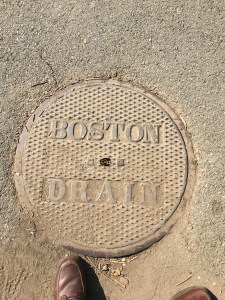
I decided to take one day and go to Boston and experience some great American history. In my search for the most fantastic piece of history, I found the Boston drain. Many people would spend their time imagining all of the creepy things underneath this heavy metal stopper, but not I.

My query was how long it would take for the city to begin to swirl and be sucked down through this little drain.


A Little Word Art


POST CARDS FROM THE MUSE

A Little Word Art

By Nandy Ekle

H

HA

HAL

HALL

HALLO

HALLOW

HALLOWE

HALLOWEEN

HALLOWEEN I

HALLOWEEN IS

HALLOWEEN IS C

HALLOWEEN IS CO

HALLOWEEN IS COM

HALLOWEEN IS COMI

HALLOWEEN IS COMIN

HALLOWEEN IS COMING

TRICK OR TREAT!

Short Stories


Outtakes 318

Short Stories

By Cait Collins


I love trying new genres and seeing if I can put a story together. Since I normally write novels, I’m finding short stories to be a bit intimidating. The short story limits my time to develop a character and tell the story. There’s no long way to define the hero or heroine in 30 or 40 pages. My protagonist still talks to me, but she’s a lot faster about telling me what’s going on in her head. I can’t be too subtle in revealing her issues; there’s just not enough word count.

Here’s what I’m learning.

One word can be more important than detailed description. Brilliant sunset says as much as the “bright orange glow of the sun setting in the western sky…” and it saves your word count.

Moria, my heroine, doesn’t have 250 pages to decide whether or not she’s attracted to Aiden. She either is or she’s not.

Aiden has to go a little slower in order to reach Moria, but then again, he can’t be too subtle. He has to make his move without scaring her off.

Forget men, a good dog can be a girls’ best friend.

One other thing I’ve found to be important is getting the details straight. Route 66 is a well known and well traveled road. People will know if your work is not accurate.

While I’m finding the short story a bit daunting, I am enjoying the challenge. Maybe I’ll consider writing a series of short stories and publishing them. And then again, maybe not.

How Do You Define Success as a Writer?


How Do You Define Success as a Writer?
 
by N. Bright
 

The Texas High Plains Writers program this past Saturday featured a Q&A panel of authors. Two traditionally published and two Indie Authors answered questions about their writing process and the publishing industry. Jodi Thomas, New York Times Bestselling author of 48 books, moderated. It was a fun morning, and I was honored to be a part of the panel along with Linda Broday who writes a successful series for SourceBooks, and Ryan McSwain who is an Indie Author.

 
“Secrets of Success” was the title of the program, and Jodi pointed out that each writer can define success in totally different ways. For very successful, tradtionally published authors, success might be the number one spot on a national best seller list, or seeing their book on a movie screen. As I juggle two teenagers, a busy day job, and all of the ideas in my head, success for me is holding one of my stories in hand. As an Indie Author, that is the immediate pay off for me personally, and then the book promotion is another faucett of the business that will continue through the long term.
 
The morning discussion included some great tips.
 
Jodi says, “Pick a lane,” which in some cases mean genre. Do you want to write kid lit or mainstream romance? In today’s publishing environment, I take it to mean considering the best publishing option for your work in progress as well. Every project may be different and writers have so many choices today. 

Jodi told us, “Everyone in this room has talent. Are you willing to do what it takes? Pick a lane. Develop your career.”

 
Linda says to include lots of conflict in your stories and use true events and personal stories to add depth to your writing.
 
Ryan keeps a character file, where he puts specifics about his characters as they develop. His ‘supplemental file’ is a list of changes that need to be made in previous chapters as he writes the new chapters. Instead of stopping to make changes, he references the supplemental file and makes the changes to his completed manuscript all at one time.
 
Traditional or Indie involves time and money, but as I told the group, it’s a completely different mindset. If you have a high concept book and you think readers all over the world will read it, then you have to go where the agents and editors are. You need to summarize your book into a one sentence pitch, and you have to practice that pitch. Attend conferences and sign up for appointments with the traditional publishing house professionals who will want your book. Your book must be exceptional in order to rise above the other 500 writers pitching during that same weekend.

As an Indie Author you have to write an exceptional book too, and then you have some aditional decisions to make. Pick a genre. Pick your target market. Pick a writing organization. Pick a cover designer. Pick a professional editor. The work is endless, but the rewards are extremly satisfying.

The secret to success takes hard work, but can be defined according to your terms. Jodi reminded us of one of our favorite local authors who, sadly, is no longer with us. DeWanna Pace always said that her writing goals never involved big dollar signs.
“It’s not the money,” she’d say. “I want people to love my work.”
Do you live in or near the Amarillo area? Texas High Plains Writers meets on the 3rd Saturday of every other month.