Malapropism


Malapropism

by Adam Huddleston


Here’s another quick literary term to add to your repertoire: malapropism. It is defined as the use of an incorrect word (with a similar sound) for a correct one.

Why would you do this?

It can be used to show that the speaker is confused, upset, or otherwise impaired. It is important to understand that in order to be effective, the two words must be similar in sound or structure.

For example, in “Much Ado About Nothing” a character states: “Our watch, sir, have indeed comprehended two auspicious persons.” In this case, the speaker substituted comprehended for apprehended.

I hope this helps in your writing!

Officially a Senior Citizen


Outtakes 252

Officially a Senior Citizen

by Cait Collins


I had a wonderful evening. Four of my five sisters and I sat down together to celebrate my birthday and Sis Number 5’s birthday. We talked for several hours about a wide range of topics. Sometimes I wonder how these women who were pests and hindrances and I can now be the best of friends. I’m blessed by their presence in my life.

I admit this year had been difficult. I’m now a senior citizen eligible for Medicare. I kept putting off applying for benefits because I was not ready to admit my age. But when I began trying to put a more positive spin on getting older I found a silver lining among the gray clouds. You see, as a writer and story teller, I have more experiences to draw from.

My generation saw medical science all but wipe out polio. Jets were tested by pilots like Chuck Yeager. We saw Alan Shepherd make the first flight into space and were glued to the TV as John Glenn orbited the earth. My father took us to the airport in Bangor, Maine to see President John Kennedy leave Air Force One and walk out to shake hands with the people in the crowd. In a matter of weeks, the President would be assassinated. The Civil Rights Movement was gathering momentum. Desegregation of schools and bussing of students for educational equality began. TV went from black and white to “living color”. Transistor radios were the rage.

The Beatles invaded America. The Twist, Monster Mash, Bunny Hop were popular dances. Lava Lamps and Danish Furniture decorated our homes. Computers were born and evolved. Now computers control much of our lives. The good old days merged with computer generation. I have history and experiences that provide background, characters, and motivation for hundreds of characters. With that in mind, I need to get back to work on my novel.


Ok, Where’s the Title?


Ok, Where’s the Title?

By Rory C. Keel


Many good projects have been written with a “working title”. That’s a temporary name given to your piece while you are still working on it. When the writing is done, you will want to give your masterpiece the perfect permanent title. Often, this can be more difficult than completing the actual piece of work.

When choosing the best title, consider these two basic points.

First, the title needs to fit within the theme of the story or work. Consider using the name of a person, place, or thing within your story. A specific kind of action that takes place in your writing could even make a good title.

Secondly, make the title easy to remember. While there are works that carry long titles, the shorter it is, the easier it is to remember. One exercise to help with this is to try and describe your story in one word. Can you do it? Consider the theme, the action, think about the people, places and things and boil the idea down to one or two words.

With this basic formula, you can have the perfect title.

Advice for Writers from Michael Blake!


Advice for Writers from Michael Blake!

By Natalie Bright

In May 2015, Michael Blake, best known as the author of Dances with Wolves, died. I didn’t hear about it until much later, and now, over a year after his death, I finally found my notes from a talk he gave in Amarillo in 2009. While in the area, he talked to the Panhandle Professional Writers, did a presentation at the Panhandle-Plains Historical Museum, and also attended an event at Palo Duro Canyon State Park.

Dances with Wolves sold over 3.5 million copies, and was translated into 15 languages. The 1990 film, which Kevin Costner directed and starred in, won seven Oscars including Best Picture and Best Screenplay. Mr. Blake also won the WGA Award and Golden Globes for his script.

Mr. Blake shared with Amarillo writers a heartfelt and grippingly honest reflection of his successes and rejections as he toiled within the L.A. movie crowd. After becoming engrossed in Indian history, his long-time friend Kevin Costner, encouraged him to write a novel rather than a screenplay. Mr. Blake told us that he struggled with the ending. The L.A. atmosphere did not lend itself to the inspiration he craved. He decided to move to Arizona where he lived in his car, worked as a dishwasher and completed his book.

Based on my notes from his talk to the PPW group in Amarillo, I thought you might like to know his advice for writers. Following, are some of Mr. Blake’s best quotes that resonated with me personally.

§ “Writers are driven to create something from our heart and soul. This is in direct conflict with the agent, producers, and editor’s side of the business,” and for this reason he encouraged us to not be afraid of rejection.

§ “No matter what, keep writing at a level that people will want to read, and keep reading.”

§ “American Indians knew things about the world that we had forgotten. Modern life has moved us away from life on earth. We need balance between earth and our existence.” This belief inspired him to write a story.

§ “Inspire with your writing.”

§ “It’s all about finishing. Power through and get it done.”

§ “Writing must convey feeling. Be different and devastating in terms of feeling.”

§ “Make every conceivable effort to put good words on paper.”

§ “Stay at it!” says Michael Blake. “If you remember only one thing from my talk, this is the thing I want you to take away—never give up.”

“Be devastating in terms of feeling”—I love that! If you haven’t had a chance to read the book, Dances with Wolves, I highly recommend this great story set in the American West. As a writer, I feel extremely blessed to have been present for such an inspiring talk from a true visionary and gifted man.

R.I.P. Michael Blake. Thank you for sharing your passion with the world.

Head Hopping


POST CARDS FROM THE MUSE

Head Hopping

By Nandy Ekle

Head hopping is technical jargon for writers. This is when the writer tells you what everyone is thinking and doing instead of sticking with one character. I’ve seen it work when used by a certain master novel writer, but most of the time it’s frowned upon by readers. The accepted rules are to change chapters if you must hop to another head, or you can show the needed information in dialogue, in body language, or by the actions and appearances of the different characters.

Another way to show your reader what all the other characters may be thinking and why is perception of your main character. And this method can be a delicious plot twist tool. I’ve seen this used more times than I can count, and when I recognize it, I usually fall in love with the author.

There’s the typical love story where the conflict is due to one character misperceiving the other character, which leads to heartache, which leads to either happily ever after or sadder buy wiser.

And then there’s the typical mystery. The bad guy can actually be hidden this way. He will be able to hide right out in the open if the other characters think he’s just another good guy standing around wondering who the bad guy is, when it’s him all along.

And, of course, this method is king in comedies. Some of the funniest stories in the world are built around a gross misperception. I know you’ve read and seen this happen, even in real life. One person gives his opinion on a subject. Another person walks in in the middle of the conversation and thinks the subject is one thing, when it’s actually something complete different, something so totally random that the audience is left wondering how could the misunderstanding have happened. After that, the whole story centers around each character acting upon what they believe the other has inferred.

But another interesting fact is when this is used on the reader. Now, we never ever want to lie to our readers. But if we make a statement, our readers are free to interpret it the way they want. So, if tell you “Jim walked in quietly with his white hat covering his head,” you might think Jim is cowboy,an introvert with a good sense of morals, and his hair is blond. However, you might not know he’s wearing a white baseball cap because he’s bald under the hat, and he’s quiet because he’s barely awake after spending a night killing his date.

Next week I’ll talk about the different points of view and why we might choose the POV we choose.

Congratulations. You have just received a post card from the muse.

Anthropomorphism


Anthropomorphism

by Adam Huddleston


It’s been a few weeks since we discussed literary terms. This week, I would like to mention anthropomorphism. It is a long word which simply means giving a non-human object a human characteristic. For example: “the rock sat there staring at me indefinitely.” “Why use this device?” you may ask. By giving a piece of your setting human attributes, you increase the relatability between it and your reader. The reader may also feel more endearing toward the object as well.

Happy writing!

Setting the Scene


Outtakes 251

Setting the Scene

by Cait Collins


My publications are in broadcasting. When writing a news or sports report, a commercial, or even a documentary, facts can be more important than description. Footage provides the setting. So, sometimes setting the scene is difficult for me. I often have to research styles, locales, and history in order to describe the scene. These are questions I ask myself when describing the setting.

Home style     Ranch, Contemporary, Victorian, Edwardian, cabin, middle class, mansion

Locale              City, town, village, mountains, plains, beach, west region, eastern seaboard, Deep South

Flora                aspen or birch, oak, walnut, maple, elm, cedar, roses, types of wild flowers, magnolia, lily of the valley, sunflowers, grass

Fauna              predators, domesticated animals, elk, deer, birds, water life

Colors             black or ebony, gray or mist, yellow or daffodil, orange or peach, red or terra cotta, blue or aquamarine, green or meadow, brown or mahogany, purple or lavender

Time period    Victorian, Old west, Civil War, Depression era, WWI, WWII, 50’s

Once I answer these and other questions, I have I have a clear picture of where I am, and I write a “character sketch” of the setting. Information in hand, I can create the scene.


Writing Inspiration

Image


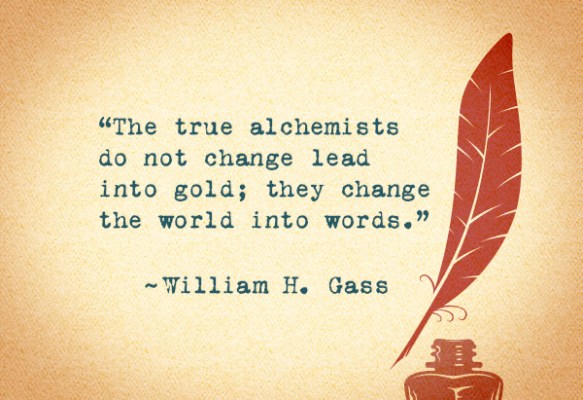
quotes-writing-william-h-gass-600x411

Quotes about Indie Publishing


Quotes about Indie Publishing

“Content is King. Promotion is Queen” ― Bob Mayer

“You are a start-up … The next great business is you.”—Hugh Howey

“The best self-promotion is your next book. And the book after that and after that …”—Bella Andre

“The good news about self-publishing is you get to do everything yourself. The bad news about self publishing is you get to do everything yourself.”—Lori Lesko

“We relish the freedom, and accept the responsibility, that comes with running our own show.”–Orna Ross, Author and Director of the Alliance of Independent Authors

“The most important thing for anyone– regardless of whether they’re an author– is to decide what is their definition of success.” –JOANNA PENN, The Creative Penn Podcast

Traditional or Indie Publish continues to be a daunting questions among today’s authors. I wish you all the best on your journey to publication, dear WordsmithSix readers.

A Blatant Borrow


POST CARDS FROM THE MUSE

A Blatant Borrow

By Nandy Ekle

I was surfing around and found this great list called “Top Ten Objectives For Writers.” So I’m sharing this with you guys because if you’re a writer, I know you’ll like it.

Top Ten Objectives For Writers

1.Ignore your inner critic.

2.Write first – edit later.

3.Keep learning! Join a writer’s group, take a class, attend a conference.

4.Make time to write every day.

5.Get published! Send out submissions . . . or decide to self publish.

6.Be you! No one writes quite like you.

7.Try something new: Experiment with a different genre.

8.Have fun! Enjoy being a writer.

9.Develop an author platform: social media, website, book trailer, blog

10.Set goals: “A dream is just a dream. A goal is a dream with a plan and a deadline.” —Harvey Mackay

WritersRelief.com

Congratulations. You have just received a post card from the muse.