Avoid the Cliché


Avoid the Cliché

by Rory C. keel

Teachers of the writing craft are unanimous about avoiding the cliché. Have you heard that one before?

A cliché is the use of phrases or expressions that are overused to the point of losing the desired effect of the intended meaning.

One example might be “Are you a man or a mouse?”

While you may want to express the level of strength or fear in your character to that of a small animal, to use this phrase would show lack of originality in your writing. Try to find other words that will demonstrate the meaning and will bring originality to your writing.

Meet the Author – Rory C. Keel


Meet the Author

Since the creation of WordsmithSix as a critique group, we have evolved in many ways. While every member is like family and brings their own valuable insights to the group, sometimes there are changes. Some of our members have moved on in their life’s journey, however their contributions continue to influence our writing forever. Others have filled the empty chairs and have started their journey into the world of writing.

Each member of WordsmithSix is excited about our writing journey. For the next few weeks we will dedicate a Sunday blog to letting our readers know a little more about who we are. Each author will be asked a few questions to help you understand their desire to write and what motivates them. Maybe their answers will influence you in your writing.

This week we are excited to feature one of our original Wordsmithsix members. An established Author and Blogger, his writing includes: Chicken Soup for the Soul: Inspiration for Writers “The Challenge,” also, multiple devotionals published in the Secret Place magazine by Judson Press.. You can find more about Rory on his website Roryckeel.com

Please welcome Rory C. Keel

When did you start writing?

Being a preacher for 30 years, I’ve written many sermons but never considered myself as a writer. However I seriously started writing around 2006. When I say seriously, I mean with a determination to do something with it like publish or sell my writing.

One day I had a strong desire to write a novel using some historical research I had collected, and was confronted with the fact that I knew nothing about writing a novel. That was the start of my writing.

Why did you choose the genre you write in?

I would have to say that I write in the genre that I read and enjoy. I love reading inspirational Christian stories that encourage the human spirit along with history and the human resolve to overcome adversity. To be able to take lessons from the past and put them into words in order to inspire others in life, drives me to write in the historical Christian, inspirational genre.

What’s the best thing you’ve done to help your writing?

The best thing I’ve done to help my writing is to find a good critique group. To have a group of writers that will encourage you and give honest constructive criticism of your writing is invaluable.

What’s your writing routine like?

My writing routine usually starts with a cup of coffee at my desk in the early morning. This seems to be the best time of the day for me to write. I make a pot of coffee, sit at my desk and listen to classical symphony music while I write. I like to think of it as the soundtrack music to the movie I’m writing.

How do you reach that personal place that allows the writing to flow?

For me, reaching that place where writing flows happens when I put my self into the story. For a reader to be drawn into a story while reading, the writer has to go there first. When I see the setting, and know the character’s good traits and flaws, when I feel their emotions, that’s the point when the writing flows. That place becomes very personal because, by putting myself in the story I must reveal pieces of myself, both good and bad.

Are you an outliner?

Yes, I like outlining. Most of the time I have a beginning point and know where the story ends, so outlining is easy for me, especially if it is a historical writing. I think of my outline as a skeleton and the story is meat on the bones.

What has been your biggest writing challenge?

My biggest writing challenge is feeling guilty when I take the time to write. When I’m writing, it’s hard not to think about all the other things I need to get done. That might be easier to overcome if I thought of writing as work instead of a pleasure.

What are you working on currently, future?

Currently I’m working on a Christian fiction novel about a man with misguided determination and his conversion to the truth. It is the story of the conversion of Saul of Tarsus to Christianity from his viewpoint as a Jew. Future works will include a sequel with the main character of Timothy, a student of Paul, and a completion of an inspirational story of one family’s struggle to improve their life over the Oregon trail. Along with these works a series of short devotionals for publication keeps the writing juices flowing.

What advice would give to new writers?

Keep going, that’s what I would tell new writers. After you’ve started your journey of writing you will hit roadblocks—keep going. When others tell you that you can’t, you can – keep going. When the mountain seems too high to climb, take small steps and keep going. Every writer, from beginner to bestseller, must start and finish so keep going.

What’s the most positive thing you could tell writers today?

If you really want to, you can!

I wonder how they used to do it?


I wonder how they used to do it?

Rory C. Keel

I thought I would write a few observations. We are surrounded by such a diverse assortment of super technology. For example, we have smart phones that are so powerful they can interrupt a personal, face-to-face conversation with an individual, and allow us to talk, text and send pictures simultaneously around the globe to multiple unseen individuals.

Computers are now a way of life. They check our spelling and grammar and make learning the many beautiful loops of cursive penmanship once taught in schools obsolete. And what is a pen anyway?

We sit in dark rooms like hermits, wearing our pajamas,  tangled hair and unshaven, and faces with no makeup, and with the push of a button circle the globe. We gather information on places we would love to go, and things we want to do–if we ever got dressed and left our home.

The sun is no longer needed to determine which direction is north, south, east or west. Grown men who stubbornly refuse to listen to their zealous wives give them directions will react, without hesitation, to the soft and sultry female voice of a GPS system, accepting every command without question.

With vehicles that can automatically parallel park, the useful skills needed in backing automobiles are forgotten, and the rearview mirror that automatically adjusts to the lighting, is relegated to review our hair, lipstick, or to check for pimples.

The aeronautics industry is also awe-inspiring. The kid down the block that used to chase the other children, dive-bombing them with his remote control airplane, is still in his backyard chasing the Taliban on the other side of the world with remote war drones.

Speed has not always been a friend to avionics. The world’s fastest commercial passenger jet, the Concord, is now retired. The expense of chasing itself around the world was too high. Crossing the International Date Line, it could arrive at its destination tomorrow, and come back yesterday.

The truly amazing thing about all the technology that we experience today is that it causes us to ask questions. But the most frequent question I hear today is not, “How will we do things in the future?” but, “I wonder how they used to do it?”

As an exercise, write about a few things in your past that have changed.

Roryckeel.com

ARE YOU AFRAID TO FLY?


ARE YOU AFRAID TO FLY?

by Rory C. Keel 

It’s amazing that so many people have a fear of flying. Several years ago, while on a plane from Saint Louis Missouri to Portland Oregon, I remember boarding and seeing a man who looked as pale as death. He took his seat across the aisle and immediately buckled the seat belt, grabbed the armrests and shook so violently I wondered if it was the engines or him shaking the plane. After sedating himself with a couple of adult beverages, he slept soundly to our destination.

While I have never been afraid to travel in an airplane, I have experienced a fear of flying. Realizing I would never pilot an F-16 fighter jet, I turned to the hobby of remote control airplanes.

After what my wife called “investing heavily” in a kit, I began to build my first R/C airplane. For days I trimmed every piece of wood with the skill of a surgeon to the exact specs. For weeks, I placed every drop of glue precisely in the correct spot, as to not change the balance of the plane. And after months of careful tune-ups on the engine and electronics, along with a few instructions from others to assure that my plane would soar with the eagles, fear took over.

What if it crashes? All that hard work and time will have been in vain.

On my first solo flight, I rolled the plane down the tarmac and lifted off. A feeling of accomplishment flooded over me as I made one pass, then another over the stands. Not wanting to run out of fuel and lose the plane, I made the approach to land. That day I witnessed the most horrific sight—in front of me laid splinters of wood, pieces of plastic and shards of metal. I crash-landed my plane.

In writing, there are moments when we are afraid to submit a piece of work, fearful of rejection. We work on a piece until it is perfect then, “WHAT IF” takes over. What if it’s rejected? What if it was a waste of time because no one likes it?

The good news is that my first plane did finally soar. I learned that my time wasn’t wasted at all. In all the hours of building I had learned how to repair the broken plane, and after adjusting the mistakes I made in the landing approach, confidence took control.

Yes, I have letters of rejection for my writing, however with repairs and a few adjustments, those same pieces have been published.

Don’t be afraid to fly!

Roryckeel.com

The Scrivener Corkboard


The Scrivener Corkboard

By Rory C. Keel


The Scrivener writing software by literatureandlatte.com, has a wonderful feature for those who love to storyboard called Corkboard. The way to get to the Corkboard is to first open Scrivener and look in the tool bar for a section called “Group Mode,” It looks something like this picture.

Untitled

Now click on the middle button of the three. This should put you into the Corkboard.

In this view, you can find options for your Corkboard in the right-hand corner at bottom of the page. It will look something like this.

cb2

With these buttons you can change the view from “arranged” placement of the cards to the “freeform Corkboard” which allows you to move each card around to change their order.

You will also notice a third button allowing you to set the Corkboard options, such as the size of card, card ratio, spacing and number of cards across the Corkboard.

Another way to access your Corkboard cards is through the “Inspector” button at the top right-hand corner of the tool bar.

scriv3

With a click of this button, the Inspector will open on the right–hand side of your screen and contain note sections including your Corkboard notecard. By pressing the notecard button in the inspector view, you can toggle between the notecard or a picture section.

scriv4

For even more adjustments to your Corkboard, in the Scrivener tool bar, go to the word Scrivener > Preferences > Corkboard.

scriv5

In the tool bar of this view, click on the Corkboard and you can adjust your board background colors and patterns, card line colors, fonts etc…

I hope this helps you use the Corkboard and get more out of the Scrivener writing program.

Ok, Where’s the Title?


Ok, Where’s the Title?

By Rory C. Keel


Many good projects have been written with a “working title”. That’s a temporary name given to your piece while you are still working on it. When the writing is done, you will want to give your masterpiece the perfect permanent title. Often, this can be more difficult than completing the actual piece of work.

When choosing the best title, consider these two basic points.

First, the title needs to fit within the theme of the story or work. Consider using the name of a person, place, or thing within your story. A specific kind of action that takes place in your writing could even make a good title.

Secondly, make the title easy to remember. While there are works that carry long titles, the shorter it is, the easier it is to remember. One exercise to help with this is to try and describe your story in one word. Can you do it? Consider the theme, the action, think about the people, places and things and boil the idea down to one or two words.

With this basic formula, you can have the perfect title.

Ok, Where’s the Title?


Ok, Where’s the Title?

By Rory C. Keel


Many good projects have been written with a “working title”. That’s a temporary name given to your piece while you are still working on it. When the writing is done, you will want to give your masterpiece the perfect permanent title. Often, this can be more difficult than completing the actual piece of work.

When choosing the best title, consider these two basic points.

First, the title needs to fit within the theme of the story or work. Consider using the name of a person, place, or thing within your story. A specific kind of action that takes place in your writing could even make a good title.

Secondly, make the title easy to remember. While there are works that carry long titles, the shorter it is, the easier it is to remember. One exercise to help with this is to try and describe your story in one word. Can you do it? Consider the theme, the action, think about the people, places and things and boil the idea down to one or two words.

With this basic formula, you can have the perfect title.

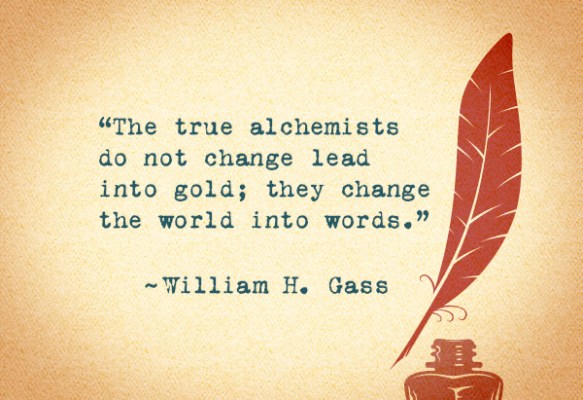
Writing Inspiration

Image


quotes-writing-william-h-gass-600x411

Reading and Writing


Reading and Writing

If you can read and write – YOU CAN DO ANYTHING!

A few things that can help you become a better writer and reader.

  1. Practice – Writing makes you a better writer and reading makes you a better reader.
  2. Read, think, read, write, ponder, write – and read some more.
  3. Learn a new word everyday.
  4. Read lots of books.
  5. And then write some more.
  6. Get the pen and fingers moving, or use a computer.
  7. Read what you have written aloud to anyone who will listen
  8. Keep a journal to keep the writing juices flowing.
  9. Read what you’ve written over and over, until you can’t find any more problems.
  10. Before you take a trip, read any information you can find and then write about your experience.

Why do I feel compelled to write?


Why do I feel compelled to write?

For me, it’s the past that drives me to write.

I read to know the strength and wisdom of those who have written about their past struggles, ideas and hopes for the future.

And so I write, in the hope that those who read my words and those that exist beyond my days can draw some strength and motivation for their days.

What compels you to write?

Roryckeel.com