Have Confidence in Your Words


Have Confidence in Your Words

Natalie Bright

A wise, multi-published author once told me, “NEVER delete anything.”

I’ve tried to make it a habit to save everything, which is a difficult thing to do when your self-editor is vigilant. Thank goodness there have been a few times I made the effort to save a story.

Many, many years ago during college, I spent time at a friend’s ranch. The ranch foreman was an old cowboy that had a story or two to tell. Wise and weather worn from spending a life-time punching cows, I remember he had the most brilliant blue eyes and he was one of the most laid-back, happiest people I’d ever met.

A spark of an idea turned into a story about that cowboy many more years later for a writing class assignment. I never thought about it again, but I’m so glad that I kept it in my class notes. Fast forward another ten years, a callout popped up into my inbox asking for stories for a Christmas collection with a West Texas theme. That cowboy and his life immediately came to mind. Within 30 minutes of my submission, I got confirmation back that my short story has been accepted.

You never know where and when your words might find a home. Sometimes we write in one form and those words can take on a life of their own and end up as something entirely different. I love when that happens!

Instead of deleting, cut and paste unwanted scenes, dialogue, and chapters, and move them into a separate file. Give it a clever name on your computer, like “My Musings” or “Brilliant Ideas”. Keep an idea file folder for those story sparks that you’ve written on restaurant napkins, scraps of paper, or sticky notes. Never let an idea pass through your brain that you don’t write down. Keep an idea journal and jot down everything when it comes to you, whether it’s a setting, a character, or a bit of dialogue.

You can read my story “A Cowboy’s Christmas Blessing” in the anthology of more than 30 heart-warming and humorous Christmas stories—all set in West Texas or by West Texas writers.
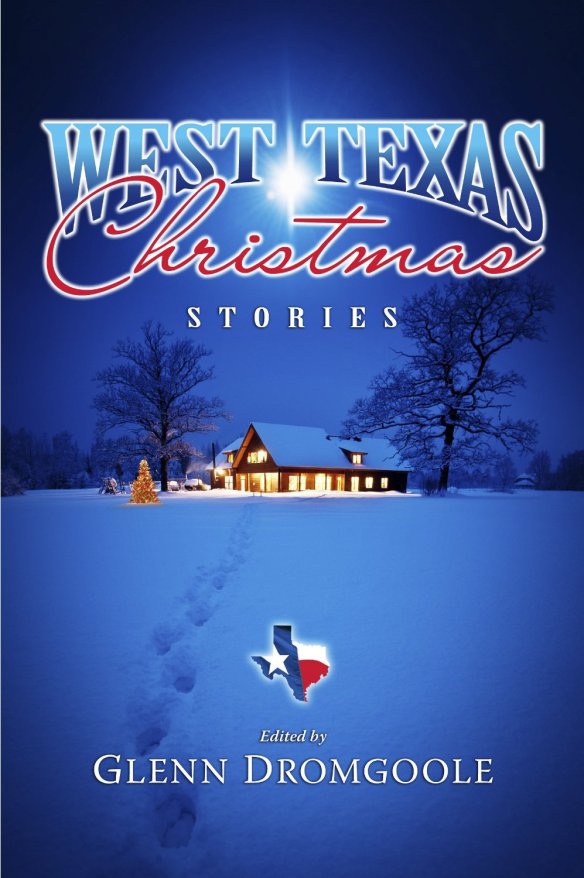
west texas christmas stories

West Texas Christmas Stories

Edited by Glenn Dromgoogle

Abilene Christian University Press; http://www.acu.edu/campusoffices/acupress/


Merry Christmas Y’all! Thanks for following WordsmithSix.


Writing Memoirs: Biography Fiction


Writing Memoirs: Biography Fiction

 Natalie Bright

Award winning author Jan Sikes spoke to the Texas High Plains Writers group in November about her biographical fiction series detailing life with her extremely talented husband, country singer Rick Sikes. The events are true; but to be able to share these immensely personal details, she tells the stories in third person and replaced real names with fictional names. To be able to tell the story, she fictionalized dialogue into scenes that she didn’t witness first-hand.  She noted that the series is semiautobiographical told in a fiction format, 90% true and 10% fiction.

This method poses a unique way to write your family stories, and because Jan wanted total control of the material she self-published.

Self-Publishing Key Points

Jan stressed the importance of having a “good quality piece of writing before you release it.” That means hiring a professional editor. True, there are more opportunities for writers than ever before, but self-publishing has a bad rep because of the less than quality material that has flooded the eBook market place. Constructive feedback is very important.

Have a publishing imprint and purchase an ISBN number. The $5 package from CreateSpace is limited as to where your book can go. It will only be available on Amazon.

Promotion

Jan reminded us that whether you’ve gone with traditional or self-published, writes must promote themselves. Traditional publishers have very limited marketing funds, and understandable those dollars are targeted for a small group of top selling authors. Mid-list authors, whether traditional or indie publishes, have to do their own promotion. For her particular series, Jan has seen the most success through one-on-one interaction with readers. She participates in community events and book festivals throughout the year.

For indie authors, there are numerous organizations that support and assist with promotion. Jan recommended the Texas Association of Authors, Independent Authors Network, and the Historical Novel Association.

Thinking About Theme for your Story

The success of this series and her unique writing style is in part because of a no secrets left unturned approach. Remember that old saying, “write like your momma’s passed on and will never read your story”? This is real life at its darkest. The main characters take a downward spiral into drugs, motorcycle gangs, Texas honky-tonks, and federal prison. Despite the events in life and insurmountable odds, what emerges from the chaos is a love story with music being the salvation. Rick built the first sound studio inside the walls of Leavenworth and was able to smuggle his songs out to his family and fans.

While each book can stand alone as a fascinating read, I started with the second book in the series, The Convict and The Rose, which won a first place award for biography fiction from the Texas Association of Authors. Music CD’s are also available.

  nataliebright.com 

WRITING LIFE


WRITING LIFE

By Natalie Bright

The writing life is a solitary endeavor, and routinely interrupted by everybody!

Seriously, at times writers have to put aside the world within their heads and face reality. Somebody’s always hungry (at least at my house), something needs cleaning, bills waiting to be paid, and laundry is piling up. I’ve been hit with reality for several weeks now and I can’t seem to dig out from under it. I really miss my fictional world.

Many experts suggest that you have to live a real life in order to find material for your stories. Overheard conversations, experiences, and research can add richness to your writing. That may be true. During this break my creative mind may be taking a pause, but my self-editor and self-doubt is partying hard. I’m a loser. I’ve been working on a 500 word piece for a month now and it’s just not coming together. At this point, I’m totally convinced that I will never write anything again that anyone will want to read. I can’t see that I’m making any progress towards building a writing career. I’m done.

Thank goodness part of the real world this past weekend included a writer’s meeting. Author and song-writer, Jan Sikes, talked to the Texas High Plains Writers group in Amarillo about her series of books based on her life with a musician. Using the facts of her own experiences, she changed the names of the people involved to create what she explains is 90% true and 10% fiction. She even gave herself a fictional name so that she can step back from the very personal connection and bring this fascinating love-story to life. Her talk was excellent. I’ll share some of her writing advice with you next week.

Thank goodness I am reminded how sitting in a room full of creative people can give you inspiration to keep going.

Texas High Plains Writers meets every other month on the third Saturday at the Amarillo Senior Citizens Center in downtown Amarillo.

THE WORLD OF BOOKS


THE WORLD OF BOOKS

The World of Books
Is the most Remarkable Creation of Man
Nothing else that he builds ever lasts
Monuments fall
Nations perish
Civilizations Grow Old and Die Out
And After an era of darkness
New Races build others
But in the WORLD OF BOOKS are volumes
That have seen this happen again and again
And yet Live On
Still Young
Still as fresh as the day they were written
Still telling men’s harts
Of the Hearts of Men centuries Dead.
– CLARENCE DAY

Five Baisc Elements of PLOT


Five Baisc Elements of PLOT

Natalie Bright

The plot is the thing that moves the story along. How you craft the plot can make a different between a best selling page turner to unforgetable and unsaleble. According to Donald Maass in his book, “Writing the Breakout Novel” one of the mistakes beginning novelists make is to write the sequentail activiities of a characters’ every day events. This makes for very dull reading. The goal of story craft is to hold a reader’s attention.

He lists the five basic plot elements:
# 1 – a sympathetic character
#2 – conflict
#3 – reinforcement. Conflict must twist, turn, deepen and grow.
#4 – climax
#5 – resolution

“Writing the Breakout Novel” is an excelent book on story craft. Be good to yourself and add it to your writing reference library.


THE HASHTAG


THE HASHTAG

Since opening an Instagram account, I’ve become fascinated by the power of the hashtags.

Hashtags are words preceded by the pound symbol (without spaces). These key words or phrases categorize posts. For example I use #TexasPanhandle on every one of my Instragram pictures. Through the use these key words and phrases, you can follow anything of interest including places, people, hobbies, food, fashion, special interest groups, companies, TV shows, movies, etc.

The birthplace of the hashtag symbol first happened on Twitter. Discussions became trackable and content can be organized using hashtags. Twitter hashtags allows for “trends”, or specific topics in conversation that you’d like to follow or become engaged by posting comments.

So how can writers benefit from using hashtags?

Create hashtags for your book titles, character names, author events, or use key topics that relate to your books when you post something.

Social media sites such as Facebook, Google+, Tumblr, Pinterest, Vine utilize hashtags to maximize shareability. Popular hashtags will help you pick up followers who are interested in the same things, and will help you discover new accounts. So what’s popular or trending now, you might ask. Go to hashtags.org to find out.

Follow me on Twitter, Pinterest and Instagram! Links are located on the home page of my website at www.nataliebright.com

#havefun #write

Sunday Writings – STORIES SET IN THE WEST


STORIES SET IN THE WEST

Several of my author friends have deals for new series set in small-town America or on ranches, with cowboys and horses and great characters. An important component to these type of books is the wide open places, endless sky, and the decent, hard-working people of the west. I don’t think westerns are dead. They’ve been repackaged into stories that are smarter, action packed and more vivid for today’s readers.

Western Writers of America is a group devoted to promoting the genre. Members include not only novelists, but song writers, historians, screenwriters, musicians, living history re-enactors, and fans of everything western.

WWA members receive a copy of the Roundup Magazine, the official bi-monthly publication of the group. The October 2015 edition just happens to include two of my articles: “Researching West Texas” is a summary of the panel of museum archivists who spoke at the WWA Convention in Lubbock this past summer. “Texas Rangers: Then and Now” is a summary of the keynote given by historian and author, Robert M. Utley.

As a member, you’ll benefit greatly from being a part of this organization. Members can have one entry in WWA’s online catalog, one entry on the WWA app, a WWA Star Speakers Listing, and be included on the WWA Facebook Page and WWA Twitter links—all for FREE!

Whether you’re a history buff, writer, or just a fan of great stories set in the west, you’ll love being a part of this group. Here’s the website:

www.westernwriters.org

Mark your calendar right now for the next WWA Convention dates:

June 21-25, 2016: Cheyenne, Wyoming

June 20-24, 2017: Kansas City, Missouri

Quote


Quote

An artist is typically a being that is filled with so much passion, love, or pain for certain lands, people, ideas, or images that all they can do with that overflow is bleed it out by creating. And with this type of art, the energy will be shifted from the depths of them and into the depths of the audience to be felt. It is a dance. A transference. An intimacy. It is to touch and awaken another human in a place they hadn’t know was aching, or sleeping. Both are opened. Both are nourished. Both are transformed.

–VICTORIA ERICKSON

Story Craft: Book Themes


Story Craft: Book Themes

By Natalie Bright

Throughout the art of story craft, you may have noticed common story threads or themes that are used over and over. This is most often observed in movies. Multi-published writers that I’ve talked to usually have an overall theme that might not be that obvious to the reader, but it helps keep the plot line consistent to the end.

A NYT bestselling author told me that she used a common theme for her main characters, as well as applying it to sub-plots and minor characters. For example, the pain of loss was a theme of a recent book. Every major and minor character had to deal with loosing something or someone.

A theme for books can be used in both fiction and nonfiction. It keeps the author on track and prevents them from deviating from the basic story structure.

For example, the hero’s journey is a popular theme that is used in a lot in books and movies. The hero is reluctantly called to adventure, faces insurmountable obstacles, and ends up saving the day. There are several excellent books on how to craft a story using this popular theme.

Listed below are some other examples of overall themes for books:

*Cinderella: down trodden girl is rescued from her dull existence and finds true love with her prince.

*Perseverance: characters never give up, even when faced with impossible obstacles.

*Honesty: always tell the truth, no matter what the cost.

*Kindness: generous, considerate, friendly characters, even when treated differently.

*Acceptance: differences and beliefs are overcome and characters find respect for each other. Or, maybe it’s an acceptance of love lost, crushed dreams, or life’s path.

*Romeo and Juliet: star-crossed lovers against the world.

*Loyalty: trusting each other, friends to the end or trusting yourself and your heart’s desire.

*Cooperation: a problem is solved or a goal is achieved through everyone working together.


Happy writing and thanks for following WordsmithSix!

TWEENS Have It


TWEENS Have It

By Natalie Bright


Children’s literature once offered the genres of picture book and everything else. Thankfully today that grey area of choices after pictures is more clearly defined with early readers, chapter books, middle grade, upper middle grade, tween, and young adult.

The new group that emerged with efforts to focus on “tweens”, between childhood and young adults, is the topic of this blog post. You’ve probably noticed that many industries are reaching out to this group, from entertainment to fashion to reading material.

Tweens Defined

Tweens, defined as being between 10-14 years of age, seem to live in two worlds. When I talk to classrooms I’m reminded that they are still children and sometimes very immature. In other instances, I’m shocked at the complexity of the questions they can ask.

It’s a complicated age; that time period between childhood and young adult. I’ve witnessed this with our own boys. Reading a book with chapters was a big deal. Our oldest totally skipped most of the tween offerings and went straight to nonfiction on the topics that held interest for him. Our youngest enjoyed the light, simple plots of chapter books. By the time he was in fourth grade he was reading at a Jr. High level and he wanted stories that were more complex. As a parent, I was cautious about the drug and sex themes covered in the young adult genre, and thankfully there were some in-between novels that held his interest.

Holes, by Louis Sachar

HOLES is the perfect example of a book for tweens, in my opinion. It includes folklore, a mystery, and contemporary issues of a work camp for difficult teenagers, along with a mystery that spans across several generations. It appeals to both girls and boys. I enjoyed the book and the movie equally as well.

Children today are much more sophisticated in their reading choices I think. Of course, there’s always the kids who never read and those who read anything and everything. Several books I would have classified with young adult type themes, seem to have resonated with the younger crowd as well.

Good Story is Everything

As my then 6th grader got into the car after school one day, he asked, “What is team Edward and team Jacob?” Twilight was a hot topic among the tween crowd from many years. My son really wasn’t interested in reading the books at all, but agreed to watch the Pay-per-View with me. “I guess I’ll have to, so I can know what the girls talk about all day.”

Bottom line: a unique, well-written story is a good story, no matter the target age.

nataliebright.com