WRITING CONTESTS BENEFITS


Writing Contests Benefits

By Rory C. Keel

It cost money; why should I enter? What benefit will a contest be for my writing and me? I’m not good enough so I’ll never win.

Those who are looking at entering writing contests frequently express these statements and questions. I know, I’ve asked most of them myself.

Having entered my share of writing contests, let me offer some positive benefits from my personal experience.

  1. Training for working with deadlines – Writing contests give a writer the opportunity to work under a deadline. Most contests will have strict dates for submitting an entry. This is good conditioning for working with agents, editors, and publishers who will place deadlines on your writing.
  2. Provides automatic platform – A platform is your audience, those who will read your writing. While your mother and “BFF” will gladly volunteer readership, contest judges can provide you with an unbiased and anonymous audience for your writing. And who knows, the judge may be an agent, editor or publisher.
  3. Gain feedback – One of the most valuable benefits of a writing contest is the critique. To have the judge’s comments noting any mistakes, suggestions for improvement and yes, even praise can help improve your writing.
  4. Build your portfolio – Writing contests are a perfect why to build your portfolio. When seeking an agent or publisher, a few writing clips, accomplishments and certificates may be the edge you need to sell the deal.
  5. Increase your confidence – Entering a contest gives a writer the opportunity to gain confidence in their writing. Have you ever written something only to tear it up or hide it in a drawer? Have you ever said, “I could never write good enough to be published!” A writing contest provides an inexpensive way to test the waters of being an author.
  6. Avoid scam contests – As with most everything, there are people who take advantage of others. Before entering a contest, research the person or organization holding the contest and make sure they are legitimate. There are a few contests that are no more than book selling scams. When your entry wins, it is accepted for publication in an anthology, with all of the other first place winners, then you must pay an outrageous price to obtain a copy. Winningwriters.com lists a few of these writing contests to avoid. To help find your next contest check out www.placesforwriters.com or www.fundsforwriters.com


Avoid the Cliché


Avoid the Cliché

by Rory C. keel

Teachers of the writing craft are unanimous about avoiding the cliché. Have you heard that one before?

A cliché is the use of phrases or expressions that are overused to the point of losing the desired effect of the intended meaning.

One example might be “Are you a man or a mouse?”

While you may want to express the level of strength or fear in your character to that of a small animal, to use this phrase would show lack of originality in your writing. Try to find other words that will demonstrate the meaning and will bring originality to your writing.

I wonder how they used to do it?


I wonder how they used to do it?

Rory C. Keel

I thought I would write a few observations. We are surrounded by such a diverse assortment of super technology. For example, we have smart phones that are so powerful they can interrupt a personal, face-to-face conversation with an individual, and allow us to talk, text and send pictures simultaneously around the globe to multiple unseen individuals.

Computers are now a way of life. They check our spelling and grammar and make learning the many beautiful loops of cursive penmanship once taught in schools obsolete. And what is a pen anyway?

We sit in dark rooms like hermits, wearing our pajamas,  tangled hair and unshaven, and faces with no makeup, and with the push of a button circle the globe. We gather information on places we would love to go, and things we want to do–if we ever got dressed and left our home.

The sun is no longer needed to determine which direction is north, south, east or west. Grown men who stubbornly refuse to listen to their zealous wives give them directions will react, without hesitation, to the soft and sultry female voice of a GPS system, accepting every command without question.

With vehicles that can automatically parallel park, the useful skills needed in backing automobiles are forgotten, and the rearview mirror that automatically adjusts to the lighting, is relegated to review our hair, lipstick, or to check for pimples.

The aeronautics industry is also awe-inspiring. The kid down the block that used to chase the other children, dive-bombing them with his remote control airplane, is still in his backyard chasing the Taliban on the other side of the world with remote war drones.

Speed has not always been a friend to avionics. The world’s fastest commercial passenger jet, the Concord, is now retired. The expense of chasing itself around the world was too high. Crossing the International Date Line, it could arrive at its destination tomorrow, and come back yesterday.

The truly amazing thing about all the technology that we experience today is that it causes us to ask questions. But the most frequent question I hear today is not, “How will we do things in the future?” but, “I wonder how they used to do it?”

As an exercise, write about a few things in your past that have changed.

Roryckeel.com

The Scrivener Corkboard


The Scrivener Corkboard

By Rory C. Keel


The Scrivener writing software by literatureandlatte.com, has a wonderful feature for those who love to storyboard called Corkboard. The way to get to the Corkboard is to first open Scrivener and look in the tool bar for a section called “Group Mode,” It looks something like this picture.

Untitled

Now click on the middle button of the three. This should put you into the Corkboard.

In this view, you can find options for your Corkboard in the right-hand corner at bottom of the page. It will look something like this.

cb2

With these buttons you can change the view from “arranged” placement of the cards to the “freeform Corkboard” which allows you to move each card around to change their order.

You will also notice a third button allowing you to set the Corkboard options, such as the size of card, card ratio, spacing and number of cards across the Corkboard.

Another way to access your Corkboard cards is through the “Inspector” button at the top right-hand corner of the tool bar.

scriv3

With a click of this button, the Inspector will open on the right–hand side of your screen and contain note sections including your Corkboard notecard. By pressing the notecard button in the inspector view, you can toggle between the notecard or a picture section.

scriv4

For even more adjustments to your Corkboard, in the Scrivener tool bar, go to the word Scrivener > Preferences > Corkboard.

scriv5

In the tool bar of this view, click on the Corkboard and you can adjust your board background colors and patterns, card line colors, fonts etc…

I hope this helps you use the Corkboard and get more out of the Scrivener writing program.

Ok, Where’s the Title?


Ok, Where’s the Title?

By Rory C. Keel


Many good projects have been written with a “working title”. That’s a temporary name given to your piece while you are still working on it. When the writing is done, you will want to give your masterpiece the perfect permanent title. Often, this can be more difficult than completing the actual piece of work.

When choosing the best title, consider these two basic points.

First, the title needs to fit within the theme of the story or work. Consider using the name of a person, place, or thing within your story. A specific kind of action that takes place in your writing could even make a good title.

Secondly, make the title easy to remember. While there are works that carry long titles, the shorter it is, the easier it is to remember. One exercise to help with this is to try and describe your story in one word. Can you do it? Consider the theme, the action, think about the people, places and things and boil the idea down to one or two words.

With this basic formula, you can have the perfect title.

Ok, Where’s the Title?


Ok, Where’s the Title?

By Rory C. Keel


Many good projects have been written with a “working title”. That’s a temporary name given to your piece while you are still working on it. When the writing is done, you will want to give your masterpiece the perfect permanent title. Often, this can be more difficult than completing the actual piece of work.

When choosing the best title, consider these two basic points.

First, the title needs to fit within the theme of the story or work. Consider using the name of a person, place, or thing within your story. A specific kind of action that takes place in your writing could even make a good title.

Secondly, make the title easy to remember. While there are works that carry long titles, the shorter it is, the easier it is to remember. One exercise to help with this is to try and describe your story in one word. Can you do it? Consider the theme, the action, think about the people, places and things and boil the idea down to one or two words.

With this basic formula, you can have the perfect title.

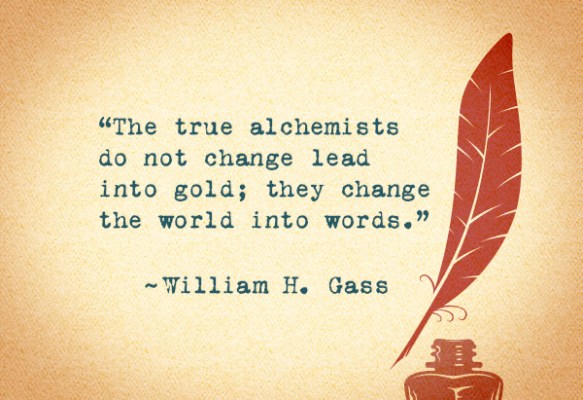
Writing Inspiration

Image


quotes-writing-william-h-gass-600x411

Reading and Writing


Reading and Writing

If you can read and write – YOU CAN DO ANYTHING!

A few things that can help you become a better writer and reader.

  1. Practice – Writing makes you a better writer and reading makes you a better reader.
  2. Read, think, read, write, ponder, write – and read some more.
  3. Learn a new word everyday.
  4. Read lots of books.
  5. And then write some more.
  6. Get the pen and fingers moving, or use a computer.
  7. Read what you have written aloud to anyone who will listen
  8. Keep a journal to keep the writing juices flowing.
  9. Read what you’ve written over and over, until you can’t find any more problems.
  10. Before you take a trip, read any information you can find and then write about your experience.

Why do I feel compelled to write?


Why do I feel compelled to write?

For me, it’s the past that drives me to write.

I read to know the strength and wisdom of those who have written about their past struggles, ideas and hopes for the future.

And so I write, in the hope that those who read my words and those that exist beyond my days can draw some strength and motivation for their days.

What compels you to write?

Roryckeel.com

Basic Social Media for Writers


Basic Social Media for Writers 

By Rory C. Keel


After mountains of research, hours of keeping my rear end in the chair and wearing out the keyboard, they expect me to do what?

Yes, that’s right, as a writer you need to have an internet presence on social media.

Recently, I was asked to present some basic materials about social media, to the Ranch House writers, a group of writers who occasionally gather for a meal and encouragement from others in the writing community.

This blog will be the first in a series of four, dealing with the basics of social media for writers.

What is Social Media

Simply put, social media is a varied group of internet based applications that allow YOU to create and share content.

Early in the development of the internet, most websites were static. In other words, much like a billboard on the highway, it was costly to change and no had ability to interact with consumers.

Today, social media platforms give writers the ability to create, share, discuss ideas, and publish user-generated materials.

These applications are often categorized into groups such as networking sites, blog sites, video Sharing sites and even photo sharing sites. There are hundreds of applications and Facebook, Twitter, Google +, YouTube and Flickr are just a few examples.

Will Social Media benefit me as a writer?

While there are many reasons an individual might use social media, for the writer it’s as simple as Business 101.

Writing is a business

Have you ever read the reviews of a restaurant before going out to dinner? Have you ever researched someone on Facebook, Twitter or LinkedIN, before meeting for an appointment?

It is estimated that in 2015, 93 percent of all businesses will use some form of social media. For both consumers and businesses it has become the norm and is expected.

Using Social Media

Using social media as a writer allows easy communication between you and your readers. It is a medium that allows the ability to develop relationships by having accessibility to groups where individual time is not possible.

And finally, social media allows you multiple mediums to develop your brand as a writer. By blogging, posting, tweeting, google plus-ing, you can establish yourself as a writer and build a large readership.

Next Tuesday we will discuss which social media platform to use. See ya’ then!