How Do I Manage My Social Media?


How Do I Manage My Social Media?

By Rory C. Keel

roryckeel.com

As we have already discovered, social media will help the writer in building their brand, platform or fan base for their writing. Social media is expected in the modern world of technology.

We previously explored the large variety of social media applications available to the writer such as blogs, business-to-customer avenues like Facebook, Twitter and Google+. We also looked at business-to-usiness focused applications such as LinkedIN. And let’s not forget the use of picture and video oriented social media venues such as Pinterest, Instagram, and YouTube.

Managing Social Media

Now that we have a social media presence on the web, how does the writer manage the avenues he or she has chosen?

First, you must understand that social media is NOT FREE.

Are you surprised?

While you may not have pulled out your credit card to set up an account, you will pay by investing either time or money. Your time equals money and unless you are a professional blogger, the hours you spend managing your social media accounts are hours NOT spent on writing projects.

Secondly, you need to understand the different ways to manage your social media accounts.

Individual App Management

This will require you to log on to each application and enter information, reply to messages or requests for followers and manage the account yourself. If you have several different applications this can be time consuming.

The optimum average time one should spend managing all accounts should be no more than 15-20 minutes in the morning and the same amount of time in the afternoon.

Basic Simple Links

Basic simple links in the applications offer the user shortcuts to link them together. By linking these social media platforms, one entry can be made and it will be posted on all applications, saving time and money.

Management Programs and Services

When you achieve your fame as a writer, management services are available to manage these accounts for you. They range from free limited services to different levels of service for various monthly charges.

Next week we will discuss some general tips in using social media.

 Roryckeel.com

Which social media platforms should a writer use?


Which social media platforms should I as a writer, have a presence on?

By Rory C. Keel

roryckeel.com

As we discussed on my blog post last week called Basic Social Media for Writers, that Social media for business has become the norm. For a writer it is no different, you are a business and your customers are your readers.

With literally hundreds of options to choose from such as Facebook, Twitter, Pintrest, LinkedIn, Google+, and YouTube, it could drive a person mad. Before deciding on which social media venue to have a presence, you need to do your research.

RESEARCH

First, you need to develop a platform of readership. Choose a B2C social media platform. B2C simply means a business–to-customer platform that will allow you as a business, to focus on your genre and connect with your readers, the customers.

Second, understand what the venue is and how it works.

A Blog is a place to publish thoughts, tips, ideas. Regular blogs provide keyword-rich content for search engines and can help create you as an expert in your field.

Facebook, Google +, Myspace and other similar platforms, are used to connect and interact with your audience with personal and/or business pages

Twitter allows you to follow and connect with a target audience.

Tweeting about your writing with excerpts, answering questions, and offering helpful insights can help to build loyal readership.

YouTube is the top site for user generated video content. It’s a place to share your business by how-to videos, video readings, discussions, or simply a video introducing YOU.

Other social media sites use the medium of photos to share ideas and communication, such as Instagram and Pintrest.

Another type of social media platform is a B2B platform. B2B simply refers to a Business-to-Business platform. In another words a wholesaler to you as a business.

As a writer, you need access to editors, publishers, or agents. You might even need connections with an ink cartridge and paper supply company. You as a business can connect with others who offer services you need.

LinkedIN is an example of this type of platform and has a business focus.

Having the proper research and information, you can begin to formulate an idea of which social media platform to focus your attention.

With that in mind, next week we will discuss how to best manage your social media so that you will still have time to write.


Basic Social Media for Writers


Basic Social Media for Writers 

By Rory C. Keel


After mountains of research, hours of keeping my rear end in the chair and wearing out the keyboard, they expect me to do what?

Yes, that’s right, as a writer you need to have an internet presence on social media.

Recently, I was asked to present some basic materials about social media, to the Ranch House writers, a group of writers who occasionally gather for a meal and encouragement from others in the writing community.

This blog will be the first in a series of four, dealing with the basics of social media for writers.

What is Social Media

Simply put, social media is a varied group of internet based applications that allow YOU to create and share content.

Early in the development of the internet, most websites were static. In other words, much like a billboard on the highway, it was costly to change and no had ability to interact with consumers.

Today, social media platforms give writers the ability to create, share, discuss ideas, and publish user-generated materials.

These applications are often categorized into groups such as networking sites, blog sites, video Sharing sites and even photo sharing sites. There are hundreds of applications and Facebook, Twitter, Google +, YouTube and Flickr are just a few examples.

Will Social Media benefit me as a writer?

While there are many reasons an individual might use social media, for the writer it’s as simple as Business 101.

Writing is a business

Have you ever read the reviews of a restaurant before going out to dinner? Have you ever researched someone on Facebook, Twitter or LinkedIN, before meeting for an appointment?

It is estimated that in 2015, 93 percent of all businesses will use some form of social media. For both consumers and businesses it has become the norm and is expected.

Using Social Media

Using social media as a writer allows easy communication between you and your readers. It is a medium that allows the ability to develop relationships by having accessibility to groups where individual time is not possible.

And finally, social media allows you multiple mediums to develop your brand as a writer. By blogging, posting, tweeting, google plus-ing, you can establish yourself as a writer and build a large readership.

Next Tuesday we will discuss which social media platform to use. See ya’ then!

roryckeel.com

What if I Fail as a Writer?


What if I Fail as a Writer?

Rory C. Keel


So you want to be a writer but you’re afraid of failure. Perhaps your dream is to write a novel, publish an article in a magazine, or write a famous screenplay but the idea of failing keeps you from ever starting. Putting the “cart before the horse,” as they say, can skew a person’s thinking.

Here are five steps to help realign your thinking so you can achieve your dream of success.

  1. Realize success comes in steps.

Achieving any goal is like walking up a staircase, it has to be one step at a time. Honestly assess where you are in your writing skills. Do you understand grammar and sentence structure? Perhaps you’re farther along and need to work on story telling or plotting?

By knowing where you are on the staircase of writing, you can know what your next step is. That next step is success.

   2. Reaching the next step can be difficult.

Famous authors such as Stephen King, Charles Frazier, Larry McMurtry, J.K. Rowling didn’t reach fame in one day. It takes hours of putting one word next to another, days of sitting in a chair, months of research and rewriting, and sometimes years of waiting for a project to be noticed. Take one step today and another tomorrow and you will be successful.

   3. You will run into obstacles.

Have you ever walked through the house in the dark to get a drink from the kitchen and stubbed your toe on the coffee table? Immediately you scream OBSTACLES!

Understand there will be hindrances to your writing such as finding time to write, family members that need attention, or even the need to make a living and pay the bills.

That’s life. These things still exist for famous authors, they have just learned to prioritize and deal with them.

   4. Surround yourself with other writers.

By surrounding yourself with other writers, you set yourself up to succeed. Learn from others who have what you want. Success is a level small or great not a final ending. So when you associate with those who desire to write and have a mindset to accomplish goals, you become motivated to move along with them.  Famous authors haven’t reached the pinnacle, they only have a greater level of what you can achieve in a small step tomorrow – SUCCESS!

   5. Never, ever, give up on your dream.

“Lots of people limit their possibilities by giving up easily. Never tell yourself this is too much for me. It’s no use. I can’t go on. If you do, you’re licked, and by your own thinking, too. Keep believing and keep on keeping on.” — Norman Vincent Peale

roryckeel.com

Pressing on Update


Pressing on Update

Rory C. Keel


Earlier this year, I posted the blog Pressing On in which I discussed a few things I would do to move forward in my writing. I must confess, today is the first day of March and I find myself struggling to find the time to write as much as I would like. I have added a few more words to my novel. Sometimes I write only a sentence, and at other times as much as a page or two. The novel is moving slowly, but it’s moving forward everyday.

One of the goals I made was to submit smaller pieces of writing for publication. Today I received my copy of The Secret Place magazine, spring 2016 edition published by Judson Press. You can read my devotional called Being Courteous in the April section.

Scan

Just keep pressing on!

Roryckeel.com

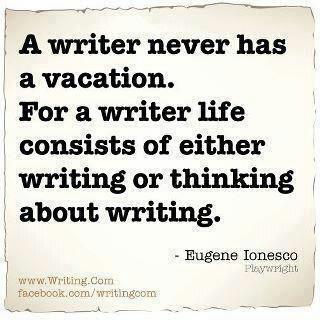
NO VACATION!

Image


writers-quotes-story-writing-34823004-320-320

I wonder how they used to do it?


I wonder how they used to do it?

Rory C. Keel

I thought I would write a few observations. We are surrounded by such a diverse assortment of super technology. For example, we have smart phones that are so powerful they can interrupt a personal, face-to-face conversation with an individual, and allow us to talk, text and send pictures simultaneously around the globe to multiple unseen individuals.

Computers are now a way of life. They check our spelling and grammar and make learning the many beautiful loops of cursive penmanship once taught in schools obsolete. And what is a pen anyway?

We sit in dark rooms like hermits, wearing our pajamas,  tangled hair and unshaven, and faces with no makeup, and with the push of a button circle the globe. We gather information on places we would love to go, and things we want to do–if we ever got dressed and left our home.

The sun is no longer needed to determine which direction is north, south, east or west. Grown men who stubbornly refuse to listen to their zealous wives give them directions will react, without hesitation, to the soft and sultry female voice of a GPS system, accepting every command without question.

With vehicles that can automatically parallel park, the useful skills needed in backing automobiles are forgotten, and the rearview mirror that automatically adjusts to the lighting, is relegated to review our hair, lipstick, or to check for pimples.

The aeronautics industry is also awe-inspiring. The kid down the block that used to chase the other children, dive-bombing them with his remote control airplane, is still in his backyard chasing the Taliban on the other side of the world with remote war drones.

Speed has not always been a friend to avionics. The world’s fastest commercial passenger jet, the Concord, is now retired. The expense of chasing itself around the world was too high. Crossing the International Date Line, it could arrive at its destination tomorrow, and come back yesterday.

The truly amazing thing about all the technology that we experience today is that it causes us to ask questions. But the most frequent question I hear today is not, “How will we do things in the future?” but, “I wonder how they used to do it?”

As an exercise, write about a few things in your past that have changed.

Roryckeel.com

Sunday Writings


“You can make anything by writing.”

C.S. Lewis


I wonder how they used to do it?


I wonder how they used to do it?

Rory C. Keel

I thought I would write a few observations. We are surrounded by such a diverse assortment of super technology. For example, we have smart phones that are so powerful they can interrupt a personal, face-to-face conversation with an individual, and allow us to talk, text and send pictures simultaneously around the globe to multiple unseen individuals.

Computers are now a way of life. They check our spelling and grammar and make learning the many beautiful loops of cursive penmanship once taught in schools obsolete. And what is a pen anyway?

We sit in dark rooms like hermits, wearing our pajamas,  tangled hair and unshaven, and faces with no makeup, and with the push of a button circle the globe. We gather information on places we would love to go, and things we want to do–if we ever got dressed and left our home.

The sun is no longer needed to determine which direction is north, south, east or west. Grown men who stubbornly refuse to listen to their zealous wives give them directions will react, without hesitation, to the soft and sultry female voice of a GPS system, accepting every command without question.

With vehicles that can automatically parallel park, the useful skills needed in backing automobiles are forgotten, and the rearview mirror that automatically adjusts to the lighting, is relegated to review our hair, lipstick, or to check for pimples.

The aeronautics industry is also awe-inspiring. The kid down the block that used to chase the other children, dive-bombing them with his remote control airplane, is still in his backyard chasing the Taliban on the other side of the world with remote war drones.

Speed has not always been a friend to avionics. The world’s fastest commercial passenger jet, the Concord, is now retired. The expense of chasing itself around the world was too high. Crossing the International Date Line, it could arrive at its destination tomorrow, and come back yesterday.

The truly amazing thing about all the technology that we experience today is that it causes us to ask questions. But the most frequent question I hear today is not, “How will we do things in the future?” but, “I wonder how they used to do it?”

As an exercise, write about a few things in your past that have changed.

Roryckeel.com

Stay Inspired


Stay Inspired 

Rory C. Keel


When I began my journey as a writer, I jumped in head first with an attitude of seeking to learn. I started reading how-to books and any instruction manual I could find. I set out to follow all of the rules to the letter and hope for success. I made a considerable effort to attend and get involved in local writing groups and conferences. Over the years, I picked up valuable lessons from other authors and publishers.

Thinking back on my involvement in these things, it felt that writing came a little easier then than now.

What’s different?

Attitude is the difference. When I surrounded myself with writer-ly people and places, my mind stayed focused on writing.

While it may have felt like it took time away from putting words on the page, I actually wrote more.

I challenge you to write more by continuing to learn from others and stay inspired.