WHO CARES?


WHO CARES?

Lynnette Jalufka


I was flipping TV channels one day when I came across the beginning of a movie. A small boy was ordered to fix breakfast by his aunt and uncle while his selfish cousin bullied him. I immediately cared for this orphaned kid with the big round glasses. I wanted to know what happened to him. He ended up at a strange school, with a mystery to solve and a villain determined to kill him. By the end of the movie, I was applauding him.

Apparently, other people liked him, too. I watched more movies about him, and when I ran out of movies, I read the last two books of the series. I wanted to see how he prevailed against this villain. I eventually bought all the books and all the movies. I even went to a midnight premiere showing of the last film. All because I cared about this character.

Such is the power of a sympathetic hero. So, have you guessed who he is? He’s the famous Harry Potter. And the movie that started it all? Harry Potter and the Sorcerer’s Stone.

Your protagonist must have something your readers can relate to, sympathize with, care about. Without it, why would they finish your story? They need someone to cheer for to the end. Who knows what can happen after that?

The People


POSTCARDS FROM THE MUSE

The People

By Nandy Ekle

So, who are the people we write about? We have to have a main character, usually this is our hero. And we have to have a villain, the one who thwarts our hero (or vice-versa) in everything he/she wants. Most stories need secondary characters on both sides, because in real life no one is alone all the time. 

So we’ve defined their roles. But who are they? This is where your love of people watching comes into play.

This past summer I went to a city I had never been before, and I was able to sit at a table and just watch. This place is a place known for all kinds of people and situations. And it was an absolute feast to watch. I saw hundreds of tourists walking up and down the street. I saw performers on street stages, on street corners, and on every square of sidewalk there was. I saw people with hunger in their eyes, wanting the big win; people with desperation in their faces, realizing they were trapped in a life they didn’t like; and people like me, just taking it all in. 

And I know each and every person I saw, whether in sparkly lacy feathery fine-ness with tails and bow-ties, all the way down to the group of people dressed in dirty rags as they vomited into the trash cans; they all had a story. They all had a reason for being there. And they all had a purpose they were looking for. 

And next week we’ll discuss some of these purposes.

My Style of Characterization


My Style of Characterization

by Adam Huddleston

Throughout this month, our writing group will be blogging about our styles and feelings concerning the topic of characterization.  I’m sure that there will be many contrasts and comparisons between direct and indirect characterization in writing.  While I have little more to add than my more experienced peers, I would like to express my favorite style of character description.

I readily admit that I am weak when it comes to direct characterization.  I need to work harder on describing what my characters actually look and sound like.  While I do believe that we should leave some of that up to the reader’s imagination, I do need to strengthen those skills.  I do prefer to show a character acting or reacting a specific way.  By doing this, the reader hopefully gains a better understanding on what the character is like.

For example, in the beginning of my work “Mattie”, the main character is an orphan sent to live with her only remaining relative,  a great aunt.  During the car ride to the aunt’s house, I attempt to portray a slight air of wealth and haughtiness to the older woman by describing how she carries herself and her dialogue with the orphan girl.  It’s not perfect, but I feel that it flows fairly smoothly.

In Search of a Character


Welcome to the year 2019!

In our journey since our start through 2018, the authors of Wordsmith Six have seen setbacks and success. However, we are determined to continue moving forward in reaching for our goals in writing. We hope you will continue to follow along as we focus our 2019 blogs on specific areas of the writing craft.

In January, we will focus on Characterization.

In Search of a Character

When starting a story, we need characters like a Protagonist, the main character and anAntagonistthe villain. There may even be secondary characters that play a role in your writing.

So where do characters come from? Where do we get them?

The easiest way for me to find a character is to think about people I know in real life.

This idea could include friends, family, or someone you just met.

If you have a good imagination, then creating characters by mixing fantasy and reality.

Are you coming up with blanks? Then a trip to the shopping mall with notepad in hand can offer some relief as you observe people as they shop. Another quick starter that might help is to do an internet search for movie star images.

How many different characters can you create this week?

Unwrapping the Story


Outtakes 366

Unwrapping the Story

By Cait Collins


One of the problems with having a big family is trying to find a time for everyone to get together to celebrate the holidays.  At Christmas it’s often eat fast, exchange gifts, and go to the in-laws or rush off to have dinner with the significant other’s family. And sometimes, it’s just seems like crossing one more items off the list.

One of my sisters had a new idea.  She and another sister gathered prizes and over 300 feet of plastic wrap. They wrapped the prizes into two balls of plastic. The younger children were given the smaller ball and a pair of dice. They stood around a table. One child had the ball and the child on the right rolled the dice.  The child with the ball could unwrap the plastic until doubles were rolled. The ball and dice were passed to the right. This continued until all the prizes were found.

Adults and older kids were up next.  The ball was larger and the contestants were handicapped. We had to wear oven mitts when unwrapping the plastic. I assure you it was not an easy task. About the time I found a thread, someone yelled, “Doubles,” and I had to pass the ball. The unraveling took around 45 minutes filled with laughter and teasing. I truly enjoyed myself. The best part was dinner and the games came before the gift exchange. We were together longer.

Sometimes I feel writing my stories is similar to the plastic ball of surprises. I have a story line and characters, but the details are harder to come by. Characters are never introduced fully developed. The layers are revealed by circumstances, developments, triumphs, and disappointments. Each layer revealed shows the characters’ strengths, weaknesses, hopes and dreams. The revelations create likable and relatable heroes and heroines along with despicable villains.

The story also has layers. The events must unfold along a believable time line. And characters must be introduced at the proper time with just the right amount of detail. Like the handicap of wearing oven mitts when unwrapping the plastic ball, the story must have roadblocks and time constraints. The plot cannot be too easy or too predictable.

When a story seems to take a wrong turn or lose focus, instead of giving up, roll the dice, hope for doubles, and receive the ball with the expectation of finding a new part of the story puzzle. Never lose sight of the goal…a story the reader will enjoy and want to read again. Above all, do not forget the fun in finding a new character or story twist. And never let allow the handicaps to defeat you. Grab the ball and shake the bindings until they loosen and the treasures fall out. The tidbits are the gems that make the story.

THE WRITING LIFE QUOTES


“If it sounds like writing, I rewrite it. Or, if proper usage gets in the way, it may have to go. I can’t allow what we learned in English composition to disrupt the sound and rhythm of the narrative.”
—Elmore Leonard

The Writing Life Quotes


The Writing Life Quotes

Natalie Bright


“The greatest part of a writer’s time is spent in reading, in order to write; a man will turn over half a library to make one book.”
—Samuel Johnson

Malapropism


Malapropism

by Adam Huddleston

This week’s literary term is: malapropism.  It is defined as the use of an incorrect word (usually for comedic effect) with a similar sound in place of the correct word.  For example, in William Shakespeare’s “Much Ado About Nothing”, a character states “Our watch, sir, have indeed comprehended two auspicious persons” (replacing apprehended and suspicious).  This effect is often used by characters who are either uneducated or wish to appear so.  

I hope this helps in your craft.  Happy writing!

The Writing Life Quotes


The Writing Life Quotes

Natalie Bright


It’s A Book Event


It’s A Book Event

And You’re Invited!

Please help me celebrate the release of our new Anthology

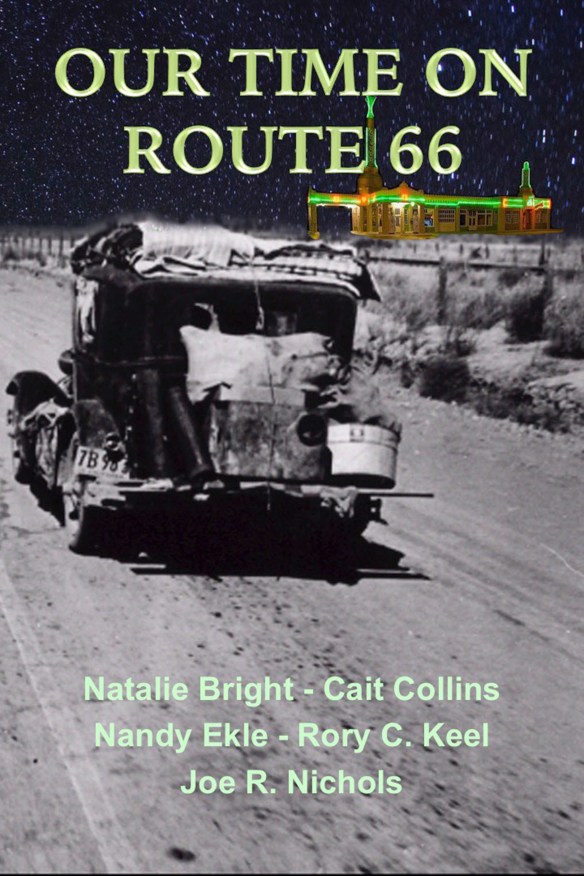
OUR TIME ON ROUTE 66

Join me for a book signing event on historic Route 66

Saturday, December 1. — 11:00 AM to 3:00 PM

Lile Art Gallery

2719 SW 6th Avenue, Amarillo

Lile’s is home of the famous Cadilite jewelry, made from paint chips off the Cadillac ranch.

Scroll down for more about the book.


About the Book:

If you’re needing a unique gift or if you’re a fan of Route 66, this new anthology is for you!

OUR TIME ON ROUTE 66 tells of good times and bad, Love and heartache, from the past to beyond tomorrow, and all of them connected by one stop, the Tower Station and U-Drop Inn on Route 66.

It started as a dirt path connecting neighbors, communities, states and a nation. Route 66 was an overland route traveled by pioneers, migrant farmers and anyone going west looking for the American dream. From wagon ruts to an asphalt paved highway, it has connected generations of people.

Five unique short stories and novellas set on historic Route 66 in Texas.

A gripping story of family betrayal, deep despair, and a young girl’s courageous triumph. MAGGIE’S BETRAYAL by Natalie Bright

A young soldier leaves his new bride for war sharing their life through letters in this heartfelt story. WAITING by Rory C. Keel

A down-on-his-luck cowboy sees opportunity in a young widow’s neglected ranch in 1944 Texas. SUDDEN TURNS by Joe Nichols

A Cherokee Chief predicts Mora O’Hara’s future as she travels The Mother Road seeking closure after a career related tragedy. SHOWDOWN AT U-DROP INN by Cait Collins

Raylen Dickey learns the difference between her friends, lovers, and enemies. FEAR OF HEIGHTS by Nandy Ekle