PODCASTS: LEARNING WHILE YOU WORK AT WRITING


PODCASTS: LEARNING WHILE YOU WORK AT WRITING

Natalie Bright

Perhaps I’m way behind the times, but I’ve never been into podcasts. My youngest son has always been a fan, but it never made sense to me that he spent time watching someone else play a video game. I realized he’s watching a lot about science though, when he began spouting off facts about the universe.

This past weekend I discovered podcasts are for writers too!

Thecreativepenn.com is a treasure trove of information for writers including 250 podcast interviews by self-published author Joanna Penn. She is officially my first podcast subscription.

Here’s what I did last week while listening to Joanna Penn talk about writing:

  • Folded two loads of clothes.
  • Re-arranged my make-up drawer.
  • Ironed shirts for my husband and son.
  • Unloaded and loaded the dishwasher several times.
  • Cooked tacos for dinner.
  • Logged five miles on the treadmill.

Which brings me to the point of this blog post:

Here’s what I learned from thecreativepenn.com podcasts and how I applied that information to my own self-published eBook:

  • Discovered my eBook on Smashwords had 225 sample downloads, but only eight sales.
  • My price of $4.99 is double the cost for about half the page length as compared to books on the same topic which are priced at $1.99 and $2.99.
  • GONE NEVER FORGOTTEN is a heartfelt memoir about loss and the grief of losing our oldest baby boy. The book title is also the same as a porno video that used to be available on Amazon, which is why I stopped promoting it. I should have researched and put more thought into title ideas before I self-published.
  • The title page, dedication, table of contents makes up most of the downloadable sample. No one is seeing any significant example of my writing or what the book is about. When formatting your eBooks, begin with the text of the story. Put everything else at the end.
  • Social media is amazing, and it’s mind-blowing as to what self-published authors are able to accomplish these days.
  • Guest blogging, Twitter, Facebook promos and whatever else, are all things I can do to let readers know about this book. The measurable results of what works best for me is completely different for what might have worked for others. Every author must decide upon their own journey.
  • The most profitable combination is to have at least four books written, polished and published before you begin a concentrated social media blitz.
  • Start building my fan base now by actively participating on twitter, facebook, pinterest, and other social media sites.
  • A newsletter is the best way to build an email data base of possible buyers for your books.
  • The number of people reading on their iPhone devices has exploded (estimated at three times other devices), which makes the iBook app worth considering both as a reader and as a writer.
  • I’ve decided to retire my eBook on Smashwords and rebrand the project.
  • Do I want to spend time and money on a cover redesign, new formatting, and find an illustrator?
  • Should I write a book proposal and research possible submissions to a small press?
  • I must develop a social media marketing plan.
  • I must learn to balance the creative side with the business side, if I want to be a successful author and sell books.
  • Be open minded and consider all of the possibilities for my books in today’s publishing environment.

I’ll keep you posted as this project develops. Thanks for following WordsmithSix!
 

Story in a Sentence


Story in a Sentence

Natalie Bright

There’s no better way to discover the “heart” of your book then to summarize the plot into as few of words as possible.

One sentence can explain the main characters, the plot line, and the theme. Now that’s a challenge!

Stripe your story down to the bare bones. Hooks are attention getters to lure readers into your story. You want to generate interest with a promise of adventure. Ensnare the reader. Pull her away from reality.

If writing one sentence is too difficult, perhaps you have more than one story line. Maybe you have multiple plot lines, and need to decide upon the main story and theme.

*Toy Story is about the ‘secret life of toys’ when people are not around.

*Princess Anna, a hopeless optimist, sets off on an epic journey – teaming up with rugged mountain man Kristoff, his loyal reindeer Sven and a talking snowman named Olaf – to find her beautiful sister Elsa, whose icy powers have trapped their kingdom in eternal winter.

*After a painful divorce, the author sets out to devote one year to pleasure, prayer and love. (EAT, PRAY, LOVE by Elizabeth Gilbert.)

Please share the story in a sentence of your current work in progress.

A NAME


A NAME

By Natalie Bright

Stuck. On a name.

Actually, I don’t know his name which is why I can’t write the story.

Drat!

All of the components are there: setting, beginning, middle, and in my opinion, a brilliant ending. The story plays out in my head in vivid color, but what is his name? I have no idea.

As writers, we understand the importance of a great name. Fictional character names can inspire countless generations (Superman, DC Comics) and generate millions in promotional material (Charles Schulz’s Snoopy). We love those serendipity moments when a character’s name arrives like a gift out of thin air. Author David Morrell spoke at a writer’s conference about being extremely frustrated and stuck on a name for his character. His wife encouraged him to take a break and handed him a locally grown apple. The name of the apple variety was “Rambo”.

My character is quiet, yet very strong, and determined for all of his twelve years of experience. He’s not shy, but he’s not the life of the party either. He works hard and he loves horses. I can see him clearly. What in the heck is his name?!!

CHARACTER NAME RESOURCES

  1. School Yearbooks. I start with my son’s Jr. High yearbook. This is a modern story and there’s no better way to know what kids are being named than to glance at names in today’s world.
  2. Google It. Next I go to the life-changing resource that is Google (how did we survive before?). I’ve searched baby name sites for several days and jot down a page of possibles.
  3. Consult your Names Notebook. Whenever I meet someone with an unusual name, I make a note on my phone or whatever scrap of paper I can find, and then add it to my Names Notebook. Sometimes in conversation someone will tell me that their family has unique names, and they’ll jot them down for me. Also in my notebook are names of family members gleaned from Ancestry.com. Thanks to my Uncle’s genealogy work, it’s become a great source for ideas.
  4. Pinterest has some interesting links for names lists, like most popular, most unusual, most underused, ancient names, etc. You can find some of these on my Board “I Write” under @natbright on pinterest.com
  5. Still writing with character named ‘boy’. The search continues…

Where do you turn for inspiration and ideas to name your characters?


TEN YEARS FROM NOW


TEN YEARS FROM NOW

Natalie Bright

“In ten years, do you see yourself as a middle grade author?” An editor posed this question to me at my very first pitch session. I was terrified, so of course I squeaked out a ‘yes’.

Many, many years later I’m older and wiser, toughened by rejection, and ever hopeful, which is why I can honestly say ‘No.’ I see myself as a productive, published author who is not afraid to write the ideas that are in my head.

This past weekend I heard a speaker who is a retired rodeo, bull rider. Chimp Robertson has written a family memoir, two volumes of rodeo tales, short stories, freelanced for magazines, and is currently working on a western fiction series. Also, he happened to know someone who knew the country singer Chris LeDoux. Long story short, LeDoux recorded two of his songs. Chimp Robertson is a former rodeo cowboy who writes.

His program at the Texas High Plains Writers meeting inspired me to think about a memoir I wrote about a devastating loss. I published it on Smashwords as an eBook, but have had numerous requests for a hardcover edition. It’s time to explore all of the possibilities that this book might become. (Stay tuned.)

I understand now that, if you let them, words can take you on a journey to places you’ve never thought possible. I know that a jumble of sentences can become a short story. I’m rethinking an unmarketable middle grade idea that might work better as a picture book. Your family memoir could lend material for a fictional series. As writers, do we have to be labeled?

Author. Songwriter. Poet. Creative. Playwright. Published. Freelancer. Wordsmith.
Happy. Successful. Writer.

In 2016, I hope you write and realize all of the labels you can ever imagine.

Natalie

Pressing On


Pressing On 

Rory C Keel

Today I’m spending time reassessing last year’s writing goals.

I have made it a custom to take the time at the beginning of each year to evaluate my writing and see where I accomplished my goals, and examine where I fell short of my expectations.

I confess—I failed to meet ALL of my goals.

While this may seem like defeat to some, it really isn’t. The truth is, I did exceed some goals and didn’t reach others. My novel is not finished, but my goals of submitting other works were achieved and rewarded with paid publication.

This year I will set my writing bar high and reach for it, and any goals not met will be closer and easier to reach the next time.

My number one Goal is to finish my novel. Secondly, is to submit ten smaller pieces of writing to various publications. Thirdly, there is a need to constantly improve in the writing craft. So, I will read and study at least one book on writing and attend one or more presentation on writing.

So, I’m pressing on.

NEW YEAR WRITING GOALS


NEW YEAR WRITING GOALS

“The only way you can write is by the light of the bridges burning behind you.”
Richard Peck


It’s a New Year for writing goals dear WordsmithSix followers!

As I think about my writing goals for 2016, the above quote from the award winning playwright and children’s author Richard Peck really speaks to me. What it says to me is that writing is more than just a “mind” exercise. We grow and improve each day. Every story we finish and submit, or shove into a desk drawer, is a lesson in grammar, character development, and plot structure. The hardest part is to keep pushing ourselves forward.

The year 2015 was sluggish for me. I’ve got two middle grade novels and a picture book out there that’s not garnering much interest. We’ve put one novel “on the back-burner” as my agent suggested. To keep busy during “the wait”, I’ve been researching and writing nonfiction articles for magazines, submitted work to several anthologies, and posted tons of blogs for various sites. I really kept on task .

Is the purpose of my writing just to keep busy? This isn’t writers block. I’ve got loads of fiction ideas in various stages of completion. What I’m lacking, I’ve decided, is heart. The heart to stay with one writing project, make it the most phenomenal story I can, and see it to the end.

Quality, NOT Quantity.

As I stare at the 2016 goals sheet, I’ve decided to forget about striving for daily word counts and endless list of contests to enter. Instead, I’m considering what are some of my weak points that I can improve upon in the New Year? How can I write the best book of my abilities and then, make it even better?

Who knows if my work will ever be read in 2016, other than by my WordsmithSix critique group? So many things in this business are beyond our control. I want a new project that will remind me of how fulfilling and fun writing can be. Which unwritten book will I come to every morning with excitement? Which story spark can’t be ignored?

Once I have the answers to these questions, that’s the spark I’ll write on the goals sheet. That’s the one I shall pour my heart into.

 What about you? What’s your writing goals for 2016?

“Fill your paper with the breathings of your heart.”
William Wordsworth 

Wishing you a blessed and productive New Year!


What’s Your Genre?


What’s Your Genre?

Natalie Bright

As you think about your writing goals for the New Year, have you thought much about genre?

Here are some questions to ask yourself as you develop blogs, tweets, and promotion around your stories.

What kind of people will be your readers?

Where can you find these people?

Do your readers have other interests in common?

What blog topics can you focus on that directly relates to your published works?

Here’s to a productive New Year!

ARE YOU AFRAID TO FLY?


ARE YOU AFRAID TO FLY?

by Rory C. Keel 

It’s amazing that so many people have a fear of flying. Several years ago, while on a plane from Saint Louis Missouri to Portland Oregon, I remember boarding and seeing a man who looked as pale as death. He took his seat across the aisle and immediately buckled the seat belt, grabbed the armrests and shook so violently I wondered if it was the engines or him shaking the plane. After sedating himself with a couple of adult beverages, he slept soundly to our destination.

While I have never been afraid to travel in an airplane, I have experienced a fear of flying. Realizing I would never pilot an F-16 fighter jet, I turned to the hobby of remote control airplanes.

After what my wife called “investing heavily” in a kit, I began to build my first R/C airplane. For days I trimmed every piece of wood with the skill of a surgeon to the exact specs. For weeks, I placed every drop of glue precisely in the correct spot, as to not change the balance of the plane. And after months of careful tune-ups on the engine and electronics, along with a few instructions from others to assure that my plane would soar with the eagles, fear took over.

What if it crashes? All that hard work and time will have been in vain.

On my first solo flight, I rolled the plane down the tarmac and lifted off. A feeling of accomplishment flooded over me as I made one pass, then another over the stands. Not wanting to run out of fuel and lose the plane, I made the approach to land. That day I witnessed the most horrific sight—in front of me laid splinters of wood, pieces of plastic and shards of metal. I crash-landed my plane.

In writing, there are moments when we are afraid to submit a piece of work, fearful of rejection. We work on a piece until it is perfect then, “WHAT IF” takes over. What if it’s rejected? What if it was a waste of time because no one likes it?

The good news is that my first plane did finally soar. I learned that my time wasn’t wasted at all. In all the hours of building I had learned how to repair the broken plane, and after adjusting the mistakes I made in the landing approach, confidence took control.

Yes, I have letters of rejection for my writing, however with repairs and a few adjustments, those same pieces have been published.

Don’t be afraid to fly!

Roryckeel.com

Have Confidence in Your Words


Have Confidence in Your Words

Natalie Bright

A wise, multi-published author once told me, “NEVER delete anything.”

I’ve tried to make it a habit to save everything, which is a difficult thing to do when your self-editor is vigilant. Thank goodness there have been a few times I made the effort to save a story.

Many, many years ago during college, I spent time at a friend’s ranch. The ranch foreman was an old cowboy that had a story or two to tell. Wise and weather worn from spending a life-time punching cows, I remember he had the most brilliant blue eyes and he was one of the most laid-back, happiest people I’d ever met.

A spark of an idea turned into a story about that cowboy many more years later for a writing class assignment. I never thought about it again, but I’m so glad that I kept it in my class notes. Fast forward another ten years, a callout popped up into my inbox asking for stories for a Christmas collection with a West Texas theme. That cowboy and his life immediately came to mind. Within 30 minutes of my submission, I got confirmation back that my short story has been accepted.

You never know where and when your words might find a home. Sometimes we write in one form and those words can take on a life of their own and end up as something entirely different. I love when that happens!

Instead of deleting, cut and paste unwanted scenes, dialogue, and chapters, and move them into a separate file. Give it a clever name on your computer, like “My Musings” or “Brilliant Ideas”. Keep an idea file folder for those story sparks that you’ve written on restaurant napkins, scraps of paper, or sticky notes. Never let an idea pass through your brain that you don’t write down. Keep an idea journal and jot down everything when it comes to you, whether it’s a setting, a character, or a bit of dialogue.

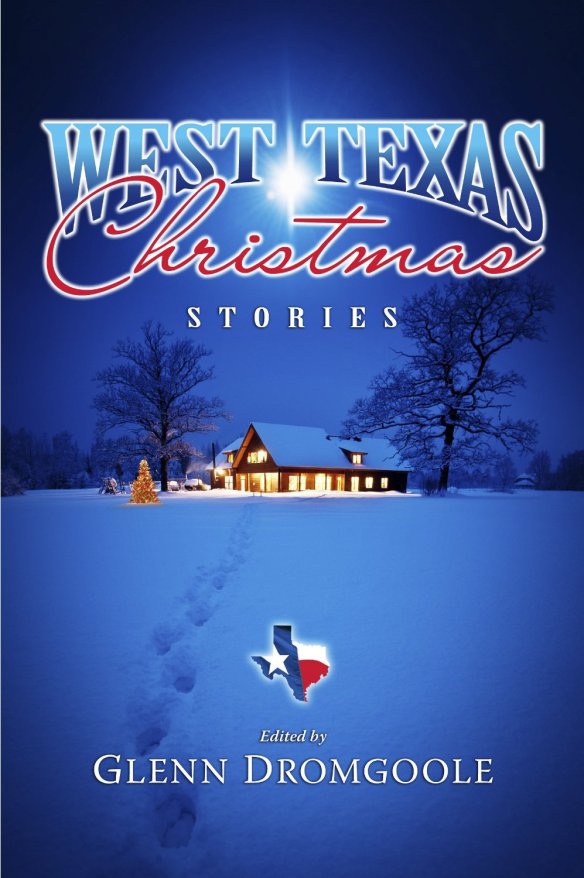
You can read my story “A Cowboy’s Christmas Blessing” in the anthology of more than 30 heart-warming and humorous Christmas stories—all set in West Texas or by West Texas writers.

west texas christmas stories

West Texas Christmas Stories

Edited by Glenn Dromgoogle

Abilene Christian University Press; http://www.acu.edu/campusoffices/acupress/


Merry Christmas Y’all! Thanks for following WordsmithSix.


ENDLESS POSSIBILITIES


Reasons to Write

     Why do I write? Is it because throngs of fans demand it, anticipating every word of my next masterpiece? Is it because I honestly expect to make millions of dollars on a bestseller, or desire to be famous? No.

This week I will share with you the 5th reason of why I write                                                                                                                                                                                   

Reason #5 – Endless Possibilities                                                    

On a recent business trip to the west coast, I noticed something amazing. Traveling along the highway, I read the billboards. Some of them knew I was reading them and said things like, “Caught you looking!” or “You’re so good. You read me like a book!” As spots on a connect-the-dots drawing, these towering advertisements had information about the grandest hotels, motels and the cleanest restrooms. They pointed the way to the best buffets and restaurants. Some revealed the places to go for the nightlife, and what it will cost if you drink too much of the highlife and turn into a lowlife while driving.

Occasionally we pulled into roadside rest-stops for short breaks and “free coffee,” and then we would load up on all the local vacation magazines, free maps and tourist information to read along the way. One visitor’s guide said that Arizona has more boats per capita than any other state in the nation—and they’re a land locked desert!

My point is that the possibilities for writers are endless because writing is everywhere. From billboards along the American road to epic novels, behind everything you read is a writer.

Rory C. Keel