Tourist Tracks


Outtakes 56

Tourist Tracks


We had a new family visit our congregation recently. I was talking with the wife regarding the area, and she asked about the town and things they should know. I told her I worked near the tourist bureau and would pick up the information she needed. I had not been to the Texas Tourist Bureau since they moved into their new facility. I could not believe the information available for Texas travelers. The racks were divided into the seven geographical areas of Texas: Panhandle Plains, Big Bend Country, Hill Country, South Texas Plains, Gulf Coast, Piney Woods, and Prairies and Lakes. No matter where he plans to travel, the visitor can easily find pamphlets on places of interest.

The travel assistant prepared a packet for the new comers and then handed a booklet to me. “You’ll need one of these for yourself,” she stated. I checked the title; Texas Events Calendar Fall 2012. Doesn’t sound like much, but I now have a list of events across the state that might be helpful for researching story locations and historic sites. I know which events are day trips and which will require longer stays. I’ve started marking my calendar with events that interest me as a writer and ones that just sound fun.

I never considered the Tourist Bureau as a source for research, but now I must reconsider the value of these facilities. Getting to know the state’s geography, geology, archeology, and history will add color to my writing.  Contact information provided in the guides might lead to experts in specialized fields who will have answers to my questions.

While state tourist bureaus do not have locations in every city, local Chambers of Commerce will have information on the area. Every state has a Convention and Visitors Bureau that will be able to send information on state events and historic locales. Email them and they will forward brochures and guides to you. In this day of on-line access to information, obtaining brochures and events calendars from state and local agencies may seem unnecessary, but the information might be the very thing a writer needs to add sparkle to his writing.

Cait Collins
What’s Good about Goodreads?


Monday Musings:

What’s Good about Goodreads?

By Natalie Bright

A deep love of books is what distinguishes Goodreads from the other social media sites like Facebook and Twitter. According to their website: “A home for casual readers and bona-fide bookworms alike, Goodreads users recommend books, compare what they are reading, keep track of what they’ve read and would like to read, find their next favorite book, form book clubs and much more.”

Launched in January 2007, it boasts of more than 7 million readers.

Readers

As a reader you can keep track of books you want to read and post reviews for your favorites. Join the conversations or check out what your friends are reading for additions to your To Be Read list. I find myself turning to the reviews on Goodreads before any others. The posts are by people who love to read, and I find their comments honest and . It’s like being a part of a gigantic book club.

Writers

As a writer, it’s a fun promotional opportunity to discover new readers. Join the book discussions and meet readers, possibly making contacts with people who might like to read what you write. Do your own market research and learn about what’s new and popular in your genre.

Beware Your Words

Just a reminder that what you post on the internet is there forever. You may not particularly like a certain author or the plot line or the ending. Odds are there’s someone else who totally disagrees with your opinion. I usually read two to four books a week, however I only post reviews for my absolute favorites.  And even then, I’ve noticed that my absolute favorites have 1 and 2 star reviews.  Stories are everywhere these days thanks to eBooks. It’s a great thing to be a kind and gentle reader.

Happy reading!

Natalie Bright

Connect with Natalie on Goodreads:

http://www.goodreads.com/author/show/5405704.Natalie_Bright

www.nataliebright.com

Submitaphobia


POST CARDS FROM THE MUSE

Submitaphobia 

Picture a girl covered in filthy rags and smudges of dirt on her face. We don’t know if she’s beautiful or not because of the stringy hair that covers her eyes and the spots of dirt and ash on her cheeks. This is our story’s first draft, like when you are in a hurry to get supper cooked and ingredients and silverware seem to land all over the kitchen.

Now you take a warm wet wash cloth and wash your girl’s face. You brush and arrange her hair. Then you take the dirty rags she wears and burn them, handing her a fine ball gown that glistens and sparkles and heralds perfection. You dress her in that gown and step back and say, “What a perfect beauty I have created!”

Of course, the metaphor is easy to see. You have edited and re-edited and re-edited your story and brought it to the closest thing to perfection you have ever read. And you’re bursting with pride.

So the next thing you do with your beautiful perfect princess-like girl is shove her in a closet and lock the door. This is what happens when you suffer from submitaphobia.

The only cure for such a disease is to remove the –aphobia and send your darling out to the ball. She will never meet the prince locked in the closet.

Congratulations. You have just received a post card from the muse.

Nandy Ekle


TEACHERS


TEACHERS

by Sharon Stevens

You must live on Mars if you don’t know that public school will begin soon. The season comes around every year and we are still taken aback as we face the crowds filled with desperate parents, school lists in hand and disgruntled children in tow, frantically searching for supplies and clothes.

Teachers have been attending in-services and getting their rooms ready whether they teach little ones or secondary. I imagine the dread and elation is much the same for either or. All wonder where their summer disappeared to, and when it will return again.

I love teachers! I treasure their kindness, their firmness, and the knowledge they share. I love my children’s teachers, my friends that are teachers, and teachers wherever they teach. You find each in all walks of life on every level, and every faith.

When our fellow blogger, Natalie Bright, reminded us that we were celebrating a year of blogging with Wordsmith Six blog I thought back to all of the words written this year by each one of us and I celebrate the stories attached to each. Just think, I may have missed out on all of this if it wasn’t for a teacher.

In the middle of first grade we had to move from Canyon to Amarillo and I had to settle into a new school. For some reason I had struggled in Canyon, but blossomed in a different environment. My mom told me later that I couldn’t read and it was the teacher that helped me to figure out what was wrong. Mom said I couldn’t change simple words like cat, to fat, to mat, to rat etc. But once I figured that out I just flew. I loved to read, and from that day on I read everything, even cereal boxes. The library and I became best friends. Teachers are wonderful everywhere and I am sure if I had stayed in Canyon they would have figured out and worked with me, but it was Mrs. Carmody who showed the way.

So this is my homage to all the teachers everywhere. It doesn’t matter whether you teach in the home, Sunday School, private or public school. Please know we cherish you and wish you the most wonderful year. And even though you may be faced with terrible restrictions, state mandates, and ugliness from every avenue imaginable, we cherish the gifts you share.

And in honor of all I wish to leave you with this quote from Theodore Roosevelt:

Far better it is to dare mighty things, to win glorious triumphs even though checkered by failure, than to rank with those timid spirits who neither enjoy nor suffer much because they live in the gray twilight that knows neither victory nor defeat.”

Sharon Stevens

Say What?


Outtakes 55 
Say What?

I’m an Air Force brat. My father served 26 years in the Army Air Corps and the Air Force. We did some traveling; mostly south to north and back again. Dad was assigned to a three-year stint in St. John’s, Newfoundland, an island province of Canada, but that’s a separate story. You see the military views things a little differently than civilians. Someone might ask about your hometown, but the service views you as Air Force regardless of age, sex, or state of origin. Imagine how difficult is for Southern-Air Force to be stationed in Northern Air Force.

As Southern Air Force (Texas-born, Louisiana cultured), I was raised to say ‘Ya’ll come’, ‘Thank you kindly, sir.’ ‘ Mom’s cooking up a mess of turnip greens and ham,’ ‘the skillet’s hot and ready to fry up some chicken’, or ‘I sure do love corn bread and sweet milk’. Unfortunately, the good citizens of Bangor, Maine, considered my terminology quite colorful. Of course, I had the same issues with Maine-speak, especially if the speaker was from down-east Maine. My teacher told me I needed red shots for gym. Cas were paked in the paking lot. Shooting stas could be seen in winter. We went to Ba Haba on Saturday. Quick translation: Red shots are red shorts. Cars were parked in the parking lot. Shooting stars can be seen in winter. And we went to Bar Harbor on Saturday. No wonder I nearly failed spelling! It seems strange that a country whose primary language is English is full of dialects and colloquialisms. Then again, the regional differences in our language are a gold mine for writers.

Can you imagine Scarlet O’Hara without her sweet southern belle smile and “Oh, Rhett, I do love you.”  Or “I want everyone to be pea green with envy.” I also enjoyed the Closer’s Brenda Lee Johnson’s syrup-sweet “I’m doing just fine, thank you, but you on the other hand are under arrest.” What about President Kennedy’s cultured Boston accent? Californians have their special vocabulary. Sarah Palin speaks with a wonderful homey twang. Sprinkling these regional dialects and phrases in our stories adds color and enhances the setting. It brings realism to the work.  Just don’t over-do it. There is a balance that should be maintained.

I say all this as I work on my contemporary cowboy story.  In Texas, a filly could be a young female horse or a young lady. Is wushin’ my dirty clothes appropriate? I know we must greeze the axle on the hay-hauler. But if I order a soda, will I get a Dr. Pepper or a Big Red? Will the sky fall if I plan a bar-b-q on Friday night during high school football season? Such an action is sacrilegious and a hanging offense if a town’s team is in the state play-offs. Is referring to the protagonist’s girlfriend as ‘ugly as a mud fence’ too much an insult? When in doubt, I’ll consult Lou Hudson’s SPEAK TEXAN IN 30 MINUTES OR LES. I just have to be sure my good friends up North know that Texans no longer tie their horses to the hitchin’ post in front of the livery stable. We now drive trucks and park them in the parking lot.

Cait Collins

Beginning, Middle and End – WHAT A RIDE!


A story has a beginning, middle and an end.

Make a brief outline answering these questions to create a story skeleton to build upon.

  1. The Beginning: What event happens to person, that creates a problem or a need?
  2. The Middle: What struggle does the character face in solving the problem or the need?
  3. The End: How is this person changed and what have they learned as a result of the struggle?

This is where the story is made. Imagine the process like a roller coaster. The reader’s attention is captured by the alluring promises made by the title and then they are locked into their seat at the beginning of the ride. Tension builds as the chain’s click-clack pulls them higher into the problem, and then drops them into the middle of the story where there’s no turning back. The reader struggles back and forth, and then up and down along with the characters to solve the problem. The ride then comes to an end where there is resolution showing a change created by the struggle.

Rory C. Keel

Happy Blog-iversary to us!


Happy Blog-iversary to us! 

We’re Celebrating the Big 1!

By Natalie Bright

We are a diverse group of writers actively writing and critique together. We started WordsmithSix Blog on August 1, 2011 with the goal to share our love of the written word.

I have to admit that I was very reluctant to start blogging, mainly because of the commitment. I’m of the opinion that if you volunteer to do something, you follow it through to the end and you give it your all. I wasn’t sure if I had enough topics on writing, but I have to admit it’s been fun, and there are a few things about blogging that surprised me…

Blogging Surprises

1) Exercise that writing muscle. Stuck on your WIP? Write a 500 word blog and just get your words out there. Don’t focus on the number of hits. Focus on the craft of words, make it your very best, then go back and tackle that 100,000 word novel.

2) Develop your “write brain” and your “idea eye”. You’ll begin to see ideas for posts everywhere, and eventually conversations, sights, sounds, tastes will give you more ideas for blogs, articles, stories, characters, settings. The overload is wonderful.

3) Deadline looming, means you must get something written no matter what or you’ll let your critique partners down. They’re just as busy as you are, and they don’t want to hear excuses.  Just do it.  You’ll turn into dedicated writer who can consistently produce new material and meet a deadline.

3) Creative people are inspiring, and it’s fun to be involved in a group effort.

4) People are nice. I’ve made wonderful connections on Facebook and Twitter and Pinterest. And vice versa, I’ve discovered a lot of talented writers and their books through social media. There’s a whole world out there of interesting people. Learning about the things they are passionate about is interesting, and being part of a vibrant community is fun and stimulating.

5) Focus, Focus, Focus. If you’ll notice, the most popular blogs are based around a common theme whether that be cooking, marketing, history, home decor, modern mommy’s, politics, etc. Writing a complete novel works in much the same way. You must have that common theme running throughout which ties your plot and characters together.  Establish your blog around a common theme rather than random posts, and when you post, make it the best. The most popular blogs have built that huge audience over a long time through quality and consistent posts.

Thank you for following us at WordsmithSix!

by Natalie Bright

http://www.nataliebright.com


Atmosphere


POST CARDS FROM THE MUSE

Atmosphere

I love scary stories. I love to watch them, hear them, read them. The best way to enjoy a scary story is to turn the lights down, maybe light some candles, and have a huge bowl of popcorn, or m&m’s. Curl up on the couch reading my book or cuddled up with my honey watching a movie.

Believe it or not, I also love to write scary stories. Doesn’t matter how my story starts, it always ends up on the dark side. And there is also a great way to get in the mood for that kind of writing.

Pull a chair up to the desk with just you and the computer. Turn off the lights and turn on some quiet music. Light some candles and let your imagination run amuck. The fun will begin.

Every genre has its own atmosphere. If you write romance, you might want flowers and love songs. If you write science fiction, you might want cerebral music and stars shining on the ceiling. If you write mystery, you might want a fog machine and a trench coat. Western writers might want hay and a cowboy hat in their writing space.

The point is, your writing space should be planned and arranged to create the perfect writing space that inspires your words to flow onto the paper.

Congratulations. You have just received a post card from the muse.

Nandy Ekle

SLOGAN


SLOGAN

by Sharon Stevens

“Tiffany’s blue box is a slogan without words.”

Words of Wisdom by Seth Godin

from Advertising Creative, Strategy, Copy, Design

by Tom Altstiel & Jean Grow

My husband and I were eating out at Jason’s Deli recently and I watched as a young mother tried to corral two little girls at their table. Juggling with keeping them seated in their chairs and retrieving upended juice boxes was a wistful and precious sight especially since our days of parenting were long past. Not wanting to intrude on their frustration I returned to my salad and conversation with my husband until I heard the woman quietly tell her daughter to sit down and eat her supper. (How many times have I said those same words?) But when she called the little child by name my heart absolutely melted as it was warmed with memories of long ago.

Molly. Such a simple symbol, and an old one at that. I didn’t think anyone named their children with such an unassuming, gender specific heirloom in this day and age. It only took a moment for me to be flooded with incredible tenderness at the mere mention of this old-fashioned name.

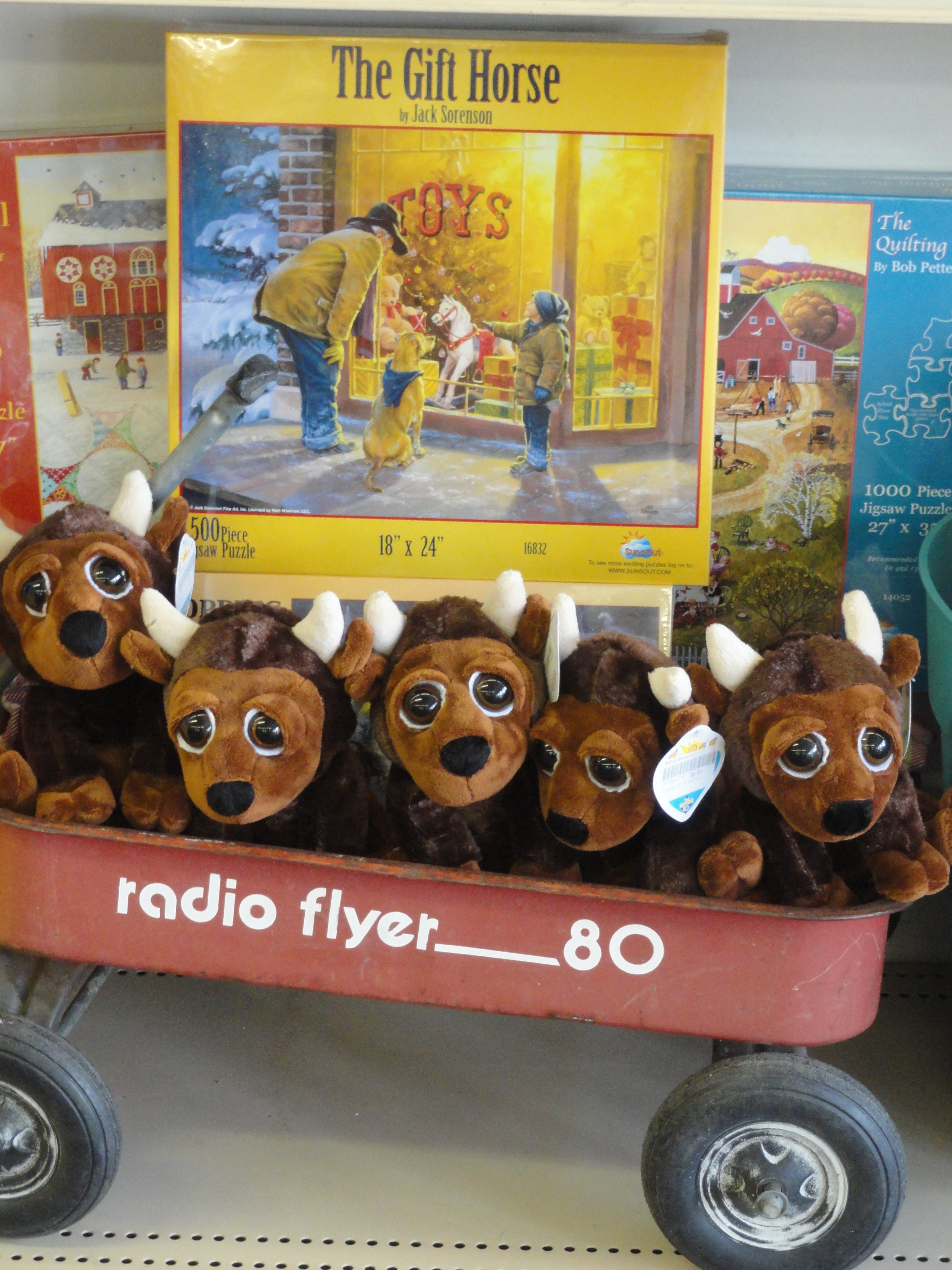
Instantly I remembered a little red, Radio Flyer wagon, a neighbor, lilacs, cottonwoods and a kindness without detail. Every sweet memory I have of childhood is related to Molly and then glory, rejoicing, sunshine, and the artistry of colors, so many colors, every color of the rainbow. I see it. I feel it. I smell it. I hear it. I even taste it. That’s what the sound of her name and her link to the little red wagon means to me.

I could never relate to a Tiffany box. My family doesn’t run in these circles. Hardly any of my friends connect to it either. On second thought, none of my friends, family or acquaintances would recognize such an item. As far as I know this kind of box can only be seen on Antique Roadshow on PBS where they are always reminding the public that the item is WAY more valuable if it comes in the original package.  And we don’t put much stock into this either, not because any of us are poor. We just don’t want to spend any extra money on a luxury that gives nothing in return.

The artist Jack Sorenson explains that it is so important to him to paint a picture that instantly tells a story to everyone who sees it. In his artwork you feel warmth, and love, sometimes a little high-jinks, but all in good fun, never ugly, no despair, just some good old-fashioned, down home thoughts.

As writers we must try to convey the theme and mood of our piece to our target audience. If you are writing about wealth and riches, by all means write about the Tiffany box, but then again pay close attention to the heart of your story. Even a sweet remembrance like O. Henry’s “Gift of the Magi” can be revived with a new twist to an age old tale. It’s the name of Tiffany that tells you someone is more than just a spendthrift with nose-up-in-the-air haughty, with lavish lifestyles, designer gowns of incredible red carpet sparkle, jewels with heavy bling from head to toe, and mega million dollar mansions. The blue box is the status symbol, but you have to have what goes inside before you can truly relate. They don’t just sell the box.

But give me the image of a little red, Radio Flyer wagon any day of the week. And send me those who fit into that vintage category and who enjoy simplicity and childhood memories as well.

These are my kind of people…the ones who will name their child Molly. After all,  a rose by any other name…

Sharon Stevens

It’s a Real Job


Outtakes 54

It’s a Real Job

“I always thought about writing a novel. I think I could do it.” I hear that statement 99% of the time when folks find out that I’m a writer. I’m sure most authors have heard similar responses. If people really understood what it takes to write that novel, they might reconsider their responses. Do these well intentioned folks really think writing is easy?

What does it take to be a writer? Some would say talent is the key component. Of course there is a certain degree of talent involved. However, there are thousands of folks who have the ability to write, but never start. I have a nephew who has talent, but he doesn’t write. Why not? Because he prefers music to the written word. He devotes his energy to perfecting his skills on the various instruments he plays. Simply put, talent comes into play when the writer has the desire to write.

The desire to put words on paper propels a talented person to begin the journey. He buys the right books, studies the craft, experiments with a few ideas. He might join a critique group and a writers’ group. As he presents his work to his peers, he receives kind but honest feedback on his writing. He rewrites, but his critique group still is not satisfied with his efforts. Frustrated, he packs the first novel in a box and shoves it under the bed. The book is never completed.

A successful writer combines his talent and desire with bulldog tenacity. No one is going to convince him it can’t be done. He plans his writing time; places his backside in the chair and writes. He listens to other writers’ critiques and does the necessary rewrites to produce a better product. The writer risks rejection when he submits the finished novel to agents and editors. A writer doesn’t expect overnight success or instant wealth. Instead he will take the free short story publication to enhance his writer’s resume. He will volunteer to help at a conference or present a program to students. He keeps up with current trends in publishing. Deep in his soul, he believes he will be a successful writer and he works for it.

Writing is a real job.  It requires talent, desire, effort, a thick skin, risk, confidence, and tenacity.  No one component is enough. Even Snoopy concedes “Good writing is hard work.”

Cait Collins