You Might Wind Up In My Novel
Outtakes 58 Release
You Might Wind Up In My Novel
“Good morning. I have just written you into my novel. Your character will die a horrible death. Have a nice day.” My number six sister has a great sense of humor. Every year, she searches a website that carries unusual tee-shirts, looking for the perfect shirts for her sons, her husband, and others on her Christmas list. Sister number three gave me a similar shirt that stated, “Be careful or you might wind up in my novel.” One might ask if my characters are created from people I know. The short answer is “yes”.
As a beginning author, I was concerned that friends and family might assume I based characters on them. I feared they would be hurt if they thought an evil or less than admirable character was written about them. I was in line to have Michael Cunningham, Pulitzer Prize winning author of THE HOURS sign my book. He heard the discussion a couple of us were having regarding this fear. Cunningham told me there would always be people who saw themselves as characters in a novel. The author must let go of the fear and write the story. His advice freed me to develop my characters. I am grateful for his insight and encouragement.
In a recent presentation in Amarillo, Texas, LONGMIRE author Craig Johnson, made reference to the indemnity clause in every book: “the persons in this book are a work of fiction. Any resemblance to persons living or dead is purely coincidental.” “It’s a lie,” he stated. “Some of my characters are based on people I know well.” Yes, I use traits from people I know, from folks I work with, from people I observe to populate my stories. Mr. Throckmorton, the minister in HOW DO YOU LIKE ME NOW, possesses the love, concern and kindness of preachers I know and admire. I have watched women like Kate Walker go through hell and still retain their dignity and remain good, noble women.
Some traits are derived from people watching. I love the adoring expression on a father’s face when a tiny hand pats his chin. Dad’s eyes light up and he brings those little fingers to his lips for a kiss. How about the child who hears music and without inhibition, dances to the beat? Then there’s the girl who meets up with a boy from her class. She twists a lock of hair around her finger as they talk. Is she shy, or nervous, or frightened?
I have written some of my best scenes in an effort to keep out of HR. Let’s face it some co-workers can be quite annoying. The temptation to mouth off must be stifled as I don’t want to be accused of creating a hostile work environment. In order to remain out of trouble, I pull out my Netbook and write a scene that releases my frustration. The final confrontation between Kate Walker and Mary Cooper was written as I was biting my tongue. Not only do I remain in good standing with my boss, I have a scene to incorporate into a current or future story.
Memorable characters make the story. You can have an intriguing plot, fabulous description, and an unusual setting, but if the characters lack the pizzazz of the author’s people watching skills and wealth of friends, family, co-works, and acquaintances, the story falls flat. No reader likes cardboard characters.
Cait Collins
Never forget
Never forget
The Mid-America Air Museum in Liberal, Kansas is one of the country’s largest air museums. The museum’s collection was started by the late Colonel Tom Thomas, Jr., who donated his personal collection of over 50 planes to the museum.
Walking by the timeline display demonstrating the history of flight, I realized the great advancements in aviation that have been made in the last one hundred years. It’s amazing to think that my grandparents lived through most of the changes we now take for granted when we step into an airliner to take a trip in the air.
With more than one hundred aircraft in the museum, it is easy to see the technical advancements in personal aircraft like the gliders, Cessnas and Beechcraft. Multiple hands-on exhibits help one to appreciate the science behind piloting these aerodynamic machines by actually sitting in a cockpit and maneuvering rudders, ailerons and elevators. The experience will give this writer sufficient material to use in a flight scene.
Military planes ranging from both World Wars and the Korean war, although primitive by today’s standards, demand respect. As workhorses of the sky, they demanded both skill and stamina by the pilot to endure the punishments of these older planes.
Further into the museum tour, the Vietnam era jets brought back memories of sonic booms that I heard as a child growing up near Perrin Air Force base in north central Texas. These were my superstars. These were the toy models that hung from my ceiling by string as though they were in real dogfights. To live in a country protected by the finest, fastest and the most feared jets in the world created in me security and a sense of national pride that has lasted through the most modern fighter jets of today.
Why do we need these?
At the end of the Mid-America Air museum tour stands a small exhibit, but one you can’t miss. Featured is a section of a rusted steel I-beam from the Twin Towers of the World Trade Center as a reminder.
God bless America!
Rory C. Keel
Why, Oh Why?
Why, Oh Why?
Don’t Be Afraid of the Journey
By Natalie Bright
A feisty eleven-year-old by the name of Silver Belle consumes my thoughts. She lives in 1887 Texas in the fictitious frontier town of Justice, Texas.
She’s the main character in my western middle grade novel, and she’s so demanding. Thoughts of her adventures interrupt me without notice, day and night. Several weeks ago, for example, I realized her grandmother does not like her.
WHY is there conflict between Silver Belle and her grandmother? WHY must Silver Belle explore her Mexican heritage by visiting a sheepherders plazita in the Texas Panhandle? WHY can’t their issues be resolved and does this story end well?
I have no idea as to the answers to any of those questions, but I do know for a fact, just as true and real as this blog I’m writing, that Silver Belle’s grandmother refuses to acknowledge her own granddaughter’s existence.
The journey as a writer is in finding out the WHY.
At this point, I have total sympathy and a better understanding as to WHY Hemingway began drinking every day at noon.
Natalie Bright
An Inspirational Book
POST CARDS FROM THE MUSE
An Inspirational Book
It might as well be midnight for me. I get up very early in the morning, work an eight-hour job, cook dinner when I get home (and other domestic activities), work a couple of craft projects for friends , and then settle with the computer in my lap. And then it hits me. I have not written my blog and my brain has already counted down, said its prayers and gone to bed.
I reach for the little green book that stays near my writing space: The Pocket Muse, by Monica Wood.
This book is a life saver. I cannot tell you how many times I have gone to Ms. Wood for help, and been sent on my way with a pocket full of inspirational ideas from the pages of her book. Just one tiny little nugget catches my attention tonight: “Write a piece – fiction or nonfiction, poetry, or script – in which three objects exist at the beginning and only one at the end.” I read it several times and begin to feel something inside my head split and unwind like an orange peel.
First, I’ll find three random homemade objects with absolutely no connection, then I’ll make up a connection for them. A couple of characters line up and their dialogue escalates the story into, um, a misunderstanding which leads to a couple of the children disliking each other. Two objects disappear and the kids must find them before the bell rings at 3:00 sending them home.
Now it’s your turn to write something from one of Monica’s amazing jam-packed idea book. Ready? Here it is: “Write about a person whose reputation rests on the appearance of an inanimate object.”
Congratulations. You have just received a post card from the muse.
Nandy Ekle
SLOGAN
SLOGAN
by Sharon Stevens
“Tiffany’s blue box is a slogan without words.”
Words of Wisdom by Seth Godin
from Advertising Creative, Strategy, Copy, Design
by Tom Altstiel & Jean Grow
My husband and I were eating out at Jason’s Deli recently and I watched as a young mother tried to corral two little girls at their table. Juggling with keeping them seated in their chairs and retrieving upended juice boxes was a wistful and precious sight especially since our days of parenting were long past. Not wanting to intrude on their frustration I returned to my salad and conversation with my husband until I heard the woman quietly tell her daughter to sit down and eat her supper. (How many times have I said those same words?) But when she called the little child by name my heart absolutely melted as it was warmed with memories of long ago.
Molly. Such a simple symbol, and an old one at that. I didn’t think anyone named their children with such an unassuming, gender specific heirloom in this day and age. It only took a moment for me to be flooded with incredible tenderness at the mere mention of this old-fashioned name.
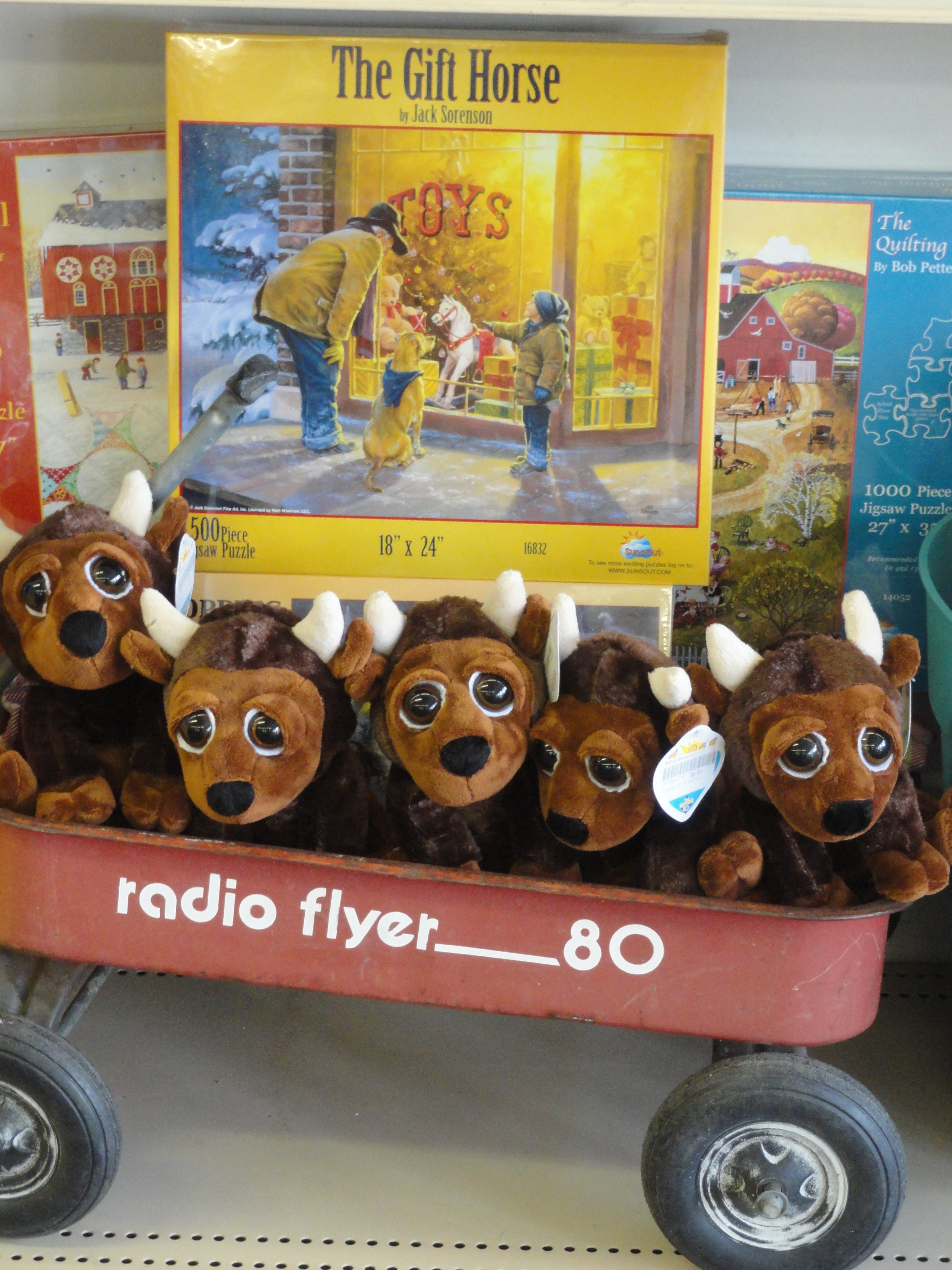
Instantly I remembered a little red, Radio Flyer wagon, a neighbor, lilacs, cottonwoods and a kindness without detail. Every sweet memory I have of childhood is related to Molly and then glory, rejoicing, sunshine, and the artistry of colors, so many colors, every color of the rainbow. I see it. I feel it. I smell it. I hear it. I even taste it. That’s what the sound of her name and her link to the little red wagon means to me.
I could never relate to a Tiffany box. My family doesn’t run in these circles. Hardly any of my friends connect to it either. On second thought, none of my friends, family or acquaintances would recognize such an item. As far as I know this kind of box can only be seen on Antique Roadshow on PBS where they are always reminding the public that the item is WAY more valuable if it comes in the original package. And we don’t put much stock into this either, not because any of us are poor. We just don’t want to spend any extra money on a luxury that gives nothing in return.
The artist Jack Sorenson explains that it is so important to him to paint a picture that instantly tells a story to everyone who sees it. In his artwork you feel warmth, and love, sometimes a little high-jinks, but all in good fun, never ugly, no despair, just some good old-fashioned, down home thoughts.
As writers we must try to convey the theme and mood of our piece to our target audience. If you are writing about wealth and riches, by all means write about the Tiffany box, but then again pay close attention to the heart of your story. Even a sweet remembrance like O. Henry’s “Gift of the Magi” can be revived with a new twist to an age old tale. It’s the name of Tiffany that tells you someone is more than just a spendthrift with nose-up-in-the-air haughty, with lavish lifestyles, designer gowns of incredible red carpet sparkle, jewels with heavy bling from head to toe, and mega million dollar mansions. The blue box is the status symbol, but you have to have what goes inside before you can truly relate. They don’t just sell the box.
But give me the image of a little red, Radio Flyer wagon any day of the week. And send me those who fit into that vintage category and who enjoy simplicity and childhood memories as well.
These are my kind of people…the ones who will name their child Molly. After all, a rose by any other name…
Sharon Stevens
Longmire
Outtakes 57
Longmire
It’s that time of year when there’s little new on television. Reruns, reality shows, and repeats of repeats of the same old movies fill the schedules. When I saw the promotions for Longmire on A&E, I thought it sounded interesting. At the very least, it would be new. I caught the last couple of episodes and was intrigued with the characters and setting. There was a beautiful starkness to the cinematography and an intriguing perfection in the characters and dialogue. I hoped the series would be picked up for a second season.
I was surprised to learn the author of the Walt Longmire mysteries, Craig Johnson, would be speaking in Amarillo as part of the Amarillo Public Library’s summer Amarillo Reads program. Since I was impressed with the series, I looked forward to hearing from the author. As I took notes from Craig’s presentation, I started thinking, “If the guy writes the way he speaks, his books will be great.” I have just finished the first book, THE COLD DISH, and can state I am not disappointed. Craig Johnson is a master story teller. His novel combines the best of distinct, interesting characters; spot-on dialogue minus tag lines; Indian lore; the harsh beauty of Wyoming and Montana; and a big anti-hero. I am hooked. Thank goodness there are seven more Walt Longmire mysteries to read.
I’m a speed reader. I can read a four-hundred page novel in a matter of hours if there are no interruptions. However, I found my reading slowed because I was savoring the description. Johnson has found the perfect balance between too much and not enough description. I hiked the trails around the lakes and through the mountains with Sheriff Walt Longmire as he and Henry Standing Bear searched for a witness. I felt the bone-chilling, mind-numbing cold as he carried an injured man to safety. I felt his pain and uncertainty as the decision was made to leave his badly wounded friend on the mountain during a blizzard. I hurt at the unexpected end.
After finishing THE COLD DISH, I realized the author had skillfully woven three of the great story themes, man against man, man against nature, and man against himself, without confusing or blurring the plot’s twist and turns. Normally, I detect the perp by the middle of the book. This plot was so well hatched, I never suspected the killer’s identity. I consider that the essence of great writing. I look forward to reading the next book DEATH WITHOUT COMPANY. I can’t wait for season two of the A&E series Longmire. In the words of Lonnie Little Bird, “Yes, it is so.”
Cait Collins
Try living with your character
When creating a character try this exercise.
As you build a character, or characters, you should be able to see them and answer questions about them. As you take action and make choices during the day, do the same with your character.
What do you eat for breakfast? Does your character eat breakfast? What foods do they like or dislike?
Do you wear a particular style of clothes? What does your character WEAR? Why do they like to wear them?
Do you go to the store? Where does your character shop and what do they buy?
What do you do for fun, sports or hobbies? What about your character?
What’s important is NOT what the character did, but what you learned about what you know about the character.
Rory C. Keel
Promoting YOU is Business
By Natalie Bright
When my story “The Race” was selected for Chicken Soup for the Mother of Preschooler’s Soul, I realized few have heard my name, but everyone knew about this international series. Following is a list of tips for organizing a promotion in your town or neighborhood.
1. Compile a mailing list NOW.
Gather addresses for a mailing list, or email list, into a database that is user friendly now. Don’t wait until you need it. It should be versatile for printing labels or for sending email notices. Everyone you meet is a potential consumer of your work either at the present time or in the future. Continually add and update names to keep your list current.
2. Think outside the bookstore.
Consider holding a book signing in unique places that have a direct connection to the work you are promoting. Our local Wal-Mart was so excited about hosting a local author, they even provided fresh flowers and goodies for the table. We scheduled the event around Mother’s Day. Other different kinds of stores might be willing to host an autographing. What about scrapbook store, floral shop, or espresso bar?
3. Plan a merchandise tie-in.
Inexpensive give-aways to coordinate with your book are fun and will add a unique component to your event. My toddler, eating nothing but fish crackers, inspired my story in Chicken Soup for the Mother of Preschooler’s Soul. The store manager contacted a vendor, who agreed to provide free crackers for the autographing.
4. Remember holidays.
Does your anthology relate to an important retail day or holiday? Schedule an autographing the day of or prior to that special day. On the day before Mother’s Day, the time of my event was set during the busiest traffic being after lunch through middle afternoon. My table was located on a main aisle in front of the book department. I had a steady stream of shoppers the entire time.
5. Spread the Word.
You’d think that most locales would do everything they can to promote the events they’re hosting. In reality, that is not always the case. Never depend on the store to do all of the promotion. They have other deadlines, work duties, and they’re as busy as you. I know the truth stings a little, but your event might not be a huge priority on the list. Instead, you might have to make it easy for store owners to help you sell books by providing flyers, press releases to the local newspaper, etc. Never underestimate the power of “buzz”. Your family, friends, and fellow writers will generate talk about your event. Social media is FREE so take advantage of the medium. Ask people to “share” or “retweet”.
I’ve been an organizer for several author events and I’m always shocked at the number of people who don’t feel they need to help with promotion. A post on Facebook, linkedIn, quick email or several tweets is so easy these days. Why would you not want to tell all of your social connections when and where you’ll be signing your book?
6. Get personal.
I think personal contact is crucial to a successful promotion on the local level. Contact bookstore managers, provide them with the ISBN number, and outline your plans to promote the book. I was turned down by the manager of our local bookstore chain because he couldn’t find the Chicken Soup title in his computer, however because of someone I knew who knew the Wal-Mart Manager, my event came together. Store managers may require several memory joggers because your event is not the only issue in their busy day. Be considerate, but be persistent. For example, after a telephone conversation follow up with a letter outlining the specifics of your event. In addition, always do what you say you will do. Build a cooperative reputation right from the start and don’t take anything personal. It’s business.
If you hit stumbling blocks, and you will, remain professional. One neighbor could not believe I had a story published and told me I had too much time on my hands. On the other hand, our city’s mayor bought a copy for her and her daughter when I was seated next to her in a local eatery. Always carry extra copies in your car. You may be surprised how quickly word about your writing buzzes around your town.
Natalie Bright
Passing Time
POST CARDS FROM THE MUSE
Passing Time
This room is gray, gray as in dull, colorless non-white. Drab walls and drab carpet, buff colored desks and glass windows letting in the gray light from the overcast sky.
Against one wall is a black metal book shelf holding numerous books of different sizes, colors fonts and genres. There is a space between two books in the middle of the shelf. This space is the exactly the size of another book, which is not in its place. It is missing.
As I look closer a the titles, I see that the owner has kept the books in order by titles in their various series. I wonder which title is missing and where it could be.
This is an illustration of what to write when you don’t know what to write. Start describing a room in as intricate detail as you can. Every single time I’ve done this exercise, I have seen sudden threads of stories begin to show up, and before I know what has happened, I have a plot and a character.
Congratulations. You have just received a post card from the muse.
Nandy Ekle