Jury Duty


Jury Duty

by Adam Huddleston


So, I have recently been summoned for jury duty. I’m one of those strange folk who have always wanted to perform my civic duty by serving on a jury, but circumstances have always conspired against me. I wanted to tie-in my summons with my weekly blog, so I began to think about the film “Twelve Angry Men.”

Written by Reginald Rose as a teleplay in 1954, “Twelve Angry Men” centers around a homicide trial and the jurors’ deliberation concerning the defendant’s fate. Each character is fleshed out and the dialogue is technical enough to make them believable.

I remember reading the play in high-school and both film versions are excellent, sporting all-star casts. The 1957 version stars Henry Fonda, Lee J. Cobb, and Jack Klugman. The 1997 edition features Jack Lemmon, Hume Cronyn, and George C. Scott. I highly recommend both.

Hopefully, my experiences won’t be quite as dynamic as those in this wonderful work!

Encouraging Others to Write


Encouraging Others to Write

by Adam Huddleston


So, you’re a writer. Or, like me, you at least attempt to be one. You spend a good deal of energy in the creation of a literary work in the hopes that it will make you rich and famous; or maybe brighten someone’s day. My question to you is: Do you ever encourage others to write?

Personally speaking, there are two types of people that I would like to see writing more. The first are my children. They know that “Daddy” is a writer and has even had a few flash fiction stories published. My oldest has created a few basic stories mostly concerned with he and his best friends fighting crime in and around our town. I praise him constantly for his efforts and encourage him to keep up the good work.

The second of my babies has even begun writing a few elementary stories. Her spelling is atrocious and the tales are quite basic, but guess what, I couldn’t care less. I fills my heart with joy and tends to bring a tear to my eye to see my kids imitating dear old Dad. I hope and pray that they continue to.

The other group of folks I encourage to write are those who are interested in writing short fiction. As a moderator of www.site.flashfiction5.com, I would love to see more people participate each month. It is completely free, it strengthens your writing skills, and is a lot of fun! If you are reading this right now, open up another window in your browser, type in the web address above, and embrace a literary nirvana.

Happy writing!

Writing in “The Visit”


Writing in “The Visit”

by Adam Huddleston


This past Friday my wife, her father, and I went to the matinee showing of “The Visit”. We are all fans of horror and this film looked to be pretty scary. Afterward, the main topic of conversation amongst us, other than the twist ending which the film’s writer/director M. Night Shyamalan is known for, was the writing in the movie.

As horror movies go, the plot was average to a bit above average, but in my opinion the dialogue was one of the film’s highlights. It had the perfect mix of humor and terror. The young boy in the movie, played by Ed Oxenbould, steals the show with his lines; especially when he substitutes profanity with the names of female pop singers. The grandparents in the film deliver equally strong performances with their portrayals of loving caretakers that get creepier as the movie progresses.

Kudos to Mr. Shyamalan for a wonderful job with the writing. If you are a fan of horror, I recommend seeing this film when you get a chance.

Ramblings


Ramblings

by Adam Huddleston


So, what do you do you are up against the deadline and you have no ideas (or good ones at least) for a blog post bouncing around in your cranium?

You ramble.

I love to read. Most writers do. I used to real a lot more before marriage, kids, and a career inserted themselves into my life. Don’t get me wrong. I’m not complaining. I love my life now, but I remember a day when I would stretch out with a good horror or fantasy novel and spend a couple of hours in page-turning relaxation.

Now I sneak a couple of minutes in here and there. Traveling to east Texas to see family helps. Whether by car or by plane, I am usually afforded a few peaceful moments to spend in my favorite pastime. It takes me about twice as long to finish a novel as it used to, but the payoff is still the same. I’m currently half-way through “Mr. Mercedes” and look to have it finished before my birthday in October when I hope to receive the sequel, “Finders Keepers.”

When do you like to read? Do you have a favorite spot to read in? I hope ya’ll do!

Happy writing (and reading)!


A Literary Analysis of Stephen King’s Writing: Part 2


A Literary Analysis of Stephen King’s Writing: Part 2

by Adam Huddleston

Last week I began a series on what makes Stephen King’s writing successful. It is my intent to analyze the strengths of his work in an attempt to understand it and apply it to my writing as well. Part 1 of the series focused on his character creation and imaginative situations. For today’s blog, lets discuss how he organizes his plots as well as how expansive his library of work is.

For the most part, the majority of Mr. King’s plotting is linear. As his stories progress, they may jump around in time slightly depending upon the narrative’s needs, but they usually move straight forward. He doesn’t toy around much with stories told in reverse or packed full of flashbacks. I believe that this is because the typical reader is more comfortable with a traditional plot format.

Speaking of his plots, there are many who criticize the endings of his stories. I’d be lying if I said that I have done so from time to time. Most of his tales end quite satisfactorily, for me at least, but there are some that just lose steam and peter out in the end. One of his novels, “Cell”, just seems to end. It almost feels like he was rushed to finish it or just ran out of things to say. Other works exist with similar flaws, but in my opinion, they comprise a minority of his library.

The expansiveness of his work is non-debatable. He has consistently published several pieces a year ranging from short story collections to novels, screenplays to audiobooks. The sheer volume of his work is a testament to the author’s success. I believe that his ability to find a niche in the fiction market then provide quality entertainment (at a break-neck pace) to his consumer base solidifies him as one of the greatest authors of the past several decades.

Happy writing!

A Literary Analysis of Stephen King’s Writing: Part 1


A Literary Analysis of Stephen King’s Writing: Part 1

by Adam Huddleston


“What? Seriously? We get it Adam, you’re a fan of Stephen King. But he’s a hack! His work isn’t deep or meaningful! He’s a cynical writer with very little to contribute to the overall tome of literature!”

And he’s one of the best-selling authors of all time.    So, say what you will, he must be doing something right.

Over the next few weeks/months, I plan on doing a general overview of what I believe makes Mr. King a successful writer. Notice I didn’t say a superior writer, just a very popular one. These blogs will be swimming with my personal views and opinions. Although I am by no means a professional critic, I feel that I’ve spent enough time in Mr. King’s writing to back up my thoughts with legitimate reasoning. So, let begin.

What does Stephen King do well? What are his writing strengths and (without completely imitating them) what can we draw from his work to improve our craft?

I believe his genius comes out in his character creation. He has the ability to create memorable heroes and villains with just enough backstory to make you care about their struggles without slowing the pace too much. Characters like Pennywise the Clown, Cujo, and Christine are as well known in American culture as Wyatt Earp and George Washington!

Mr. King is also able to throw those full characters into the most imaginative situations. His work, while generally classified as horror, steals a bit from the fantasy, science-fiction, and western genres as well. As you can imagine, when you mix these fields together, a mother-load of strange circumstances can occur. It is these odd occurrences which he throws his protagonists into that keep his “Constant Readers” turning the page.

Next week:

His plotting style and proliferation.

Rookie Mistakes in Writing


Rookie Mistakes in Writing

by Adam Huddleston


As an aspiring writer, I am well acquainted with the myriad of mistakes that a young scribe can make (and truth be told, I still make them all the time). These can range from poor word selection to inappropriate story pacing. For the newbie like me, here are a few pitfalls to avoid:

  1. Don’t over/underuse adverbs and adjectives. Descriptions are wonderful for your writing, they make the scene stand off the page, but using too many will bog the story down and lead to a weak overall reading experience. Instead, opt for a sharper word selection.
  2. Alter sentence length depending on the events in the story. Exposition can afford to be a bit longer but action scenes should contain quick, powerful sentences that drive the narrative forward.
  3. Keep your promises. If you lead the reader to believe something concerning a character or event, make sure you stay true to it or the reader will feel cheated. For example, if you imply that the antagonist is planning something evil and dangerous for the hero, have him do it! Also, if your story has a twist ending, make sure it is still a reasonable one. Avoid the deus ex machina.


Hopefully, you will find these helpful in your writing!

Funny Pics about Writing


Funny Pics about Writing

by Adam Huddleston


This week I thought I’d just share a few humorous gifs about writers and the work they do.

00688-funny-cartoons-writer

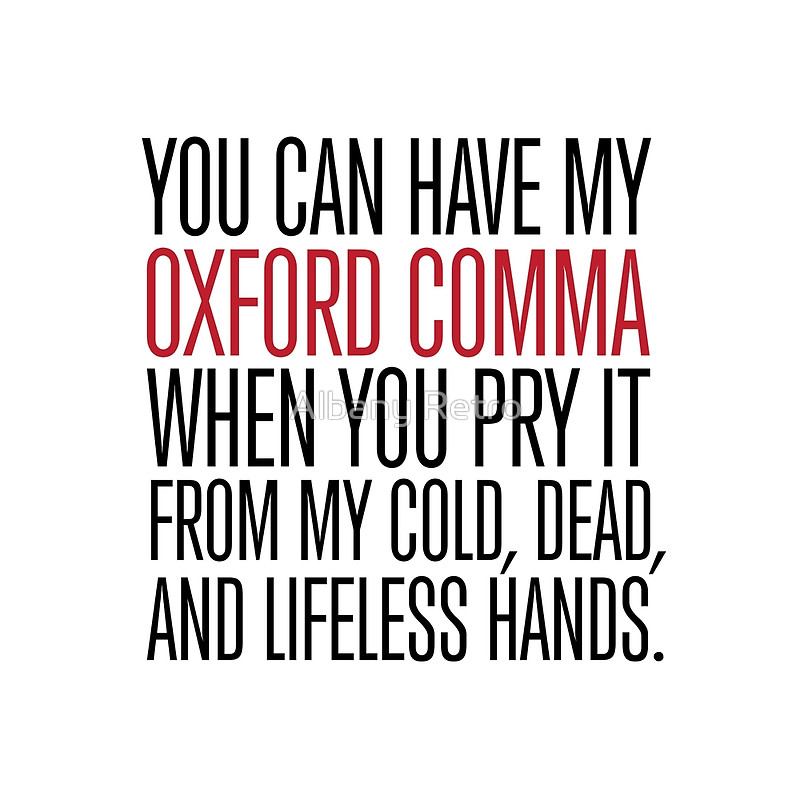
flat,800x800,075,t.u3

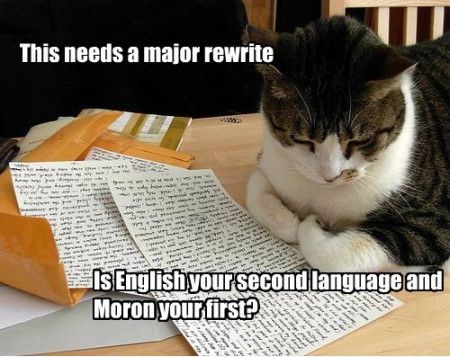
Funniest_Memes_this-needs-a-major-rewrite-is-english-your_9562

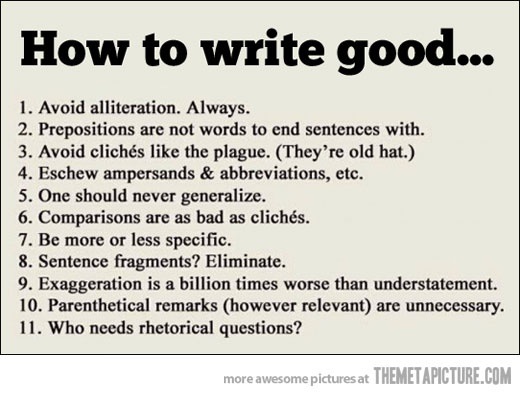
how-to-write-good

Happy writing!

Procrastination


Procrastination

by Adam Huddleston

     Procrastination.

It may not be the hallmark of all great writers, but I’ll bet it pokes its little head around the corner in the minds of most. It’s easy to do, and if done frequently, it can lead to a serious backlog of work. So, what can be done to curtail this bane of efficiency? As it pertains to writing, I believe there are two main weapons:

  1. There are a plethora of tools available to help a writer keep on track. Most smartphone and computer software has scheduling options that will send alerts at specified times. One writer’s software I’ve used in the past and highly recommend is Scrivener. You can set a certain word count and deadline and it will calculate how many words per day are needed. Very helpful!
  2. Fellow writers. It can be quite beneficial to have other writers’ encouragement when you have a project that needs to be finished. They are usually in the same boat and can easily relate.

Hopefully you can use these tools to help meet deadlines easier. Happy writing!


Favorite Quotes

by Adam Huddleston


Writers love a good quote. What classifies as “good” may differ between individuals, but most would agree that it should be witty and memorable. That being said, here are a few of my favorite quips:

“It is better to keep your mouth closed and let people think you are a fool than to open it and remove all doubt.”

Mark Twain

“When I die, I want to go peacefully like my grandfather did–in his sleep. Not yelling and screaming like the passengers in his car.”

Bob Monkhouse

“I love deadlines. I like the whooshing sound they make as they fly by.”

Douglas Adams

When you are courting a nice girl an hour seems like a second. When you sit on a red-hot cinder a second seems like an hour. That’s relativity.

Albert Einstein

A government that robs Peter to pay Paul can always depend on the support of Paul.

George Bernard Shaw


Happy writing!