Frontiers in Writing 2012


By Natalie Bright

Frontiers in Writing 2012 will open with a Thursday night book signing event held at Barnes and Noble, 2415 Soncy Road., 7:30 – 9:00 PM, June 28. Classes on Friday and Saturday will be held at the CUB on the Amarillo College Washington Campus. The closing event with John Erickson as the keynote speaker, will be held in the Ordway Auditorium.

Just for Newbies! If this is your first writers conference ever, don’t be shy. We’ll have a short orientation in the Barnes and Noble Classroom just for you starting at 7:30 PM. You’ll be done in plenty of time to attend the autographing and meet some of this years faculty.

The Friday night banquet featuring New York Times and USA Today bestselling author Jodi Thomas, will be held in the REC Hall at the FORTAMARILLO RV PARK located at 10101 Amarillo Blvd. West, Amarillo. The REC hall is located on the corner of Amarillo Blvd andHelium Road, just behind Gander Mountain.

PPW is having a Book Fair at Barnes and Noble during this weekend. Every purchase made in store or online will benefit the organization. This gives us much needed funds for future conferences allowing us to keep registration fees as affordable as possible.

Print the registration form by going to www.panhandleprowriters.org

Hope to see you all in June!

Natalie Bright


The Ten Best from DFWcon 2012


The Ten Best from DFWcon 2012

By Natalie Bright

Based on the sessions I attended, here’s a list on the best things about DFWcon 2012:

1) Over 400 creative people all in one conference center.

2) “Creativity is not a bucket, it’s a river. Jump in.” Jodi Thomas

3) “Fiction is a reality in me; a very real part of my life.” Jodi Thomas [www.jodithomas.com]

4) “Every author should have at least three pieces of social media, and it doesn’t really matter which. Start with a website and build from there.” Fred Campos [www.funcitysocialmedia.com]

5) “Don’t go anywhere without your book. You are the advertising agency for your book, and you must get comfortable with that process.” Cheryl Ammeter, author of  steampunk, Ivey and The Airship. [http://www.aethersedge.com/]

6) “Horses, most particularly stallions, are hyper aware of everything around them.” The 33 Worst Mistakes Writers Make about Horses, by Becky Burkheart.

7) “The key to success is take control and keep submitting.” James Rollins [www.jamesrollins.com]

8) “The only excuse you have to NOT write is death or a coma, and even if you’re in a coma you should still be thinking about your story.”  Candace Havens [www.candacehavens.com]

9) “People of the past felt differently about everyday issues. Life was dirtier, more physically demanding, and more dangerous.” Jennie Goloboy, agent and historian.

10) Over 400 crazed book people all in one conference center.

Great conference!

Natalie Bright

http://www.nataliebright.com

Author Platform


Author Platform

By Natalie Bright

You’ve heard the term author platform many times. For most people in

business, it takes years to build connections. Many of the vast
opportunities in social media are free, allowing you to build your platform
before you need to be known as a public person.

Writing is the hardest thing you’ll ever do and marketing yourself is even
more difficult. The writing part, you probably can’t help. The marketing
part can be learned and you can work on promotion at the pace you feel
comfortable with.

Fame before the Pub Credit

While you’re working on that great novel, have you considered some of the
other things you can do that will create a fan base and a professional name
for yourself? Every one of the connections you make now equals potential
customers in years to come.

The key to remember is that social media is “social”. You can promote
yourself certainly, and more importantly you can network with other
professionals, discover new favorite authors, communicate with people all
over the world, and find endless knowledge by reading blogs on a array of
topics. It’s an information overload!

Wordsmith Six Blog

The members of my writers critique group started a blog in August of last
year.  To be honest, I held out as long as I could on the blogging and
tweeting. In my mind, it made more sense to use every spare second writing
my stories. I was worried that I might have just so many words in me.

Jumping In to Blogging

Today, I have a totally different opinion. Within my writers critique group,
we decided to  make a concentrated effort to join the social world out there
and start a blog. We didn’t want to be just one in a zillion. First we did
some homework.

Successful Bloggers

After much discussion over the course of several meetings we came to the
following conclusions:

1) most high traffic sites have a specific theme whether it be political,
mommy bloggers, marketing, crafts, etc.
2) we picked a theme: writing and our journey to publication
3) good bloggers, who have lots of followers, are consistent
4) high traffic blogs have interesting information, and since the members of
our critique group write in many different genres, we felt it would lend a
variety and uniqueness to our posts.
5) the numbers are important, but not something to obsess over. The main
thing you can learn from the statistical analysis is the best times to post
and what topics generate the most hits. Interestingly enough, our highest
traffic seems to be around 2:00 PM in the afternoon.
6) the most popular

Based on the results, we’re doing good and we hope to do better.  Every day
we gain more followers.  Thanks for following us!

www.nataliebright.com

Natalie Bright

Reading for the Music


Reading for the Music

By Natalie Bright

Successful authors tell us over and over again to write every day and read every day. Why is reading so important?

Do You Hear the Music?

NYT and USA Today bestselling author, Jodi Thomas, [www.jodithomas.com] explained it like this at a talk she gave to area writers; “writers must be able to hear the music.”

As you listen to the radio, you can distinguish between rock and roll or country.  How about classical or bluegrass? By reading the genre you want to write, your brain becomes geared to the flow of a romance novel, or the twists and turns of a mystery, or to the humor that would appeal to children.

Goodbyes are Hard

I found this to be so true in my own writing. My first middle grade novel took three years to write. I loved those characters, and never got bored with the editing process. I probably read that story hundreds of times. My husband, a man of few words, said, “It has no plot.”

As much as I loved that story, he was right. I had to bury that one in the closet. I then focused on reading middle grade novels, starting with award winners and those that made bestseller lists.

Story, Story, Story…

I printed lists by authors who posted their favorite reads in blogs or on their websites, and scanned Amazon for used editions of Newberry winners. I read hundreds of middle grade books over the next year, and discovered so many amazing authors.

Recognition!

From a dream, a new character took shape in my head:  a feisty, eleven year old named Silver Belle. Her personality jumped off the page, and the story emerged. Recently, Silver Belle’s Train Caper received a 2nd place award in the OWFI ’12 contest, which tells me the story has potential but still needs polish. The work goes on.

Have I finally recognized the “music” of a middle grade story? I don’t know, but the melody continues to fill my soul and keeps me on task.

Are you listening to the music of your story?

Natalie Bright

Rebuilding History


Rebuilding History

By Natalie Bright

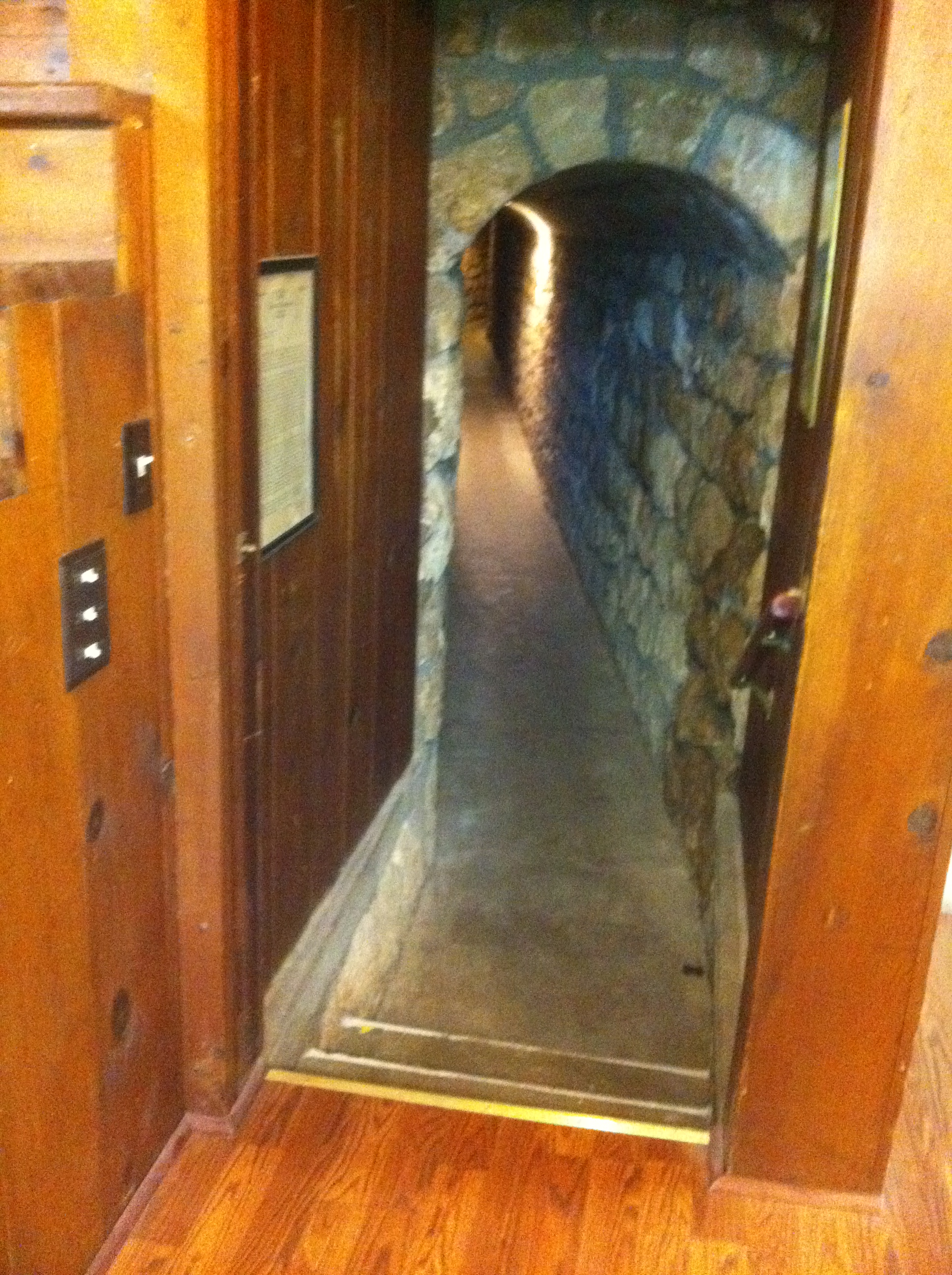
The Dalton Gang hideout is a well-preserved piece of history. Located in Mede, Kansas, the small two-story house belonged to the gang’s sister and her husband. A tunnel runs under the side yard into the horse barn and corral, which is now the museum.

Today the tunnel is nicely cemented with stone sides for safety purposes, but it’s still in the exact location. Interviews with old timers document memories of playing in the tunnel when they were children. As I walked down the tunnel from the house back to the barn, I imagined men scurrying to their horses with spurs jingling and pistols at the ready.

Dodge City

By contrast, about 45 minutes North on Highway 283 is the town of Dodge City, Kansas. Yes, THAT Doge City! In 1967, the town council voted to participate in the government’s urban renewal and accepted funds to tear down the original and famous “Front Street”.

The historic Front Street, where famous lawmen like Bat Masterson, Wyatt Earp, and Bill Tilghman worked to tame the wildest town in the west, is now a parking lot. About two blocks away is the Boot Hill Museum and a rebuilt Front Street, which to me has the feel of an amusement park setting. The highway was widened, but the proposed hotel and pedestrian malls were never completed. An impressive sculpture of a longhorn now marks the historic location. As one area historian told me, where the famous Long Branch Saloon once stood is now the spot for that Honda Civic.

Stepping into the Past

Walking the actual ground of history is an amazing experience for writers. As I walk through old forts and hideouts and homes, I try to imagine the sights, sounds, and smells of the time. I try to get a sense of the people who lived within the walls where they loved, laughed, and cried.

With that information, writers make every effort to convey these sensations through words. It’s our words that have the ability to transport readers back in time. Hopefully, our written stories transcend time and place.

Thanks

On behalf of historical writers everywhere, I want to extend kudos to those communities and to the citizens that work hard to preserve the places of our history for future generations. We are forever indebted.

Natalie Bright

Thanks


By Natalie Bright

Thanks to TheBeachWriter.com for recognizing WordsmithSix with a Versatile Blogger Award!

7 things about WordsmithSix:

1. We’re six writers who really do exchange work at bi-weekly meetings.

2. We’re going on our third year of critiquing together, first meeting in 2009.

3. We write numerous genres including inspirational, horror, westerns, Biblical fiction, kid lit, freelance articles, women’s mainstream; which makes for interesting meetings!

4. We represent a wide variety of life experiences and professions: pro bronc rider, mortician, published documentary author, court reporter, human resources director, OB/Gyn nurse, bookstore owner, mom, dad, bookkeeper, roper, rancher, minister, legal assistant, conference speakers!

5. We call the state of endless skies and flat, treeless landscapes home.

6. We are all members of Panhandle Professional Writers, organized in 1920 as “Panhandle Pen Women” by Laura Hamner and Pheobe Warner, which continues today as one of the oldest professional writer’s groups in the U.S.

7. Our blog has a theme:  join us on our journey to publication as we blog about the craft of writing.

*****Drum Roll Please*****

WordsmithSix would like to recognize the following blogs. You may not have ran across some of these, so please check them out.

The Versatile Blogger Award goes to:

1. http://joshua-mom.blogspot.com  this mom posts about loss and love.

2.  www.kellerbusybees.blogspot.com : this TCA teacher of the year and a “20” to Watch NSBA Tech Leader is very creative and energetic. You’ll love her posts.

3. http://networkedblogs.com/tc8lW Angels and Demons and Portals. Oh My!

4.  http://welcometowherever.wordpress.com

5.  www.panhandleprofessionalwriters.wordpress.com

6.  www.wizardwayne.blogspot.com

Versatile Blogger Award

Thank the award-giver and link back to them in a post.

Share 7 things about yourself or your blog.

Pass this award along to other bloggers.

Natalie Bright

Thanks


By Natalie Bright

Thanks to TheBeachWriter.com for recognizing WordsmithSix with a Versatile Blogger Award!

7 things about WordsmithSix:

1. We’re six writers who really do exchange work at bi-weekly meetings.

2. We’re going on our third year of critiquing together, first meeting in 2009.

3. We write numerous genres including inspirational, horror, westerns, Biblical fiction, kid lit, freelance articles, women’s mainstream; which makes for interesting meetings!

4. We represent a wide variety of life experiences and professions: pro bronc rider, mortician, published documentary author, court reporter, human resources director, OB/Gyn nurse, bookstore owner, mom, dad, bookkeeper, roper, rancher, minister, legal assistant, conference speakers!

5. We call the state of endless skies and flat, treeless landscapes home.

6. We are all members of Panhandle Professional Writers, organized in 1920 as “Panhandle Pen Women” by Laura Hamner and Pheobe Warner, which continues today as one of the oldest professional writer’s groups in the U.S.

7. Our blog has a theme:  join us on our journey to publication as we blog about the craft of writing.

*****Drum Roll Please*****

WordsmithSix would like to recognize the following blogs. You may not have ran across some of these, so please check them out.

The Versatile Blogger Award goes to:

1. http://joshua-mom.blogspot.com  this mom posts about loss and love.

2.  www.kellerbusybees.blogspot.com : this TCA teacher of the year and a “20” to Watch NSBA Tech Leader is very creative and energetic. You’ll love her posts.

3. http://networkedblogs.com/tc8lW Angels and Demons and Portals. Oh My!

4.  welcometowhereever.wordpress.com

5.  www.panhandleprofessionalwriters.wordpress.com

6.  www.wizardwayne.blogspot.com

Versatile Blogger Award

Thank the award-giver and link back to them in a post.

Share 7 things about yourself or your blog.

Pass this award along to other bloggers.

Natalie Bright

Famous Authors Whose Works Were Rejected


Famous Authors Whose Works Were Rejected

By Natalie Bright


Stephen King

Mr. King received dozens of rejections for his first novel, Carrie; he kept them tidily nailed to a spike under a timber in his bedroom.

One of the publishers sent Mr. King’s rejection with these words: We are not interested in science fiction which deals with negative utopias. They do not sell.

William Golding

Mr. Golding’s Lord of the Flies was rejected by 20 publishers.  One denounced the future classic with these words: an absurd and uninteresting fantasy which was rubbish and dull.

Anne Frank

According to one publisher, The Diary of Anne Frank was scarcely worth reading:

The girl doesn’t, it seems to me, have a special perception or feeling which would lift that book above the ‘curiosity’ level.

15 publishers also rejected The Diary of Anne Frank.

Joseph Heller

One publisher wrote of Mr. Heller’s Catch-22:

I haven’t the foggiest idea about what the man is trying to say…Apparently the author intends it to be funny – possibly even satire – but it is really not funny on any intellectual level.

J.K. Rowling

Harry Potter and the Philosopher’s (later Sorceror’sStone was rejected by a dozen publishers, including biggies like Penguin and HarperCollins. Bloomsbury, a small London publisher, only took it on at the behest of the CEO’s eight-year old daughter, who begged her father to print the book.

George Orwell

One publisher rejected Mr. Orwell’s submission, Animal Farm, with these words:

It is impossible to sell animal stories in the USA.

Tony Hillerman

Mr. Hillerman, now famous for his Navajo Tribal Police mystery novels, was initially told by publishers to Get rid of all that Indian stuff.

John Grisham

Mr. Grisham’s first novel, A Time to Kill, was rejected by a dozen publishers and 16 agents before breaking into print and launching Mr. Grisham’s best-selling career.

Sylvia Plath

According to one publisher, Ms. Plath’s ability as a poet was nothing special: There certainly isn’t enough genuine talent for us to take notice.

Irving Stone

Mr. Stone’s Lust for Life was rejected 16 times, once with this helpful synopsis: A long, dull novel about an artist.

The book went on to sell over 25 million copies.

Frank Herbert

Dune was rejected 20 times before successfully reaching print – and becoming one of the most beloved science fiction novels of all time

Richard Adams

Mr. Adams’ Watership Down was rejected since older children wouldn’t like it because its language was too difficult.

 Madeleine L’Engle

Ms. L’Engle’s A Wrinkle in Time was rejected by 26 publishers before finally breaking into print. It went on to win the 1963 Newbery Medal.

Margaret Mitchell

Ms. Mitchell’s Gone With the Wind was rejected 38 times before finally finding a publisher.

 D.H. Lawrence

 After reading Mr. Lawrence’s Lady Chatterley’s Lover, one publisher warned: for your own sake do not publish this book.

 I stumbled on this under the title of “30 Famous Authors Whose Work was Rejected” I’m offering a portion of the article for you here. I think this is proof that we must write the story of our heart and soul.  No one can write the story that you must, so just keep at it!

Natalie Bright

Pitch Perfect


Pitch Perfect

By Natalie Bright

Perfecting a Story’s Pitch

At a recent Society of Children’s Book Writers and Illustrators meeting in Oklahoma City, those attending had the opportunity to turn in a 60-word pitch, which were then picked at random and read out loud.  The conference faculty offered their thoughts and suggestions.

Based on the comments and feedback, I’ve compiled a list of the main instruction for making your pitch’s perfect for editors and agents:

* Informative

* Tell us about your story succinctly

* Be direct and concise without being cryptic

* Not too detailed

* “kid” perspective if you are writing a children’s story; be careful of word choice

* Not mysterious or extranious words, just get to the point

* Not too eloquent or flowery

* In a nutshell, what kind of journey

* Do not use cliché’s

* Not too vague

* Be careful with technology references; it becomes very outdated in a short time

Writer’s “Voice” Defined


Writer’s “Voice” Defined

By Natalie Bright

Children’s writers gathered in Oklahoma City at the end of March for the SCBWI-Oklahoma chapter’s annual Spring conference. The delightful Regional Advisor, Anna Myers, and her volunteers put together an informative and inspiring day.

More than one presenter elaborated on “voice”; the thing that some writers seem to come by naturally, and the rest of us wonder where in the heck the line is to get one.  Several of the speakers helped shed some light on this elusive muse.

Authorial or Narrative

“Editors are always looking for strong, new voices,” said Krista Marino, Executive Editor at Delacorte. She explained that there is an authorial voice and a narrative voice. Authorial being the distinctive finger print that an author might put on one’s work, and the kind that passes from one piece to the next. A narrative voice is what a reader remembers when she reads the book and this is what editors are looking for.

Maggie Lehrman, Sr. Editor with Amulet/Abrams Books, noted that a strong voice for her represents memorable characters, plus style and diction all rolled together. “Care is taken in language and word choice, and there is a rhythm that is unique in some way.”

One of a Kind Voice

Noa Wheeler, editor at Henry Holt, read a passage from one of my all-time favorites, Tuck Everlasting by Natalie Babbitt. She said, “The language in this story makes us wonder at the magic.”

It wasn’t that long ago that I had read Tuck Everlasting for the second time. As an adult the words and the story made an impression.  Hearing Wheeler read out loud, the words absolutely blew me away. There is no mistaking  the “voice” which was made even more unique by the rhythm of the words and how each word fit together in a unique way.

Finding YOUR Voice

As a children’s writer, I particularly appreciated the closing advice from Marino. “Erase the worldliness of your life,” she said. “Find the smallness of their world. Remember the protag doesn’t have a wealth of experiences to draw from.”

Lehrman urged us to draw out what’s unique in our own particular story. “Passion and heart must come through to your words. Find the right tone, speak to a kid’s experiences and have fun.”

I think agent, Marietta Zacker, summed the day up perfectly during the afternoon session when she said, “Use the experiences that are real to you, because you’ve felt them. Write and illustrate what you know to be true, not just what you know.”

Here’s Your To Do’s:

Do re-read the classics in children’s literature.

Do read the new releases too.

Do plan to attend an SCBWI regional conference near you.  http://www.scbwiok.org

Do stay connected with the people you’ve exchanged business cards.

Do keep writing!

Natalie Bright