Thinking Too Much


Outtakes 212

Thinking Too Much

by Cait Collins

I believe certain aspects of a work should be researched. Historical facts need to be checked, and laws, procedures, and medical information must be accurate. However, too much technical jargon can slow the story and frustrate the reader. Barry Eisler writes some of the best thrillers. He uses a perfect marriage of a fast action story, memorable characters and spy-speak. He relies on good story telling instead of clocking the action in technicalities. There are other very popular writers who overwhelm me with their expert knowledge.

It’s not just technical over-thinking that can hinder a project. Back story and excessive description are also enemies of good story telling. The reader does not need nor does he want to know the whole story up front. And who wants to wade through three pages describing the sunrise or fly fishing in a mountain stream.

The old KISS philosophy works well when planning a story. Keep It Simple, Stupid. (Stupid references the writer, not the reader.) By adhering to good plot, dynamic characters, and proper setting, the story can be told well. Those fascinating details will season and spice the work when they are properly and sparingly sprinkled into the mix.

 

PRONOUNS


PRONOUNS

By Rory C. Keel


No, Pronouns are not professional nouns. Pronouns are words that take the place of, or act like a noun. Let me give you few common examples, he, them, this, everyone, myself, mine, and those.

Pronouns can be classified into different types such as

Personal pronoun — A word that refers to a specific person or thing.

Demonstrative pronoun — Words that point things out like this, that, these, and those.

Indefinite Pronoun — These point to people or things but in a vague way such as anybody, everyone, someone, something or nobody.

Reflexive Pronouns — Words that end in –self. A few examples would be himself, herself, yourself and myself.

Roryckeel.com

READING AND WRITING


READING AND WRITING
By Natalie Bright

One of the notable things that many successful writers have in common is that they read. If you find interviews by some of your favorite best-selling authors, they usually reveal their reading lists. And more often than not, they’ll have a few books that they’ve read over and over.

William Faulkner wrote, “Read, read, read. Read everything — trash, classics, good and bad, and see how they do it. Just like a carpenter who works as an apprentice and studies the master. Read! You’ll absorb it.” 

One of the WordsmithSix writers told me she reads Stephen Kings’ THE SHINING every year around Halloween. It’s one of her favorite books because of the psychological intensity, and of course written by one of the masters. My goal this year is to read that book in October. It’s already on my eReader.

Which comes first: the writer or the reader? For me personally, I can’t answer that question, but one bookshelf holds several of my cherished childhood picture books. And I can vividly remember my hometown library, Rhoads Memorial Library in Dimmitt, Texas.

Located on the same block, and just around the corner from the Laundromat, I spent most Saturdays there.  While my mother did our weekly wash, I whiled away the time with characters and discovered places I’ll never forget. Mrs. Howell usually had books ready and waiting for me. With a cheery “Good morning. I think you’ll enjoy this,” she’d hand me a stack of treasures.  The feel, the smell of the pages, the tingle of excitement; I couldn’t wait until I could bury my thoughts into the story.

One of the happiest days for my mom, and probably one of the saddest for me, was when my dad backed his pickup truck next to the front porch and unloaded a new washer and dryer. That was the Saturday I didn’t get to go to the library. And perhaps that was the day I started writing the stories in my head.

Who influenced you to become a reader?

nataliebright.com

Fill In the Blank


POST CARDS FROM THE MUSE

Fill In the Blank

By Nandy Ekle


Her first name is __________. Her hair is the color of __________ and her eyes look like __________. Her favorite hobby is __________. Her passion is __________, but more than anything in the world she wants __________, and she would be willing to give up __________ to get it.

His first name is __________. His hair is the color of __________ and his eyes look like __________. His favorite hobby is __________. His passion is __________, but more than anything in the world he wants __________, and he would be willing to give up __________ to get it.

One day they meet at __________ and they both know __________. They decide they should __________, each one thinking about that one thing they want so desperately. But when they begin to _________ they realize _________ all along. In the end they have __________ their goals to __________.

The End.

Congratulations. You have jus received a post card from the muse.

Rookie Mistakes in Writing


Rookie Mistakes in Writing

by Adam Huddleston


As an aspiring writer, I am well acquainted with the myriad of mistakes that a young scribe can make (and truth be told, I still make them all the time). These can range from poor word selection to inappropriate story pacing. For the newbie like me, here are a few pitfalls to avoid:

  1. Don’t over/underuse adverbs and adjectives. Descriptions are wonderful for your writing, they make the scene stand off the page, but using too many will bog the story down and lead to a weak overall reading experience. Instead, opt for a sharper word selection.
  2. Alter sentence length depending on the events in the story. Exposition can afford to be a bit longer but action scenes should contain quick, powerful sentences that drive the narrative forward.
  3. Keep your promises. If you lead the reader to believe something concerning a character or event, make sure you stay true to it or the reader will feel cheated. For example, if you imply that the antagonist is planning something evil and dangerous for the hero, have him do it! Also, if your story has a twist ending, make sure it is still a reasonable one. Avoid the deus ex machina.


Hopefully, you will find these helpful in your writing!

Getting Unstuck


Outtakes 211

Getting Unstuck

by Cait Collins

So you’re getting ready to write your very first love scene. The problem is your characters don’t know each other that well. The young lady is not very experienced, and while the gentleman portrays himself as worldly, it’s all a bluff. He is very principled and truly believes in love. You’re having problems writing the scene.

Maybe the answer to your problem is in your past.

Think back to your first make-out session. Or your first real encounter. How nervous were you? What about the first kiss. Were your palms sweaty? Was the experience a pleasant memory or a disaster? Relive the grins, the groans, and the giggles. Gather every memory of event and write your scene. Remember, the first time probably wasn’t all that romantic and sexy, but did it stop you from trying to make it better the next time?

WRITE TO MAKE DIAMONDS


Write to make Diamonds

by Rory C. Keel

I recently conducted some interesting research on diamonds, how they are formed in the earth, the process used in mining these allotropes of carbon and what happens to them on the journey from mining to the market.

Dealing with diamonds the industry uses what is called the 4C’s. The first “C” is the Carat. This is a term used to reference the size of the diamond. The second is Color. This can range from colorless, the most valuable, to a yellow hue. On occasion a diamond of another color is found such as the blue Hope Diamond. These are rare. Thirdly is the Clarity. This describes the degree to which a diamond is free of blemishes and inclusions. Finally is the Cut. The cut is the jeweler’s touch. The angle at which a diamond is cut makes it attractive to the eye and gives it its shimmering brightness.

I have found that these “4C’s” are very useful in writing.

First, the carat. What size does my writing project need to be? Many contest pieces, devotionals, short stories and articles are subject to a specific word count. Publishers and agents may also require a word count in the length of some novels.

Secondly is the color. What is the genre’ of my writing? The answer to this question will not only help you in what to write, but in determining your target audience when it comes time to publish.

Third is clarity. What point of view are you writing from? Is it first person or third person, past or present? Double check your grammar usage and make it proper for the piece; and don’t forget the punctuation and spelling. These things can determine whether your story shines or is as clear as mud.

Finally the cut. The goal of this stage is to produce a faceted jewel where each angle between the facets optimizes the luster of the diamond. The jeweler cuts out weaknesses and flaws to focus attention on the beauty of the diamond. As writers, we type as fast as we can, elaborating on every little detail and sometimes find ourselves in a dark alley away from our storyline; or we add filler just to make the word count. Let’s face it; there are some things that will need to be taken out to make it shine.

At the jeweler’s a rough diamond is placed in a small vice, then carefully and strategically cut, and when it’s polished, it’s beautiful!

The diamond is your story.

www.roryckeel.com

The ROCKY Path to Publication


The ROCKY Path to Publication

By Natalie Bright

If there’s one thing about the writing industry I’ve learned as being true, is how consistently inconsistent it is.

An author of 35 plus novels told me that not one of her books ever did like she’d planned. Some won major awards taking her totally by surprise, some got picked up in foreign countries while others didn’t, and some of her all-time favorite stories to write didn’t resonate with her fans like she’d hoped.

I visited with a newbie writer in Dallas whose Aunt had paid her conference fee because her Aunt believed she had potential as an author. We visited over the weekend, and her story ideas were very unique. At her first conference she learned, pitched, and submitted. That “newbie” took the fast track to success and never looked back. She has since established a solid career which began with a romance eBook novella.

The manuscripts by a former critique partner and talented writer still haunt me. She finally submitted a mystery; it was one of the first and only things she ever submitted. An editor expressed great interest, but this friend would not even consider making any of the edits. She gave up writing soon after.

The point is that the path to publication is very different for each one of us. I think the key is to be willing to bend around any plan you might have and walk through the doors, or very small windows, or opportunity.

Today’s authors are faced with a myriad of options. Some days it’s overwhelming. Should we wait on someone else to decide or should we take matters into our own hands? Authors have the power to give their projects wings, but is it the right thing to do for that particular project?

One thing for sure, the path is consistently rocky and trying, but ultimately very rewarding.

Thanks for following WordsmithSix!

TAGS:

A Very Boring Life


POST CARDS FROM THE MUSE

A Very Boring Life

By Nandy Ekle

There was a time when, as a younger woman with three brilliant and combative children, I was convinced my life was boring. I was a stay-at-home mom who literally stayed at home, except when I was driving kids to school, driving to the grocery store, picking up kids from school, and driving kids to appointments.

It seemed like nothing exciting ever happened. To and from the schools, groceries, doctors, library, vacuuming the floor, scrubbing the floor, washing clothes, cooking dinner, bathing kids, and then putting them to bed. Then I would get up late at night/early morning, fight zombies, spiders, and various other monsters that bothered my children at night. The same old day started at 6:00 the next morning.

Yes, I really thought I had a boring life.

Then I watched a movie about my life. The main character was a secret agent for the government and his wife, a plain, average woman just like me, had no idea what he actually did. He had her convinced he sold insurance. She felt like she had a very boring life. Then she had lunch with another man and her husband sees her. So he sets up a little adventure for her.

Anyway, watching this movie taught me some things about myself. In all my cleaning and driving and nurturing, it turns out I am one of the most adventurous women in the world. I realized that not only was I a chef and chauffeur, I was also a referee, a doctor/nurse, “office” manager, banker, bookkeeper, and so on. But that’s old news. Every stay-at-home mom realizes these titles eventually.

The other thing I discovered was that our family was prone to experiences that are, um, unique. Like the time a lizard tail fell out of the dryer. Or the time my dog started barking hysterically at 3:00 in the morning. And how could I ever forget the cars that stopped working while driving down the highway or stopped at a red light. Or the plumbing that backed up. The creative scheduling and emergency shopping for school.

Now, as a mature woman whose children have grown up and flown away, I remember those boring days and think about the tons of stories I lived through.

Congratulations. You have just received a post card from the muse.


Funny Pics about Writing


Funny Pics about Writing

by Adam Huddleston


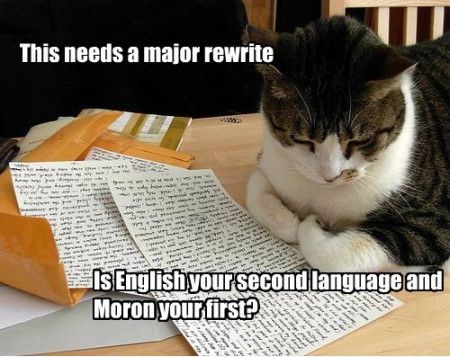
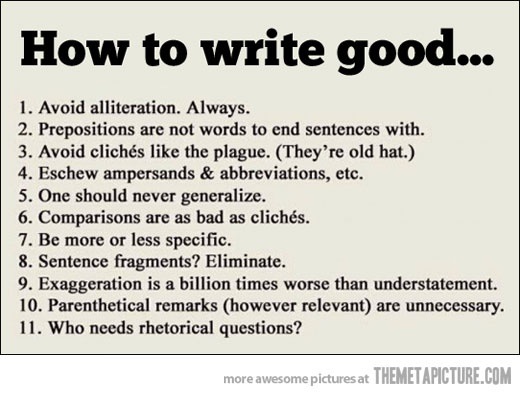
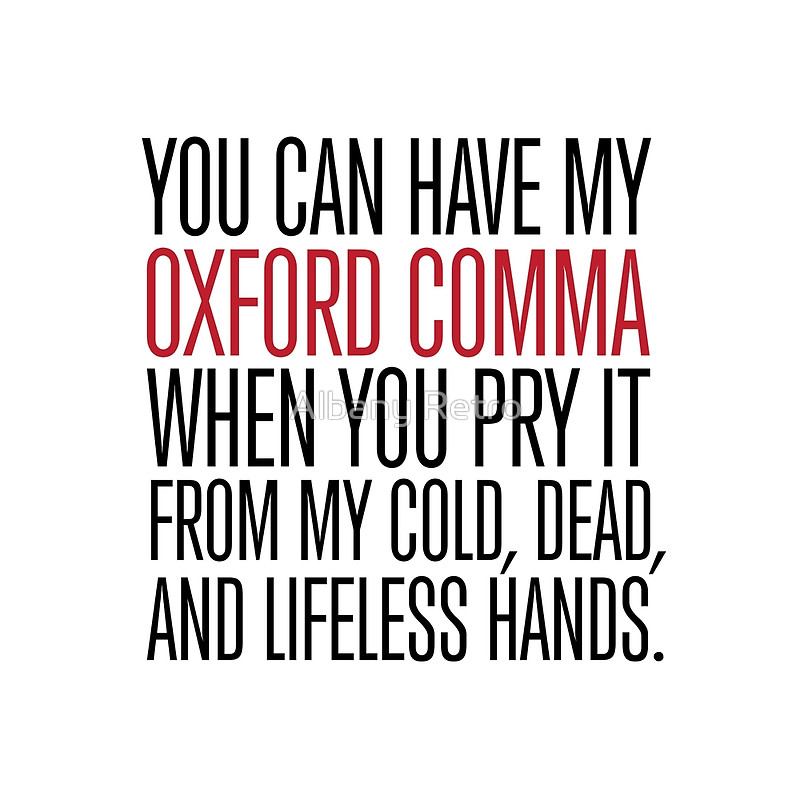
This week I thought I’d just share a few humorous gifs about writers and the work they do.

00688-funny-cartoons-writer

flat,800x800,075,t.u3

Funniest_Memes_this-needs-a-major-rewrite-is-english-your_9562

how-to-write-good

Happy writing!