BATTLING THE BEAST


BATTLING THE BEAST

I gaze into the eyes of the beast searching to find its soul. I am caught in the childhood game of “the first one who blinks looses,” yet he shows no emotion, no rising of brow, no blinking or shedding of tears, just a long menacing stare.

The creature’s leering eye grows brighter with every passing moment, seemingly intent on seeing the space of my existence. My vision is full of his sight, yet I see nothing.

I study his unrelenting look, my mind searching the far corners and deep recesses, constantly swirling, struggling to find some strategy, or weapon or even one simple word that might defeat my enemy and win this mind-numbing battle.

The desire to close my eyes tugs at the lids. The moisture surrounding my orbs in their sockets has become dry and I struggle against the urge to rub them. The creature shows no signs of weakening and continues to counter every glance.

Without my consent, sudden darkness is all I see. I blink. I am immediately torn between two emotions. First, relief. Moist droplets flood my eyes like waters of the sea crashing onto the shore. The fetters that once restrained the rubbing of my eyelids have now been unfastened.

And second, In the darkness of my blink, dread fills my mind as I wait for the wrath of my opponent to be unleashed. Or perhaps he has already struck with such a swift penalty that I didn’t feel the pain. In the deafening silence I dare to open my eyes. To my surprise I find that it was not I who blinked first, but the computer screen upon which I placed these words.

Rory C. Keel

CHRISTMAS


CHRISTMAS
by Sharon Stevens
My husband was outside mowing as I was finishing up this week’s blog on the first day of summer. With the recent rains he was already behind in keeping the weeds at bay. In the house I had just cut up a cantaloupe to put in the refrigerator, really wishing for homemade ice cream instead that signified a return to summer memories. Within the last couple of years our area had faced deadly drought, reminders of the dust bowl days that once had sucked the life out of every living thing, wildflowers included.
May 29th celebrated the 70th anniversary during World War II of Bing Crosby’s recording of “White Christmas”. Jeff Messer, the chaplain of Bivin’s Foundation had posted in the Amarillo Globe News about the story, and described what a morale booster this was for those in service and those on the home front.
When I think of Christmas like everyone else I picture glittering snow, shiny tinsel, curling ribbon, rolls of wrapping paper, evergreen and holly wreaths, and of course Santa Claus. You wouldn’t think that summer months are the perfect time to remember the holidays, but in all actuality this is a great time to set down family memories.
The Otwell Twins describe dressing in holiday costumes when it was still sweltering in California. The Lawrence Welk specials were taped in late summer, and they told me it was hard for everyone to get into the Christmas spirit weighed down with heavy velvet under the hot stage lights.
Jack Sorenson tells me that when he gets ready to paint his Christmas Santa his wife turns up the air conditioner and decorates his studio in twinkling lights encircled around the tree. The only thing missing is the yule log crackling in the fireplace, and gingerbread cookies along with a glass of milk waiting on the hearth for ole Saint Nick.
For years publishing houses and magazines called for submissions six months ahead which meant that June is the time for holiday stories. With the Internet and Facebook you would think that you could wait until at least the fall to send in polished work, but they are already deciding what will go into those issues. Chicken Soup for the Soul is one example that needs those tales shared.
Even if you are not interested in sending in a story of Christmas or Hanukah celebrations or disasters, now would be a great time to stretch your writing skills. As you are watching the grass grow or melting in summer heat pull out your writing utensils and try to capture the shiver of building snowmen, the warmth of hand stitched quilts, the smell of pecan pie and so on and so on. Take every little bit of the experience and shape it into a story. Write a poem and weave the threads together. Pen a song that helps you to remember just why you celebrate with your families and friends this special time of year.
You may be surprised to find you have a classic on your hands that sends a timeless message to be read year after year around the family hearth.
And now I think I will go get a piece of cantaloupe out of the fridge and imagine its snow ice cream, all the while dreaming of a “White Christmas”.
Sharon Stevens

Writing Conference


POST CARDS FROM THE MUSE

Writing Conference

The Panhandle Professional Writers is hosting Frontiers in Writing, an annual writing conference, later this month. I have been to three of these and have learned something new and exciting while enjoying every single one.

So what do I expect to get from a conference? Well, there will be a lot of different successful writers that are willing to share what they have learned in their careers. If this was the only reason I had for going to the conference, it would be enough because I still have a lot to learn about writing .

But that is not the only reason I go to the conference. I also enjoy supporting the local authors that bring their published works to sell. It’s a cool experience to buy a book written by a friend and ask them to autograph it.

But probably the number one reason I have for choosing to go to the writing conference is to meet other writers. There are no people on the earth, except maybe grandchildren, who are more fun to be around than writers. These are the people who transport me to another world with just three or four words. These are the people who introduce me to entire populations that live in the worlds they create. These are the people who never cease to thrill me with a story.

Now how much is that worth!

Congratulations. You have just received a post card from the muse.

For more information about the Frontiers in Writing, visit  http://www.panhandleprowriters.org/fiw-conference

Nandy Ekle

Long Sentences


Long Sentences

I write long sentences. I usually weave them through a story, bobbing in and out, up and down causing the reader to run out of breath. However, not all long sentences are bad. I have to remember that after long extended sentences, I need to sprinkle in a few that are short. I need to use some of medium length to fill in thoughts.

Keep changing the length and rhythm of your word combinations by adding varied length questions. Use one-word phrases or expressions when possible. This will keep the reader from becoming exhausted, or board with your writing. The End.

Rory C. Keel

Writing: Own It!


Writing: Own It!

How many people have you told that you’re a writer? I’m not counting the people at the writers conference you just attended. What about your family or close friends?

OWFI ’12 keynote, Steven James, encouraged us to come to the realization writing is work and own the fact we’re writers.

With limited bio space on the various social media venues, how do you make your profile short and unique to cover all of the things you are?  So much of my time is taken up with life and I struggle to find writing time. Mother, office manager, volunteer, rancher’s wife, shuttle service for kids–the list goes on and on. Life for most of us is so full and complicated. How can we let everyone know how well-rounded, talented, disciplined and wonderful we are if we’re only limited to a 60 word bio?

Steven James said, “Forget the day time stuff you have to do to pay the bills. Write and own it. You’re a writer.”

Recently, I changed my facebook profile to “Writer”.

What about you?

Natalie Bright

http://www.nataliebright.com

BATTLING THE BEAST


BATTLING THE BEAST

I gaze into the eyes of the beast searching to find its soul. I am caught in the childhood game of “the first one who blinks looses,” yet he shows no emotion, no rising of brow, no blinking or shedding of tears, just a long menacing stare.

The creature’s leering eye grows brighter with every passing moment, seemingly intent on seeing the space of my existence. My vision is full of his sight, yet I see nothing.

I study his unrelenting look, my mind searching the far corners and deep recesses, constantly swirling, struggling to find some strategy, or weapon or even one simple word that might defeat my enemy and win this mind-numbing battle.

The desire to close my eyes tugs at the lids. The moisture surrounding my orbs in their sockets has become dry and I struggle against the urge to rub them. The creature shows no signs of weakening and continues to counter every glance.

Without my consent, sudden darkness is all I see. I blink. I am immediately torn between two emotions. First, relief. Moist droplets flood my eyes like waters of the sea crashing onto the shore. The fetters that once restrained the rubbing of my eyelids have now been unfastened.

And second, In the darkness of my blink, dread fills my mind as I wait for the wrath of my opponent to be unleashed. Or perhaps he has already struck with such a swift penalty that I didn’t feel the pain. In the deafening silence I dare to open my eyes. To my surprise I find that it was not I who blinked first, but the computer screen upon which I placed these words.

Rory C. Keel

The Ten Best from DFWcon 2012


The Ten Best from DFWcon 2012

By Natalie Bright

Based on the sessions I attended, here’s a list on the best things about DFWcon 2012:

1) Over 400 creative people all in one conference center.

2) “Creativity is not a bucket, it’s a river. Jump in.” Jodi Thomas

3) “Fiction is a reality in me; a very real part of my life.” Jodi Thomas [www.jodithomas.com]

4) “Every author should have at least three pieces of social media, and it doesn’t really matter which. Start with a website and build from there.” Fred Campos [www.funcitysocialmedia.com]

5) “Don’t go anywhere without your book. You are the advertising agency for your book, and you must get comfortable with that process.” Cheryl Ammeter, author of  steampunk, Ivey and The Airship. [http://www.aethersedge.com/]

6) “Horses, most particularly stallions, are hyper aware of everything around them.” The 33 Worst Mistakes Writers Make about Horses, by Becky Burkheart.

7) “The key to success is take control and keep submitting.” James Rollins [www.jamesrollins.com]

8) “The only excuse you have to NOT write is death or a coma, and even if you’re in a coma you should still be thinking about your story.”  Candace Havens [www.candacehavens.com]

9) “People of the past felt differently about everyday issues. Life was dirtier, more physically demanding, and more dangerous.” Jennie Goloboy, agent and historian.

10) Over 400 crazed book people all in one conference center.

Great conference!

Natalie Bright

http://www.nataliebright.com

Back To Basics


POST CARDS FROM THE MUSE

Back To Basics

Think back to the first thought you had of writing. I’m not talking about the assigned theme about how you spent your summer vacation. I’m not talking about the essay explaining photosynthesis. And I’m not talking about the lines you may have had to write declaring that you would not talk out in class.

What I am talking about is the little paragraph you put together about who said what during lunch. Think about the notes you wrote your friends telling them the latest gossip. Remember the stories you told each other during PE and recess.


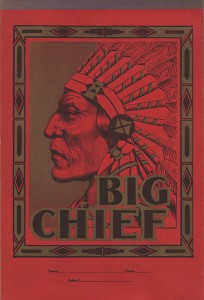
Sometimes the best inspiration is where it’s always been, at the beginning. One of the things that used to really stir the story pot in my head was a blue ink pen and a brand new Big Chief Tablet. That was definitely one of the most thrilling things in the world. I could take that medium point pen and the paper with the newsprint texture and whole new worlds full of interesting people opened up. The beautiful blue ink nearly jumped from my pen onto the tablet forming words and sentences, paragraphs and pages. I never experienced a stuck moment as long as I had those tools.

What brought the writer out in you? Did you have a certain favorite paper and ink color? Was it a favorite song? favorite character? a fun assignment? Did you and your friends share stories back and forth? Whatever it was, find it again and feel the magic start all over again. I can almost guarantee that your words will make their way through that blockade that has caused them to huddle in a corner waiting to be pulled out and put down on that page.

Congratulations. You have just received a post card from the muse.

Nandy Ekle

Where do I start?


 Where do I start?

This is a common question by those who want to write a book. With all the many instructions and how-to’s out there, let me suggest three simple Ideas.

Develop a THEME for your book.

First, develop a theme for your story. Theme is different than subject in that it expresses a purpose or intent of the subject. For example, your subject might be a run-away girl, but your theme might be, “There’s no place like home.” The theme is what ties your plot and characters together.

Develop the PLOT

Develop the Plot or the action of your story. The plot is not equivalent to conflict, but is a series of dilemmas or encounters, which may include conflict, that helps your main character to evolve through their needs and motivations.

Create CHARACTERS

These are the people who reveal your theme. They connect with the reader by their traits and inner qualities described by the writer in a believable way. By matching their characteristics with the theme and running them through the plot, they must change in some recognizable way.

These three intertwined together will form a satisfying story. So let’s get started!

Rory C. Keel

Reading for the Music


Reading for the Music

By Natalie Bright

Successful authors tell us over and over again to write every day and read every day. Why is reading so important?

Do You Hear the Music?

NYT and USA Today bestselling author, Jodi Thomas, [www.jodithomas.com] explained it like this at a talk she gave to area writers; “writers must be able to hear the music.”

As you listen to the radio, you can distinguish between rock and roll or country.  How about classical or bluegrass? By reading the genre you want to write, your brain becomes geared to the flow of a romance novel, or the twists and turns of a mystery, or to the humor that would appeal to children.

Goodbyes are Hard

I found this to be so true in my own writing. My first middle grade novel took three years to write. I loved those characters, and never got bored with the editing process. I probably read that story hundreds of times. My husband, a man of few words, said, “It has no plot.”

As much as I loved that story, he was right. I had to bury that one in the closet. I then focused on reading middle grade novels, starting with award winners and those that made bestseller lists.

Story, Story, Story…

I printed lists by authors who posted their favorite reads in blogs or on their websites, and scanned Amazon for used editions of Newberry winners. I read hundreds of middle grade books over the next year, and discovered so many amazing authors.

Recognition!

From a dream, a new character took shape in my head:  a feisty, eleven year old named Silver Belle. Her personality jumped off the page, and the story emerged. Recently, Silver Belle’s Train Caper received a 2nd place award in the OWFI ’12 contest, which tells me the story has potential but still needs polish. The work goes on.

Have I finally recognized the “music” of a middle grade story? I don’t know, but the melody continues to fill my soul and keeps me on task.

Are you listening to the music of your story?

Natalie Bright