Scrooge


Outtakes 225

Scrooge

By Cait Collins


I hate admitting I don’t remember much from all the Charles Dickens works I read in high school and college. But one novel stands out – A Christmas Carol. Who could forget Tiny Tim, Bob Crochet, Marley’s Ghost; and the Ghosts of Christmas Past, Present, and Future? And then there’s our hero, Ebenezer Scrooge.

When we first meet Scrooge, he’s a mean, nasty man. He’s devoid of love and human kindness. While life handed him some hard knocks, he has no excuse for his actions. Others have problems, Tim and his family for example, yet they remain positive and hopeful. Scrooge holds his hurts closely and lashes out at society. Yet he still has choices.

The ghostly visitors open doors for the miser, but Scrooge must choose to change his ways. And when he makes the 180 degree turn, he is truly a changed man. He reaches out to others and opens his heart to those around him. Talk about character growth. Scrooge went from zero to hero. Yet for many readers, the character they remember is the cold-hearted miser. His name is an adjective. We still refer to anti-Christmas folks as Scrooge. “Bah. Humbug.” is their catch-phrase of the season. But again, Scrooge changed for the better and that is hope for all mankind. If someone as mean and hateful as Scrooge could change his life, then those of us who are reasonable and kind can absolutely become more kind and helpful.

Tiny Tim, who greatly benefitted from Ebenezer’s transformation, said it best, “God bless us everyone.”
 

ARE YOU AFRAID TO FLY?


ARE YOU AFRAID TO FLY?

by Rory C. Keel 

It’s amazing that so many people have a fear of flying. Several years ago, while on a plane from Saint Louis Missouri to Portland Oregon, I remember boarding and seeing a man who looked as pale as death. He took his seat across the aisle and immediately buckled the seat belt, grabbed the armrests and shook so violently I wondered if it was the engines or him shaking the plane. After sedating himself with a couple of adult beverages, he slept soundly to our destination.

While I have never been afraid to travel in an airplane, I have experienced a fear of flying. Realizing I would never pilot an F-16 fighter jet, I turned to the hobby of remote control airplanes.

After what my wife called “investing heavily” in a kit, I began to build my first R/C airplane. For days I trimmed every piece of wood with the skill of a surgeon to the exact specs. For weeks, I placed every drop of glue precisely in the correct spot, as to not change the balance of the plane. And after months of careful tune-ups on the engine and electronics, along with a few instructions from others to assure that my plane would soar with the eagles, fear took over.

What if it crashes? All that hard work and time will have been in vain.

On my first solo flight, I rolled the plane down the tarmac and lifted off. A feeling of accomplishment flooded over me as I made one pass, then another over the stands. Not wanting to run out of fuel and lose the plane, I made the approach to land. That day I witnessed the most horrific sight—in front of me laid splinters of wood, pieces of plastic and shards of metal. I crash-landed my plane.

In writing, there are moments when we are afraid to submit a piece of work, fearful of rejection. We work on a piece until it is perfect then, “WHAT IF” takes over. What if it’s rejected? What if it was a waste of time because no one likes it?

The good news is that my first plane did finally soar. I learned that my time wasn’t wasted at all. In all the hours of building I had learned how to repair the broken plane, and after adjusting the mistakes I made in the landing approach, confidence took control.

Yes, I have letters of rejection for my writing, however with repairs and a few adjustments, those same pieces have been published.

Don’t be afraid to fly!

Roryckeel.com

Have Confidence in Your Words


Have Confidence in Your Words

Natalie Bright

A wise, multi-published author once told me, “NEVER delete anything.”

I’ve tried to make it a habit to save everything, which is a difficult thing to do when your self-editor is vigilant. Thank goodness there have been a few times I made the effort to save a story.

Many, many years ago during college, I spent time at a friend’s ranch. The ranch foreman was an old cowboy that had a story or two to tell. Wise and weather worn from spending a life-time punching cows, I remember he had the most brilliant blue eyes and he was one of the most laid-back, happiest people I’d ever met.

A spark of an idea turned into a story about that cowboy many more years later for a writing class assignment. I never thought about it again, but I’m so glad that I kept it in my class notes. Fast forward another ten years, a callout popped up into my inbox asking for stories for a Christmas collection with a West Texas theme. That cowboy and his life immediately came to mind. Within 30 minutes of my submission, I got confirmation back that my short story has been accepted.

You never know where and when your words might find a home. Sometimes we write in one form and those words can take on a life of their own and end up as something entirely different. I love when that happens!

Instead of deleting, cut and paste unwanted scenes, dialogue, and chapters, and move them into a separate file. Give it a clever name on your computer, like “My Musings” or “Brilliant Ideas”. Keep an idea file folder for those story sparks that you’ve written on restaurant napkins, scraps of paper, or sticky notes. Never let an idea pass through your brain that you don’t write down. Keep an idea journal and jot down everything when it comes to you, whether it’s a setting, a character, or a bit of dialogue.

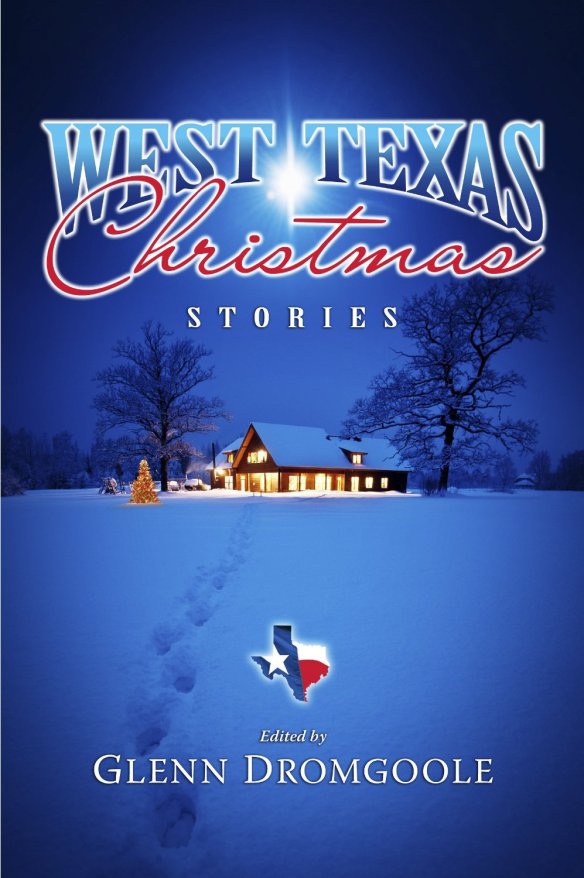
You can read my story “A Cowboy’s Christmas Blessing” in the anthology of more than 30 heart-warming and humorous Christmas stories—all set in West Texas or by West Texas writers.

west texas christmas stories

West Texas Christmas Stories

Edited by Glenn Dromgoogle

Abilene Christian University Press; http://www.acu.edu/campusoffices/acupress/


Merry Christmas Y’all! Thanks for following WordsmithSix.


Story Time


Outtakes 224

Story Time

By Cait Collins


Have you ever been with a group of kids and decided it was time to write a story. It goes something like this.

What if a space ship landed in your back yard? What then?

The door opens and the aliens get out.

And what if they looked like…

Dogs. Big ones and little ones.

And they walked on their back legs.

They talked English. I could understand them.

And one of them had to pee. He walked to a corner in the yard and peed.

Did he poop?

No, he just peed.

And then what?

They wanted something to eat and drink.

What did you give them?

Dog food and water.

Boring. They wanted those black, jelly looking things. They put the stuff on a cracker and used wooden knives. Dad said they were fish eggs. Yuck!

What did they drink?

Bubbly stuff. Mom keeps it for special occasions. Is meeting aliens a special occasion?

I think so? So how were the aliens dressed?

Superman pj’s.

No, they wore camouflage. Like soldiers in the desert.

And then what?

They asked for directions to the Alamo. They wanted to fight with Davy Crockett.

And so?

It started to rain. It rained cats. Tabby cats, black cats, orange ones.

What happened then?

They ran back to their ship. One of the little dogs yelped. He was melting into a puddle of butter.

Really? Did you get pictures?

Tried, but they went invisible.

You mean they melted?

Sure.

And then what happened?

They couldn’t take off. They were melty.

And so?

The space ship is still in the back yard. And it’s bigger and better than Bobby Johnson’s tree house. We play there all the time.

Isn’t it melty?

No, Dad took the garden hose and washed it out. It’s neat now?

Are you going to fly the ship?

Nah, we want it for a club house. No girls aloud. (Yes, that’s the way the kid said it.)

Why not allow girls?

Cooties. Girls have cooties and maybe bed bugs. Don’t like that.

So how does the story end?

All the alien dogs got melty and went away. The girls had to go to the hospital to get rid of their cooties and bed bugs. And my friends and I took over the space ship and now we have a nice place to play basketball and football. My dad says he’ll get us a special video game set-up so we can play all kinds of games. My dad’s rich. He has twenty credit cards and money in a hundred banks. That means we can be happy and never have to go without things we want.

Pretty neat, huh?

The end.

Try editing this tall tale.

MAKING SENSE OF THE SENSES


Making Sense of the Senses


How does the loss of sight affect your hearing?

What color does an orange smell like?

How loud is an inner voice?

Can you describe how the wind feels?

What does sour taste like?

When I am writing, it’s easy to visualize what I want my characters to see and feel or even smell. However putting it down on paper so that the reader can clearly see them is a difficult task. For example, if I write, “He walked into the room and gazed at the beautiful painting hanging on the wall.” What does the reader see? What object is displayed in the painting? What colors make the painting beautiful? How is it framed?

This dilemma came to life for me when the main character of my novel, UNLAWFUL WORDS, suddenly goes blind. Writing what he saw with his eyes came to an abrupt halt. How do I write his experiences now?

A blindfold

Using a blindfold I spent several hours experiencing the darkness. Immediately I began to depend on my hearing, turning my head from side to side trying to capture all the sounds around me. My hands automatically reached forward hoping to feel something familiar and my feet slowed their steps to prevent stumbling. The objects once identified by sight now had to be described by feeling the texture, or the smell. These are the details that help the reader understand what the character is experiencing.

In your writing, use the basic senses such as taste, touch, hear, see, smell. Be careful not to give the reader sensory overload by giving a long string of description using all five sense on every situation, when generally the use of two or more different senses can tie the picture together for the reader.

Rory C. Keel

Wayward Words


Wayward Words

Natalie Bright

Many, many years ago during college, I spent time at a friend’s ranch. Their ranch foreman was an old cowboy that had a story or two to tell. A spark of an idea turned into a story about that man many more years later for a writing class assignment. I never thought about it again, but thank goodness I kept it in my class notes. It was just a simple writing exercise.

Fast forward another ten years, a callout popped up into my inbox asking for stories for a Christmas collection with a West Texas theme. That cowboy and his life immediately came to mind. I reworked it that very day, and within 30 minutes of my submission, I got confirmation back that it was accepted.

Hang on to every word you write. You never know where that story might find a home.

Books make great gifts! If you know of someone who enjoys stories and memories about Christmas’ past, this anthology of more than 30 heart-warming and humorous stories are all set in West Texas or by West Texas writers. It includes my story “A Cowboy’s Christmas Blessing”

West Texas Christmas Stories
Edited by Glenn Dromgoogle
Abilene Christian University Press
Available at Amazon and at www.acu.edu/campusoffices/acupress/

Stephen King Quotes


Stephen King Quotes

1. Books are a uniquely portable magic.

2. The scariest moment is always just before you start.

3. Descriptions begin in the writer’s mind, but should finish in the reader’s.

4. Writing isn’t about making money, getting famous, getting laid, or making friends. In the end, it’s about enriching the lives of those who will read your work, and enriching your own life as well. It’s about getting up, getting well, getting over. Getting happy, okay? Getting happy.

5. Amateurs sit and wait for inspiration, the rest of us just get up and go to work.

The End of an Era


The End of an Era

by Adam Huddleston


Okay, so maybe it wasn’t a very long era, but after this month, I am stepping down as the moderator for www.site.flashfiction5.com. It saddens me a great deal, but the number of contributors has dwindled down to the point where it doesn’t seem feasible to continue. I have loved reading and judging the works of several fantastic and talented authors over the past couple of years. It makes me happy to see that folks have such a mastery of the English language that they are able to create a story containing characters, plot, and climax in under one-hundred words. This is a wonderful genre and I wish the best for every great author that I had the privilege of working with.

If anyone reading this wishes to take over the responsibilities as moderator, feel free to contact me at adhuddleston@hotmail.com. Thanks and happy writing!

Kids and Books


Outtakes 223

Kids and Books

By Cait Collins

I’ve really tried to keep causes out of my blogs, but I hope you will indulge me this week. I realize times have changed, but as we see academic scores dropping and kids having trouble excelling in school, I have come to believe we have an issue with reading. I see kids being held back in school because their reading skills are not where they should be. They are not dumb children; they simply can’t read well.

I grew up in an environment where reading was encouraged. My folks bought the Grolier Encyclopedia, Book of Knowledge, and ChildCraft for us. They bought the books on a payment plan because they wanted us to have easy access to information. I remember Mom or Dad gathering us in the big chair and reading to us. As I got older and could read on my own, I would spend hours reading and studying these volumes.

These days books are not always present in the home. Often the family budget does not stretch to purchasing books. And if parents are not readers, it could be difficult for a child to see the need to read. Unfortunately, the child suffers because the inability to read well slows the learning process. For this reason, I support efforts to get books into a child’s hands.

One of my favorite programs is Toys for Tots. Every Christmas, the Barnes and Noble Store in Amarillo selects books for kids of all ages. The titles are suggestions for customers who wish to purchase books for the toy drive. Or the patrons may prefer to browse the shelves for some of their childhood favorites. Book donations are also accepted by the Evelyn Richards Foundation, a local charitable group that works to provide coats and Christmas for children in our area. It may not seem like a big deal to those of us who grew up reading, but giving a child a book of his own may be the beginning of new adventures and better learning opportunities.

Why not volunteer for Story Hour at your local library or bookstore? Maybe we could mentor in the local schools. As writers, we should be at the forefront of supporting efforts to put books in the home and in schools. Maybe we can’t change the whole world, but at least we can make an inroad in our corner of it.


Verbs


Verbs

Rory C. Keel


Lights, Camera, ACTION!

Without Verbs, stories would be boring. There would be no action such as running or jumping. No motion or movement, like when the spy rolled and dodged the bullet. There would be no romance without kissing or holding her tight.

Verb or Noun?

There are times when a word can be a verb or a noun, depending on how it’s used in a sentence. For example, the word dance would be a noun when describing a type of dance. The nutcracker is a ballet dance.

Dance is a verb when describing the action of those in the play. We watched the actors dance during the Nutcracker.

Verbs are what give life to your stories, so use them often.